

Mass Protests Erupt in Germany Against AfD’s Electoral Victory
Over the weekend, tens of thousands of individuals took to the streets across Germany to express their opposition to the far-right Alternative for Germany (AfD) party. This surge of protests came on the heels of the AfD’s significant win in a state election, where they emerged as the leading party in Saxony-Anhalt. This victory places them on a path toward establishing the first far-right state government in Germany since World War II.
Protests Nationwide
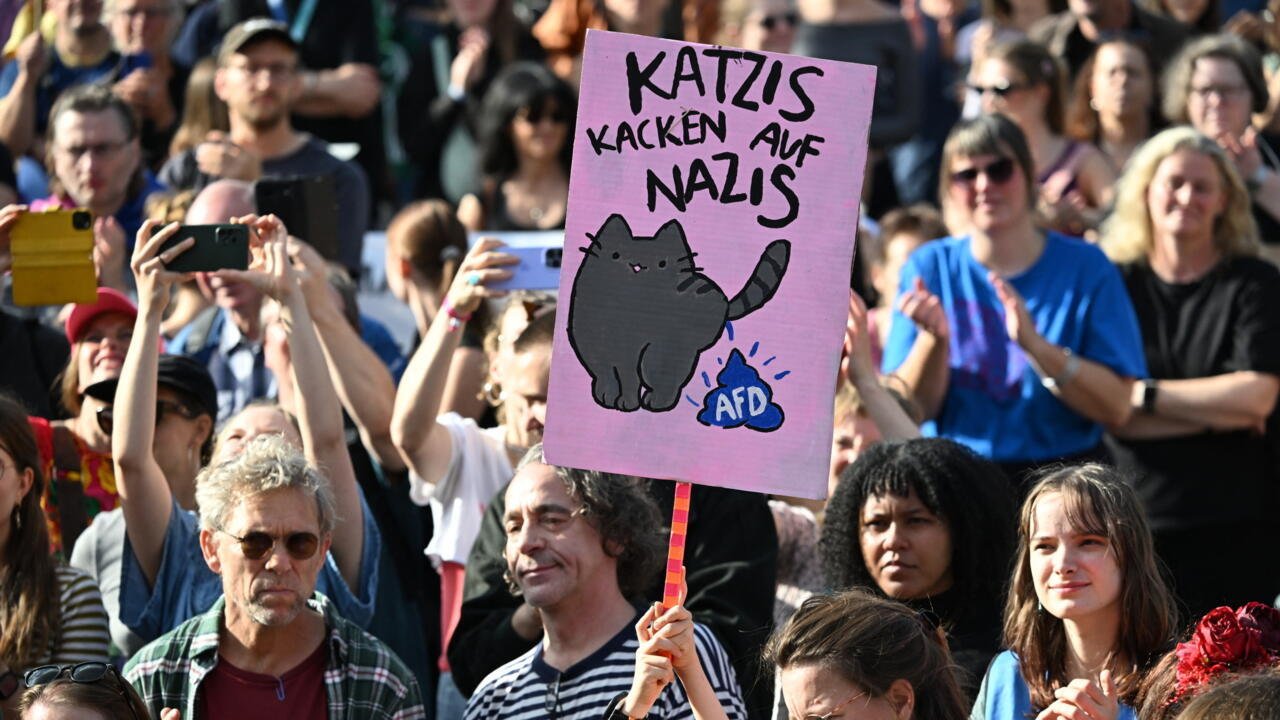
Approximately 150,000 protesters gathered in around 20 cities, including major hubs like Berlin, Hamburg, and Munich. The demonstrations were organized by Pruef, a group advocating for a ban on the AfD. Many attendees brandished signs with messages such as “Ban the AfD now” and “Democracy needs no alternatives.”
Voices of Concern
Christoph Bautz, the leader of the campaign group Campact, which participated in the protests, remarked, “A broad cross-section of civil society is taking to the streets to prevent the enemies of the constitution, the AfD in Saxony-Anhalt, from gaining government power.” The rise of the AfD has alarmed many citizens, particularly those who feel that Germany bears a unique responsibility to confront its Nazi history. As a result, there are increasing appeals for mainstream political parties to pursue a formal ban of the group.
Political Skepticism
Despite public calls for action, the challenges to implement a formal ban on the AfD are substantial. Chancellor Friedrich Merz of the center-right CDU remains doubtful about this course of action. In Berlin, law enforcement reported that several thousand individuals participated in multiple demonstrations.
Counter-Protests and Electoral Landscape
Meanwhile, the AfD staged a counter-demonstration in the capital, led by Kristin Brinker, their primary candidate for the upcoming regional elections in Berlin. According to Campact, estimates suggested that around 25,000 protesters assembled in Hamburg and approximately 12,000 in Munich. In the recent election, the anti-immigration and pro-Russia AfD garnered nearly 44 percent of the votes in Saxony-Anhalt, significantly outpacing the CDU’s 17 percent. Though they fell just three seats short of an absolute majority, the AfD has initiated dialogues with other parties and legislators to forge a state government.
Conclusion
The recent electoral success of the AfD and the accompanying protests highlight the deep divisions within German society. As discussions about the future of democracy and civil rights continue, the response to the far-right’s rise remains crucial for the country.
Key Takeaways
- Tens of thousands protested across Germany against the rising influence of the AfD.
- The AfD won a significant portion of the vote in Saxony-Anhalt, seeking to establish a state government.
- Public sentiment calls for a ban on the AfD, but political hurdles remain.
- The situation raises important questions about Germany’s democratic values and its past.