

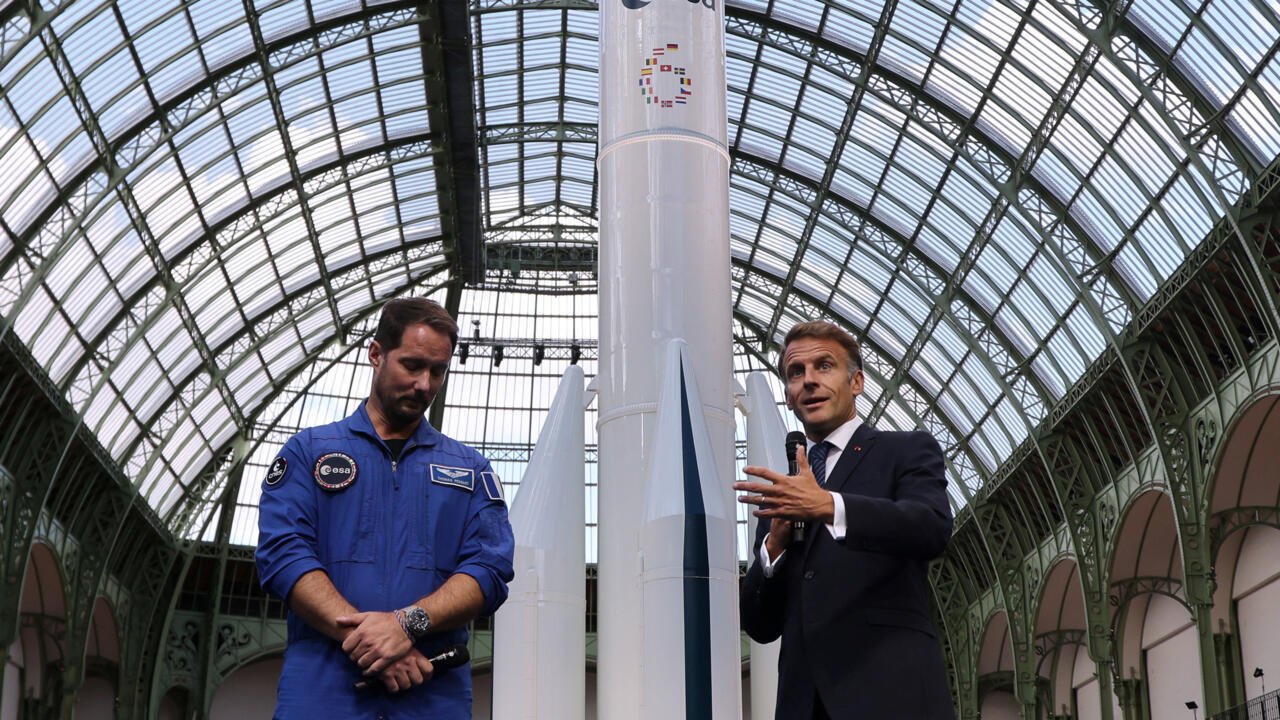
International Space Summit: Paving the Future of Space Exploration
The two-day International Space Summit kicked off on Wednesday, gathering officials, astronauts, researchers, and industry leaders from around 120 countries. The primary focus of this summit is to explore the future of the space industry and seek potential business collaborations. French President Emmanuel Macron emphasized the importance of innovation and investment to empower Europe in the space sector, stating that Europe must become self-reliant.
Shifting Focus: European Independence in Space
Macron’s initiative highlights a growing desire to diminish Europe’s dependency on the United States for critical technological services. This includes not only satellite communications but also the essential infrastructure for space launches. Josef Aschbacher, the head of the European Space Agency (ESA), urged for a €10 billion ($11.6 billion) investment over the next decade to establish Europe’s autonomy in the space field. During a closed-door meeting, he posed a pivotal question to European ministers: “Will we be passengers or pilots?”
A Call for Action
Aschbacher pointed out the swift advancements being made globally in space technology, from developing satellites to exploring celestial bodies like the Moon and Mars. “In this emerging context, Europe must establish itself as an indispensable partner, equipped with its own capabilities,” he stated, emphasizing the need for a yearly investment of approximately one billion euros for the next ten years. He warned that without such commitment, Europe risks remaining reliant on external players, which carries significant costs.
“Opting to buy flights for European astronauts from foreign providers could cost €5 billion over ten years, with most funds funneled into foreign industries,” Aschbacher explained. “Investing in our own capabilities can create jobs locally, strengthen European independence, and empower the next generation.”
Voices from the Summit
At the summit, French astronaut Thomas Pesquet echoed similar sentiments, stating that Europe must not remain inactive in the space race. “We lead in technology, and with our universities, laboratories, and agencies, we must take control of our future,” he remarked. The ESA member states are expected to deliberate on enhancing their autonomy in the sector during a ministerial meeting set for December.
Europe’s Response to Global Dynamics
Since the onset of Russia’s full-scale invasion of Ukraine in 2022, European nations have been actively working on strengthening their sovereign space capabilities. The conflict underscored how Elon Musk’s Starlink satellite service became a critical resource for Ukraine, raising concerns about over-dependence on a single entity. Immediately following the outbreak of war, there were questions about Musk’s ongoing support for Starlink in Ukraine, particularly since reports indicated he had limited its use in military contexts.
In response to these challenges, the European Union is developing a “sovereign satellite” constellation named Iris2, aimed at offering secure communications for its 27 member countries, though it won’t be operational until 2030.
The Competitive Landscape in Space
This year marked another turning point, particularly after tensions escalated in the Middle East following the Iran conflict. US satellite imaging companies began withholding images to prevent sensitive information from falling into adversary hands. The US continues to lead globally in space initiatives, with NASA conducting significant exploration efforts and overseeing the Artemis program, which aims to establish human presence on the Moon.
Moreover, companies like SpaceX have revolutionized commercial launches with reusable rockets, lowering costs and increasing launch frequencies. Amazon, under Jeff Bezos’ direction, is also entering the fray, having launched its first internet satellites with plans to deploy over 3,200 to provide worldwide broadband service.
Notably, SpaceX and Blue Origin decided not to attend the Paris summit, reportedly following suggestions from the White House to avoid supporting European Union policies.
Conclusion
As Europe forges ahead in the space sector, the emphasis on autonomy and innovation sets the tone for future endeavors. This summit represents a critical step toward empowering Europe to stand on its own in the vast arena of space exploration and technology.
Key Takeaways
- The International Space Summit gathers global leaders to discuss the future of the space industry.
- France’s President Macron emphasizes Europe’s need for independence in space technology.
- Significant investments are required for Europe to develop its own space capabilities.
- Global dynamics, including conflicts and competitive advancements, shape the landscape of space initiatives.