

Understanding Russia’s VPN Restrictions as a Censorship Strategy
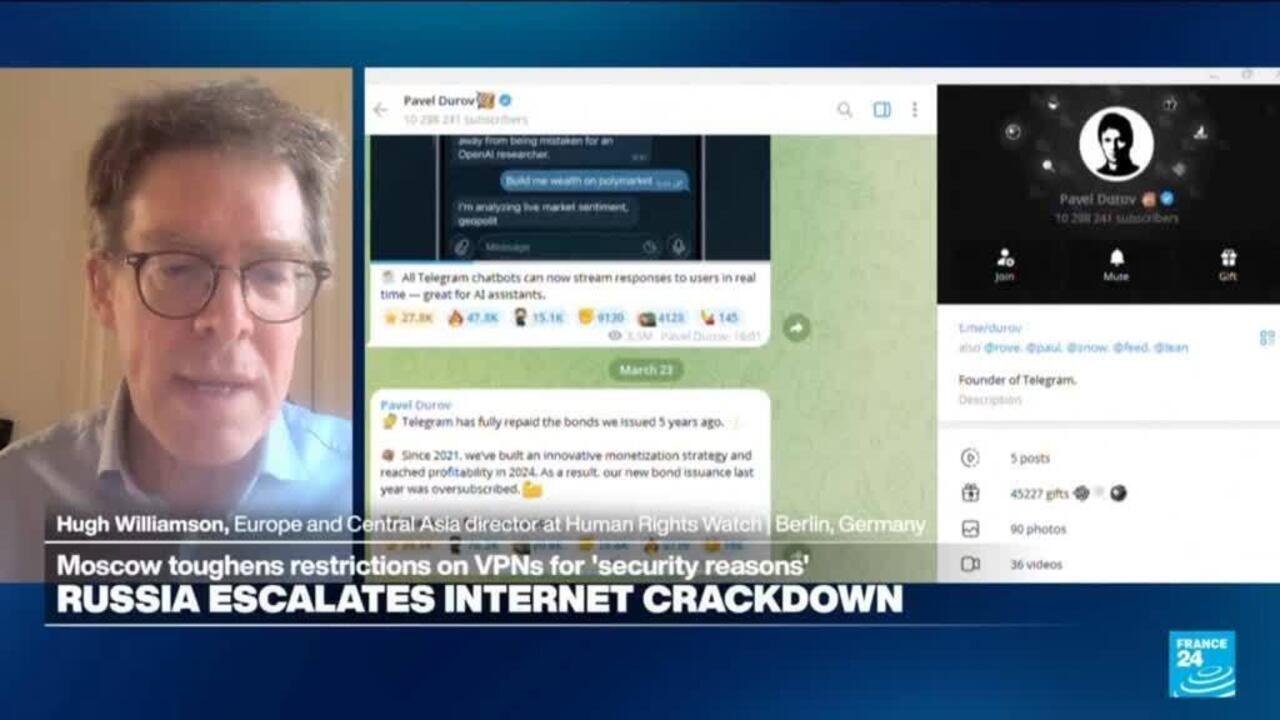
In a recent discussion, Alison Sargent welcomed Hugh Williamson, the Human Rights Watch Director for Europe and Central Asia. Williamson sheds light on Russia’s measures against VPNs, positioning them within a broader framework of censorship that has seen a marked increase since the onset of the Ukraine invasion in 2022. He argues that these actions are part of a calculated approach by the Kremlin to limit access to independent information, stifle public discourse, and centralize political authority.
The Censorship Landscape in Russia
According to Williamson, the Kremlin’s restrictions on VPNs are not just random policies but represent a strategic maneuver aimed at controlling the flow of information. This has implications for not only the public’s access to diverse viewpoints but also for the overall health of democracy in the region.
Intent and Impact of VPN Restrictions
The primary aim of these restrictions is to undermine the availability of independent news sources and alternative opinions. By doing so, the government seeks to maintain a tight grip on public sentiment and narrative. However, Williamson notes that this censorship strategy has had several unintended side effects.
- Heightened Public Frustration: Many citizens are growing increasingly discontent with the lack of access to unbiased information.
- Economic Disruption: The constraints imposed on VPNs can hinder foreign investment and economic competition, negatively impacting the economy.
- Political Risks: The government faces potential backlash as discontent grows among the populace due to these restrictive policies.
The Wider Implications
Williamson emphasizes that while the Kremlin may believe they are fortifying their control through these measures, the long-term consequences could be detrimental. As public frustration mounts, the risk of instability rises, which could ultimately threaten the government’s position.
Conclusion
In summary, the Kremlin’s restrictions on VPNs signify more than just localized censorship; they represent a larger strategy aimed at restricting independent thought and debate. Understanding these developments is crucial as they not only impact Russia but also have broader implications for human rights and freedoms in the region.
Key Takeaways
- The Kremlin’s VPN restrictions illustrate a deliberate strategy to limit access to independent information.
- These measures are causing increased public frustration and may disrupt the economy.
- Long-term, the restrictions pose significant political risks for the Russian government.
- A deeper understanding of these issues is essential for grasping the current human rights landscape in Russia.