

Ukraine’s Harvest and the Black Sea Blockade: A Critical Situation
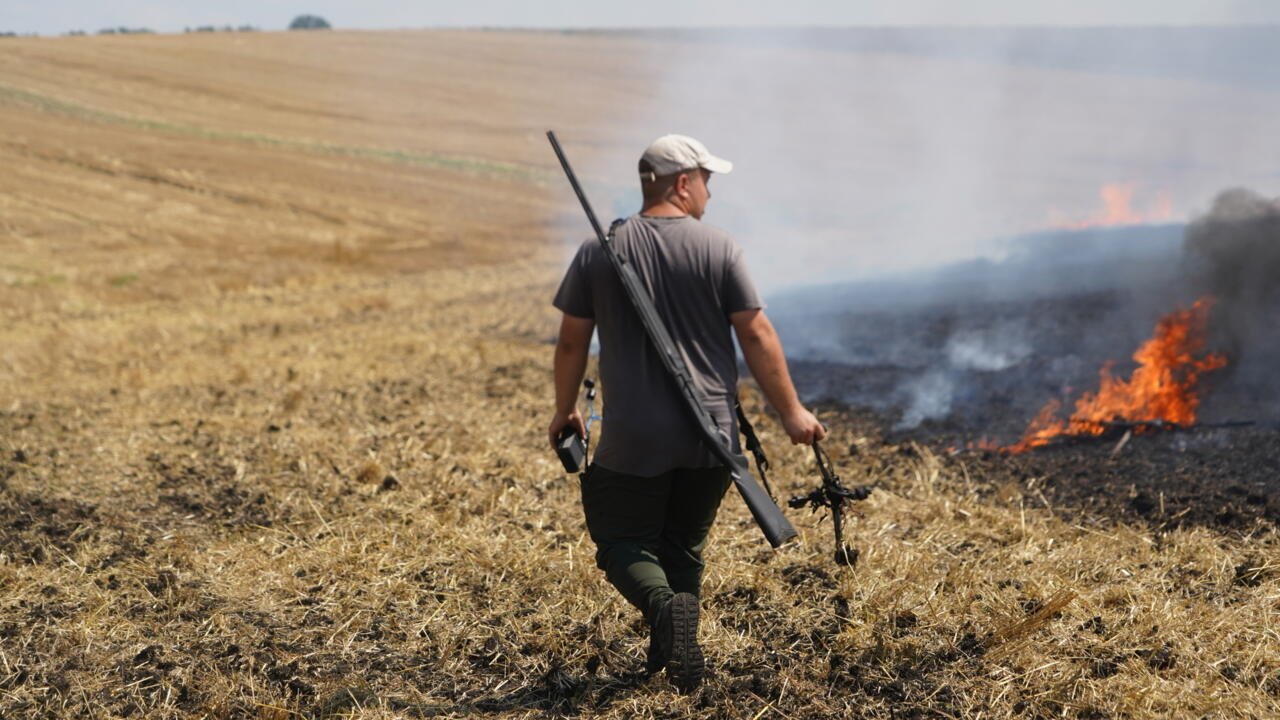
The fields are ripe for harvest, yet the Black Sea route remains blocked, creating a challenging scenario for Ukraine. With Russian forces advancing towards the remaining cities in the Donbas controlled by Kyiv, Ukraine launched a “40-day campaign” of drone strikes deep within Russian territory. This operation, as outlined by President Volodymyr Zelensky, targets crucial infrastructure, primarily oil refineries essential for Russia’s fossil fuel exports. Additionally, airstrikes have targeted warehouses relied upon by Russian small businesses.
Intensified Strikes and Response
Since July, Ukraine has broadened its focus to Russian ships transporting grain through the Black Sea and has targeted rail and port infrastructure around the Sea of Azov. Recently, heavy drone attacks struck grain terminals at the significant port of Novorossiysk, sheltering remnants of Russia’s Black Sea fleet. In retaliation, Russia has escalated its own assaults on Ukraine’s infrastructure, launching drones and missiles on grain silos and port facilities in Odesa, while also threatening any ships attempting to dock.
Bilateral Disruptions
The situation has reached a point where both Kyiv and Moscow have attacked commercial container ships and grain export terminals in each other’s Black Sea ports, effectively halting grain shipments—essential for both nations. In a recent state media interview, President Vladimir Putin accused Ukraine of “opening Pandora’s box” and pledged to target Ukraine’s vital economic sectors. Given that Ukraine is a top global producer of wheat, barley, sunflower seeds, and corn, the stakes in agriculture are exceptionally high. Before the war, this sector contributed significantly to Ukraine’s economy.
Failed Negotiations
President Zelensky has expressed disappointment that Moscow has rebuffed efforts for a ceasefire in the Black Sea, insisting that any such agreement would only be reached if Kyiv halted its campaign against Russian energy infrastructure. Meanwhile, Russia has systematically attacked Ukraine’s energy resources, aiming to diminish the country’s capacity for heating and electricity as winter approaches.
The Asymmetry of Warfare
Oleh Nivievskyi, an associate professor at the Kyiv School of Economics, highlighted that the blockade’s economic impact is disproportionately harsher on Ukraine than on Russia. While Russia heavily relies on agricultural exports, agriculture is less critical to its overall economy than the energy sector. Conversely, for Ukraine, maritime routes are vital, constituting a significant part of its economy and exports. Together, Ukraine and Russia account for over a quarter of global agricultural exports, primarily supplying regions in North Africa and the Middle East.
Historic Context
This isn’t the first time grain exports have faced disruption. After Russia’s invasion in February 2022, millions of metric tonnes of grain remained stranded in Ukraine’s Black Sea ports. To address spiraling global food prices and looming famine threats, the Black Sea Grain Initiative was established in July 2022, creating a secure passage for food and fertilizer shipments.
The Current State and Future Concerns
A year after exiting that agreement, Russia has intensified the blockade, creating a situation that could have even more severe implications for Ukraine. As farmers prepare for winter planting, the timing is critical; winter crops, particularly winter wheat, are essential. August marks the peak of Ukraine’s wheat harvest, with the corn harvest approaching, yet farmers face the grim potential of being unable to sell their current yields. The liquidity required for next season’s planting is drying up, as farmers struggle with lower domestic prices and limited sales volumes.
Storage Challenges
With grain exports down by approximately 75% year-on-year at the start of August, the issue of grain storage is becoming crucial. Agriculture Minister Taras Vysotsky warned that the country might face a storage shortfall of up to 11 million metric tonnes. Farmers have already harvested more than 28 million tonnes of grains, with a forthcoming corn harvest of around 33 million metric tonnes yet to begin. Storage capacities are strained, escalating pressure on farmers as they contemplate whether to harvest or leave crops in the field.
Logistical and Political Hurdles
Efforts by Russia to reroute grain shipments have challenges, as the Danube River, another major export route, is facing low water levels due to drought, and its ports are frequently attacked. Ukraine’s railway infrastructure is also affected, with significant losses suffered due to Russian strikes. The agriculture minister noted that the combined capacity of rivers and rail can only transport one-third of the previous volumes moved through Black Sea ports.
Amid these logistical issues, the political landscape has shifted considerably. Although the European Union initially relaxed agricultural import restrictions to support Ukraine, the subsequent influx of products led to backlash from farmers in Central and Eastern Europe, resulting in bans on certain Ukrainian imports from nations like Poland and Hungary. According to Nivievskyi, the enthusiasm of European partners to aid Ukraine has waned compared to 2022.
Conclusion
As Ukraine navigates the complexities of warfare and agricultural export challenges, the blockade of the Black Sea presents a critical threat not only to its economy but to global food security as well. Moving forward, the focus on establishing safe maritime routes while addressing domestic agricultural pressures will be paramount for Ukraine’s farmers and economy.
- Ukraine launched a campaign targeting Russian infrastructure amid an ongoing blockade.
- Bilateral strikes on grain transport have stalled exports for both nations.
- The economic impact of the blockade hits Ukraine harder than Russia.
- With storage concerns escalating, the future of Ukraine’s agricultural sector hangs in the balance.