

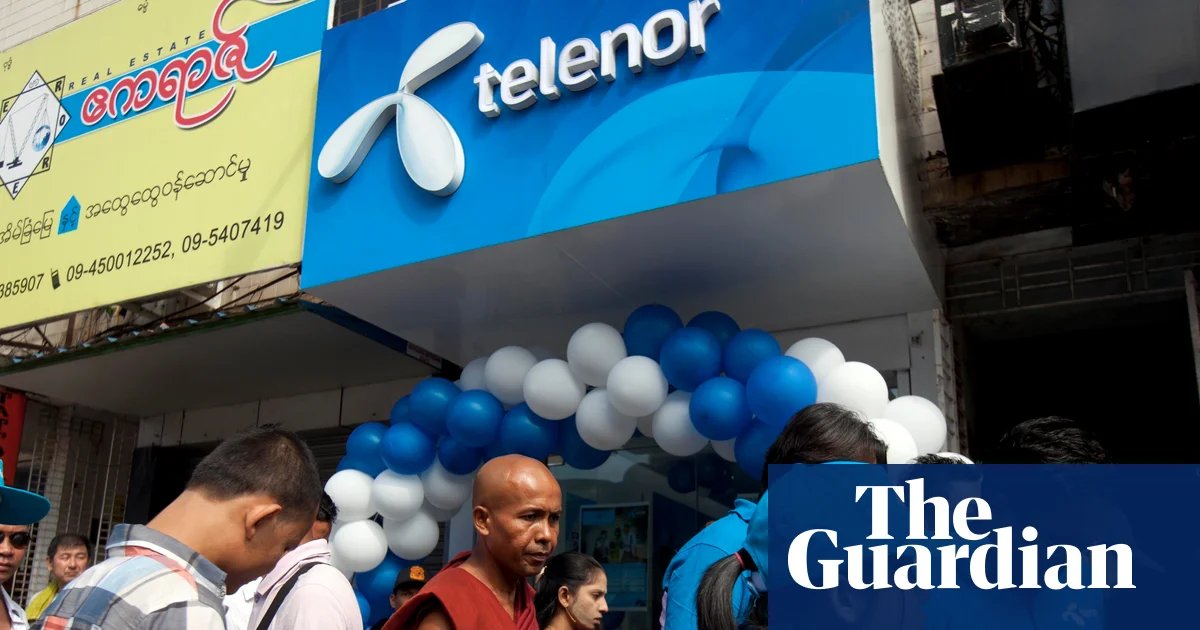
Telenor Under Fire for Alleged Data Breach in Myanmar
In a troubling turn of events, Aung Thu, a prominent anti-coup activist in Myanmar, found himself at the center of a major controversy involving Norwegian telecom giant Telenor. After enduring two weeks of intense interrogation, his captors sought new means to extract information by requesting data from Telenor, the largest telecom operator in Myanmar. This situation has raised significant concerns regarding corporate responsibility and human rights in the aftermath of Myanmar’s military coup.
Background: Telenor’s Entry into Myanmar
Telenor established a presence in Myanmar in 2013 during a critical phase of the nation’s transition towards democracy. The company pledged to connect millions who remained isolated from the global community. However, many activists now accuse Telenor of betrayal, suggesting that it played a role in entrenching the military junta’s grip on power by providing the regime with sensitive data about dissidents.
The Allegations
Aung Thu and over 1,200 other individuals affected have initiated a class-action lawsuit against Telenor, asserting that the company’s failure to safeguard personal data led to serious repercussions, including arrests, torture, and even executions. The lawsuit claims that Telenor supplied the military with customer information, including addresses and last-known locations, without informing the victims or adequately protecting their rights.
Telenor went into the country saying you should trust us. They did that, that trust was breached and they’ve faced severe consequences.
Documents released by the Norwegian state broadcaster reveal that Telenor complied with a staggering 96% of the 153 official data requests it received. Notably, Aung Thu’s phone number was included in one of these requests made while he was already imprisoned in September 2021.
Aung Thu’s Experience
Aung Thu recalls the distressing reality following his arrest in September 2021, where he faced allegations of incitement against the military regime after participating in the “spring revolution,” a grassroots movement opposing the February coup that overturned Aung San Suu Kyi’s elected government. He was released briefly in October 2021 but was rearrested hours later under counter-terrorism laws after Telenor allegedly provided his data to the military.
Legal Action Initiated
On April 8, the Justice and Accountability Initiative along with various rights organizations launched a legal case in Norway against Telenor, seeking at least €11 million in compensation for those whose information was improperly shared. Telenor, which previously boasted 18 million customers in Myanmar, now faces significant reputational damage.
They sent every second, every little detail, of every telecom data they had on users.
Reports also indicate that data shared by Telenor included details about high-profile figures like Aung San Suu Kyi and Phyo Zeya Thaw, who was executed by the military. Tha Zin, Thaw’s wife, is among those filing complaints, stating her husband was apprehended shortly after Telenor released his information to the military authorities.
Responses from Telenor and the Norwegian Government
Telenor has defended its actions by asserting that while it complied with requests for historical metadata, it did not transmit content from calls or messages. A company spokesperson emphasized the challenging and dangerous environment in which employees operated, citing safety concerns that influenced their decision-making.
Back in Norway, there are increasing calls for accountability regarding the government’s involvement. Since the coup, officials have held numerous meetings with Telenor representatives, stressing that the company’s operational decisions rest with its board, which is expected to uphold human rights.
Conclusion
This unfolding scandal highlights the complex interplay between corporate conduct, human rights, and governance in fragile democracies. As Myanmar continues to endure political turmoil, the role of foreign companies like Telenor comes under scrutiny, creating an urgent conversation about ethical practices and accountability in business operations.
- Telenor is facing a class-action lawsuit for allegedly sharing sensitive data with Myanmar’s military.
- The lawsuit claims information provided led to arrests and human rights violations against activists.
- Activists accuse Telenor of breaching trust after entering Myanmar as a proponent of connectivity and democratization.
- The case raises larger questions about corporate responsibility and the protection of human rights in volatile regions.