

Ukrainian Drones Target Russian Oil Infrastructure: A New Offensive Strategy
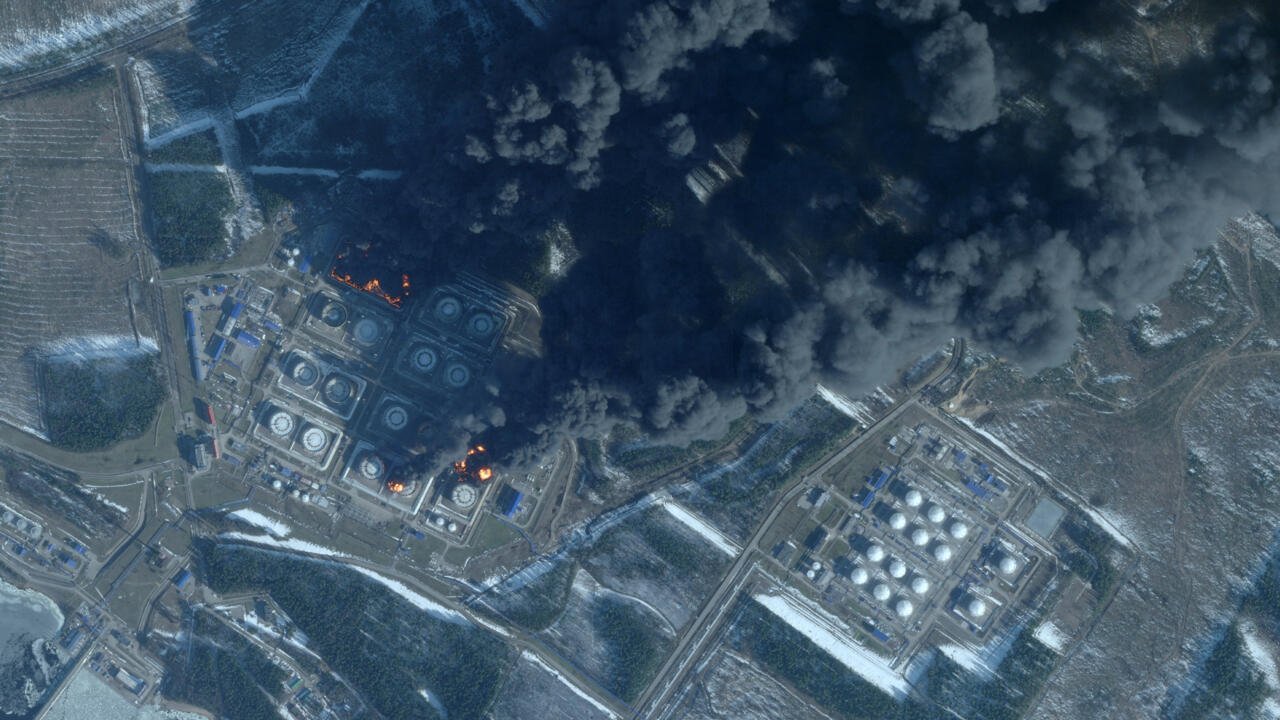
In a striking escalation of its military strategy, Ukraine has launched a series of drone attacks on crucial oil export facilities in Russia’s Leningrad region over the past week. This bold move has resulted in significant damage, with some facilities reportedly ablaze for days. Ukrainian forces have consistently targeted Russia’s energy infrastructure, and these recent strikes mark a noteworthy intensification of those efforts.
Recent Attacks: Details and Implications
On March 31, Leningrad Region Governor Alexander Drozdenko confirmed damage to the Ust-Luga port but withheld further specifics regarding the extent of the destruction. Huseyn Aliyev, a war expert from Glasgow University, noted that the Ukrainian military has been systematically attacking Russian infrastructure for nearly a year. However, by specifically targeting oil ports, Kyiv appears to have escalated its campaign significantly.
Boris Aronshtein, an energy analyst, characterized these attacks as “the most serious threat to exports of Russian oil and oil products since the war began,” indicating the critical nature of these sites for Russia’s energy revenues.
Signals from Allies
On March 30, Ukrainian President Volodymyr Zelensky mentioned that some allies had communicated their desire for Kyiv to limit its long-range strikes on Russia’s oil sector in the Baltic region. This highlights the sensitivity surrounding the energy infrastructure, which is essential for Russia’s economy.
Strategic Significance of Oil Ports
The targeted energy infrastructure is particularly significant due to its historical ties to the Soviet Union and its continued importance in supplying Western Europe. Jeff Hawn, a Russia specialist at the London School of Economics, explained that the Primorsk and Ust-Luga ports currently serve as Russia’s primary oil terminals on the Baltic Sea. These two ports alone account for about 30% of Russian oil exports, making them vital to Russia’s war-funding efforts.
Aliyev observed that while Kyiv has likely focused on these ports for some time, it was only in recent months that the capabilities and range of Ukrainian drones expanded, enabling them to strike deeper into Russian territory.
Evolving Military Tactics
The recent drone strikes represent a natural evolution of Ukraine’s military strategy. Initially, Ukraine targeted infrastructure close to its borders and in the Black Sea region. However, with improved drone capabilities, the Ukrainian military has successfully extended its operational reach. This adjustment signifies a strategic shift in target selection, focusing on crippling Russia’s monetary flows from hydrocarbon exports.
Will Kingston-Cox, a specialist in Russia at the International Team for the Study of Security Verona, remarked that while prior strikes aimed at domestic fuel production bottlenecks, the current focus on import and export terminals directly impacts Russia’s ability to sell its oil internationally.
The Broader Context
Amidst rising demand for Russian oil driven by global events, Aliyev noted that Ukraine’s strikes represent an effort to create military economic pressure on Moscow. Following disruptions in maritime traffic in the Strait of Hormuz, the U.S. issued a waiver allowing Russia to resume some oil sales, benefiting Moscow in a way that contradicts Ukraine’s interests.
These drone attacks serve as Ukraine’s response to the diminishing external economic pressure on Russia – a calculated strategy using low-cost drones to target the Kremlin’s financial lifeblood. Nevertheless, this approach carries diplomatic risks, as certain European nations have expressed concern over Ukraine’s escalation.
Potential Diplomatic Fallout
While Europe aims to phase out Russian oil, any decrease in export capacity can tighten the global oil supply, contributing to rising prices. Aliyev noted that Ukraine’s strategy is somewhat of a gamble, and the continuation of these strikes will depend on how much pressure Ukraine faces from its allies.
Conclusion
The recent drone strikes on Russian oil infrastructure in the Baltic Sea signify a notable escalation in Ukraine’s military strategy. As Ukraine adapts its approach to target critical energy facilities, the implications reverberate both diplomatically and economically. The ongoing conflict continues to evolve, with both sides eyeing crucial energy assets.
- Ukrainian drones have recently targeted Russian oil ports, causing significant damage.
- This marks a strategic shift in Ukraine’s military operations over the past year.
- The Primorsk and Ust-Luga ports are vital to Russia’s oil export capacity.
- Ukraine’s strikes aim to exert military economic pressure amidst changing global oil dynamics.