

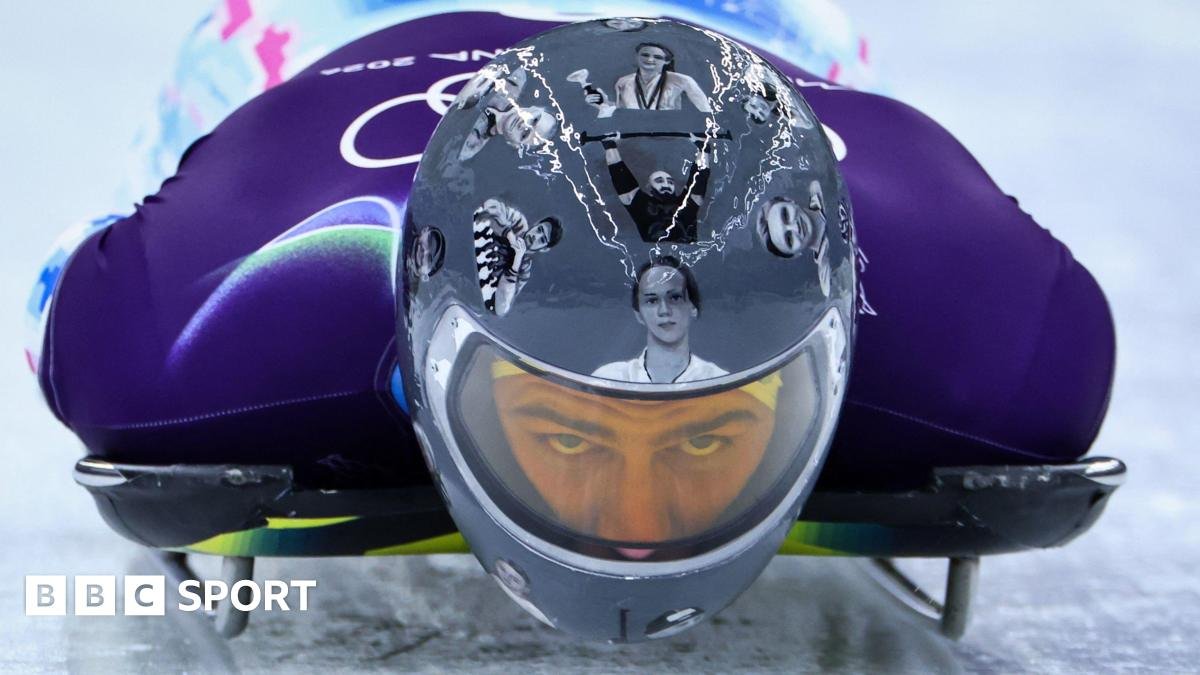
Ukrainian Skeleton Racer’s Tribute to Fallen Athletes
Vladyslav Heraskevych, a skeleton racer from Ukraine, has made headlines with his decision to wear a special helmet during competitions to honor athletes who lost their lives amid Russia’s ongoing invasion of Ukraine. Despite the International Olympic Committee (IOC) advising against it, he remains steadfast in his support, arguing that these athletes deserve recognition on the track.
Helmet of Remembrance
During a recent training session, Heraskevych donned a helmet adorned with portraits of athletes who have been killed due to the conflict. He made this choice even after being informed by the IOC that such displays are not permitted under Olympic rules. The IOC has suggested alternatives, such as wearing a black armband to express tributes.
Standing Firm Against IOC Regulations
Heraskevych expressed confidence that the IOC would not impose penalties for his actions, stating, “I believe we have every right to wear this helmet in competition because it aligns with the rules.” He humorously added, “I believe the IOC doesn’t have enough black bands to honor all of the athletes.”
IOC’s Stance on the Situation
As the situation unfolds, the IOC has yet to clarify whether sanctions will follow for Heraskevych’s decision. A spokesperson mentioned that discussing hypotheticals is unproductive and emphasized the strict adherence to Rule 50.2 of the Olympic Charter, which prohibits political, religious, or racial demonstrations at Olympic venues.
Mark Adams, the IOC spokesperson, stated that they would reach out to Heraskevych to remind him of various channels available to express his sorrow. While this athlete can showcase his helmet in mixed zones and on social media, the competition area is seen as a ‘sacrosanct’ space where rules are strictly enforced. Adams stressed the importance of allowing athletes to compete without disruption.
Honoring the Memories
Heraskevych took a moment to share the emotional weight behind his helmet. Many of the athletes depicted, such as weightlifter Alina Peregudova, boxer Pavlo Ishchenko, and ice hockey player Oleksiy Loginov, were not just acquaintances; some were his friends. He remarked, “With this helmet, we keep memories about these athletes.” He affirmed their connection to the Olympic movement, stating, “They belong to the Olympic family and deserve to be recognized.”
Previous Disqualifications and Concerns
The IOC has a history of disqualifying athletes for political displays. Notably, Afghan breakdancer Manizha Talash faced disqualification for showcasing a ‘Free Afghan Women’ message during a preliminary dance battle as part of the Refugee Olympic Team.
Conclusion
As the men’s skeleton heats approach, Heraskevych’s determination to wear his helmet symbolizes a profound tribute to fallen athletes. While navigating the regulations set by the IOC, he remains committed to honoring those who have made the ultimate sacrifice.
Key Takeaways
- Vladyslav Heraskevych is determined to wear a helmet honoring slain athletes during competition.
- The IOC has cautioned against this action but has yet to confirm any sanctions.
- Heraskevych believes the helmet aligns with Olympic rules and commemorates the legacy of friends and fellow athletes.
- The IOC has previously disqualified athletes for political messages, highlighting the ongoing conflict between personal expression and Olympic regulations.