

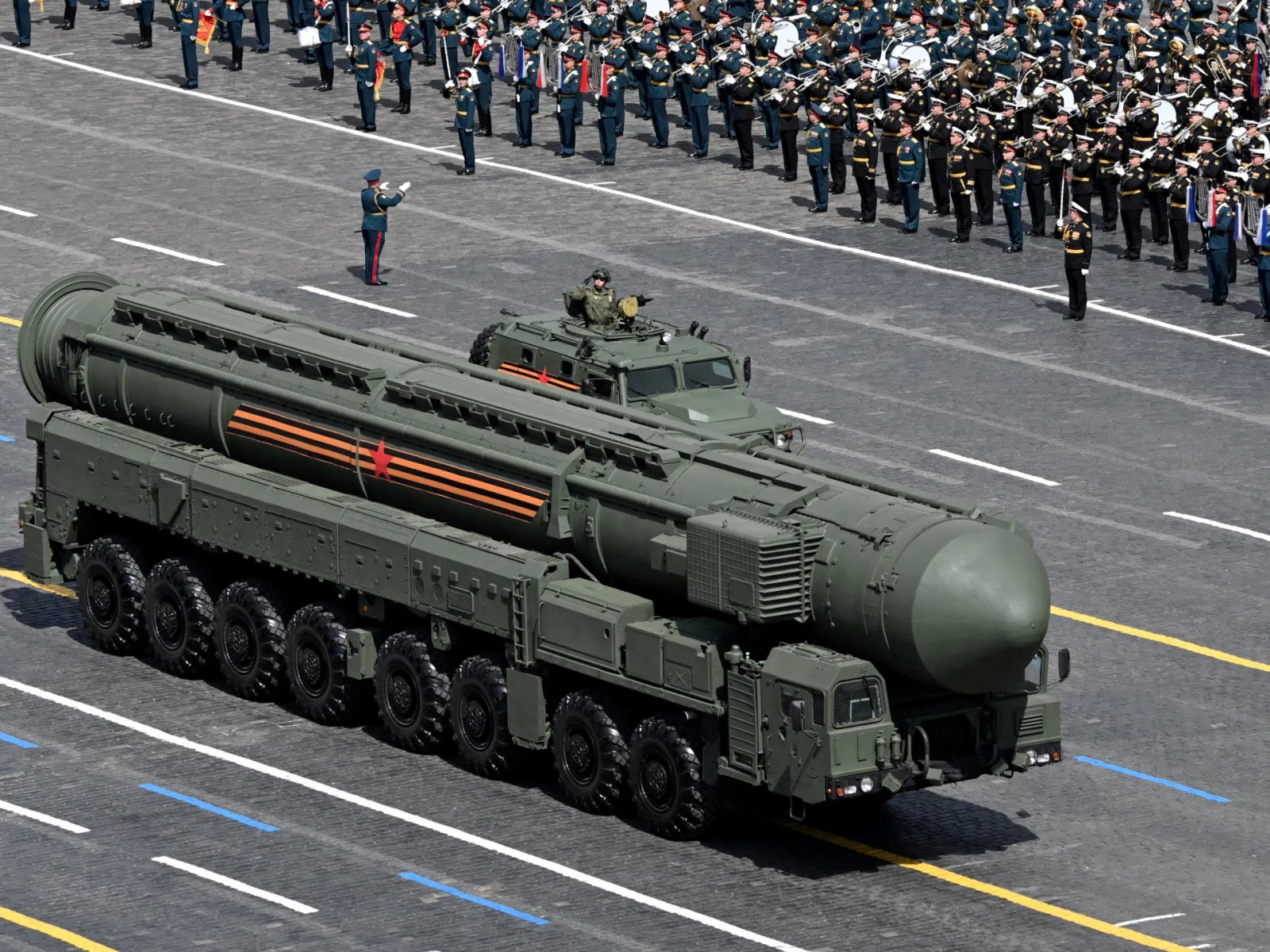
Concerns Rise as New START Treaty Nears Expiry
As the New START treaty between the United States and Russia approaches its expiration, experts are sounding alarms about the potential for a renewed nuclear arms race. This article explores the implications of the treaty’s lapse, the responses from both nations, and the broader global ramifications.
The Situation at a Glance
The New START treaty, signed in 2010, is set to expire soon, leading Russia to declare that it is “no longer bound” by the treaty’s limitations on nuclear warheads. President Vladimir Putin’s request for an extension to maintain existing missile and warhead restrictions has reportedly gone unanswered by the U.S.
Russia’s Position
In a statement from the Russian Foreign Ministry, officials indicated that Russia assumes both parties are free from the treaty’s obligations. They expressed frustration over what they perceive as a lack of U.S. engagement on the matter, stating, “This [U.S.] approach appears mistaken and regrettable.”
Understanding New START
The Strategic Arms Reduction Treaty aims to limit the arsenals of strategic nuclear weapons, which are intended to target significant political, military, and industrial sites of an adversary. The weapons and warheads covered under this treaty refer to those that are currently active and ready for immediate deployment, as opposed to those that are in reserve or decommissioned.
Potential Consequences
The conclusion of New START could enable both countries to expand their missile inventories and deploy additional warheads, albeit facing logistical and time constraints. With this shift, there are mounting concerns over a resurgence in nuclear armament.
U.S. Perspective
Former President Donald Trump has conveyed interest in establishing a new framework for nuclear arms control. In a January interview, he mentioned regarding New START: “If it expires, it expires. … We’ll just do a better agreement.” He has also advocated for including China in future discussions on nuclear strategy.
Global Reactions
The potential fallout from the treaty’s expiration has raised alarms among security analysts, who warn that the absence of this agreement could trigger an arms race, exacerbated by China’s accelerating nuclear capabilities. Matt Korda, from the Nuclear Information Project at the Federation of American Scientists, indicated that without the treaty, each side could significantly increase their arsenals, potentially doubling them in a worst-case scenario.
Appeals for Restraint
As the deadline looms, leaders worldwide are calling for continued dialogue and restraint. Notably, Pope Leo emphasized the necessity of adhering to the treaty limits during his weekly address, urging both nations not to let this critical agreement lapse. “It is more urgent than ever to replace the logic of fear and distrust with a shared ethic,” he insisted, advocating for a collaborative approach centered on the common good.
Conclusion
The impending expiration of the New START treaty not only signifies a pivotal moment in U.S.-Russia relations but also presents serious challenges for global security. As both nations reconsider their nuclear strategies, the international community watches closely, hopeful for diplomatic solutions that prioritize peace over proliferation.
- New START treaty expiration poses risks of a renewed nuclear arms race.
- Russia declares it is no longer bound by treaty limitations.
- Former President Trump shows interest in establishing new nuclear agreements.
- Global leaders advocate for continued arms control dialogue and peace.