

Tragic Train Derailment Near Barcelona Leaves One Dead and Many Injured
A recent train accident in the Catalonia region has resulted in the tragic death of a train operator and left at least 37 passengers injured, with five in critical condition. This incident, which occurred just two days after a severe collision involving two trains in southern Spain, has raised significant safety concerns. Here, we’ll explore the details of the derailment and the implications it has for rail travel in the area.
Details of the Incident
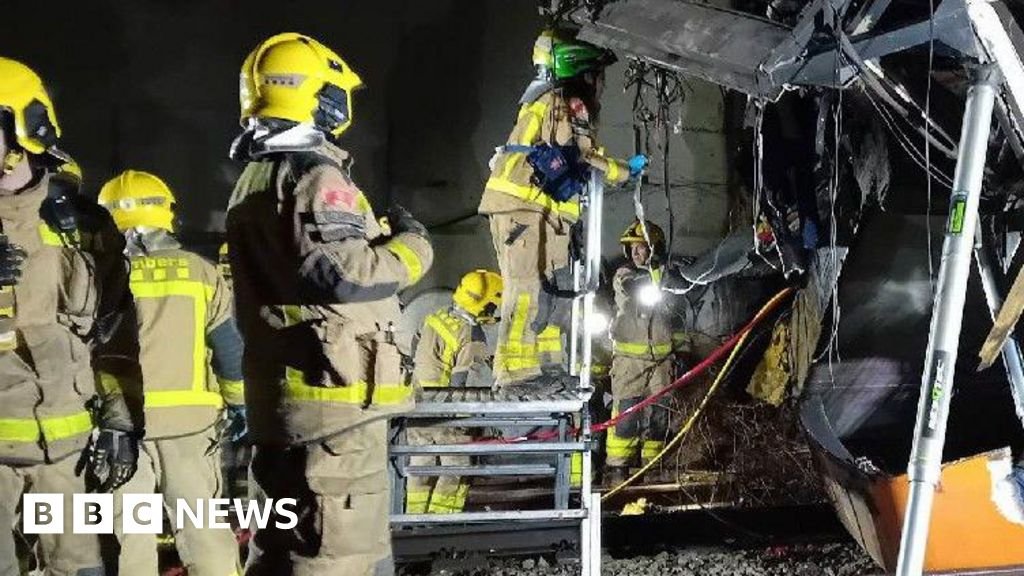
Local authorities reported that the Rodalies commuter train collided with a retaining wall that had collapsed onto the tracks between Gelida and Sant Sadurní. According to Catalonia’s regional fire inspector, Claudi Gallardo, all passengers were successfully evacuated from the train following the accident.
Conditions Leading to the Crash
The incident unfolded during a period of heavy storms that were impacting northeastern Spain. Regions along the coast were under heightened alert due to the adverse weather conditions. Rail officials suggest that the train struck the collapsed wall around 21:00 local time (20:00 GMT), impacting the driver’s cabin first and subsequently damaging the first carriage, where many of the injured were located.
Rescue and Medical Response
The identity of the train driver has not yet been confirmed, as he was accompanied by three trainees at the time of the derailment. Firefighters reported that two of these trainees were among those who suffered severe injuries. The rescue operation lasted nearly an hour for one survivor at the site in Gelida, which is about 35 kilometers (22 miles) west of Barcelona.
Emergency services transported some of the injured to several hospitals, including Moisès Broggi, Bellvitge, and Vilafranca for treatment.
Impact on Rail Services
In the wake of this accident, all services across Catalonia’s primary Rodalies commuter rail network have been completely suspended while thorough safety inspections are conducted. Officials have stated that service will not resume until they confirm the safety of the lines.
Union Response
In light of the recent tragedies, the Spanish train drivers’ union, Semaf, has announced a strike. This decision follows the deadly crashes at Gelida and a separate incident near Córdoba, where at least 42 lives were lost. A collision between two high-speed trains near Adamuz, Andalusia, marked one of the most devastating rail accidents in Spain in over a decade. During this incident, carriages from a train heading to Madrid derailed and crossed onto the opposing tracks, colliding with an oncoming high-speed train.
Causes and Concerns
Regional officials in Catalonia attribute the wall’s collapse to heavy rains that followed a prolonged period of drought. This situation has raised serious concerns regarding infrastructure safety across the rail network. In an alarming coincidence, another train within the Barcelona commuter network also derailed the same day, reported to have been caused by a rock dislodged by the storm striking its axle.
Widespread Consequences
As a result of these suspensions, approximately 400,000 commuters in the Catalonia region are expected to face significant disruptions in their daily travel, according to local reports.
Conclusion
The recent train derailments in Catalonia highlight the critical need for maintaining the safety and integrity of rail infrastructure, particularly in the face of extreme weather conditions. As investigations continue, authorities must ensure that such tragedies are prevented in the future.
- One train driver died and 37 passengers were injured in the derailment near Barcelona.
- Heavy storms and recent drought are believed to have contributed to the collapse of the retaining wall.
- Train services across the Rodalies network in Catalonia have been suspended for safety checks.
- The Spanish train drivers’ union has called for a strike in response to recent accidents.