

Tragic Train Collision in Southern Spain: Update on the Incident
A devastating train collision in southern Spain has left at least 39 people dead and many more injured. This unfortunate event occurred near Córdoba and is being recognized as the country’s most severe rail disaster in over ten years. Prime Minister Pedro Sánchez visited the site and declared a three-day period of mourning. Here’s what we know about the crash and its aftermath.
Where Did the Collision Occur?
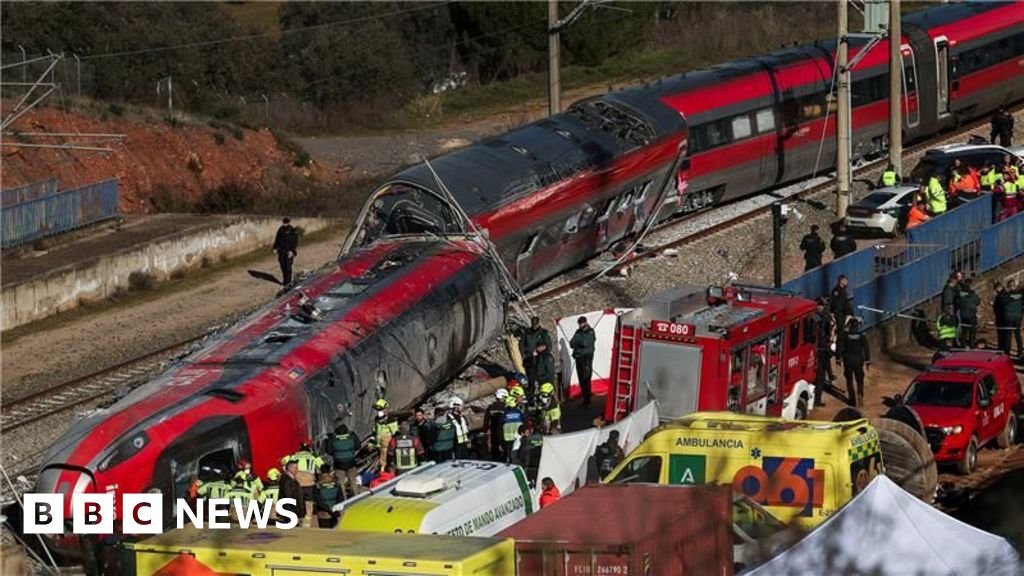
The accident happened around 19:45 local time on Sunday, shortly after one train departed from Málaga en route to Madrid. According to the train operator, Adif, one of the trains derailed and crossed onto the opposite track. It then collided with a train coming from south Madrid heading towards Huelva, which subsequently crashed into an embankment, as noted by Spain’s Transport Minister, Óscar Puente. Most casualties were reported in the front carriages of the train bound for Huelva.
What Caused the Derailment?
The precise cause of the derailment remains unknown. Officials have announced that a comprehensive investigation is underway, but no definitive conclusions are anticipated for at least a month. Minister Puente has characterized the incident as “extremely strange,” expressing that railway experts are perplexed by the situation. The president of Spain’s state-owned rail operator, Renfe, stated that he has ruled out excessive speed or human error as factors. He asserted that both trains were within the speed limits for that section of the track. Instead, Álvaro Fernández Heredia suggested that a mechanical failure or an issue with the infrastructure might be responsible for the tragedy.
Current Status of the Rescue Efforts
Rescue teams have been working tirelessly at the scene, where around 400 passengers and staff were present on the involved trains. The head of firefighters in Córdoba, Francisco Carmona, indicated that some individuals might still be trapped in twisted metal wreckage, complicating rescue operations. Heavy machinery is being awaited to assist in lifting parts of the damaged train for further assessments and to free anyone still caught inside.
Identifying the Victims
The 39 fatalities from the collision have yet to be publicly identified, and Transport Minister Puente noted that the death toll may still rise as the investigation continues. As of Monday afternoon, local emergency services confirmed that 122 individuals had received medical attention, with 48 remaining hospitalized, five of whom are minors. The local government is actively working to identify the deceased.
Survivors’ Experiences
First-hand accounts from survivors detail the horrifying moments of the crash. Passengers described the impact as resembling an “earthquake,” which shattered windows and threw belongings and people in all directions. One journalist, Salvador Jimenez, reported being in the first carriage when the train derailed and emphasized the chaos that followed, with people screaming for help. Another survivor, Lucas Meriako, recounted feeling violent vibrations before the collision, likening the experience to an impending disaster.
Conclusion
This tragic event has shaken the nation and prompted an urgent investigation into its causes. With ongoing rescue efforts, there is hope for more survivors, and the search for answers continues as the nation mourns the loss of life.
Key Takeaways
- At least 39 people have died, with many more injured in the train collision near Córdoba.
- The crash occurred shortly after one train departed from Málaga to Madrid.
- Investigations are underway, but the cause of the derailment is still unknown.
- Rescue efforts are ongoing, with heavy machinery needed to assist in the recovery process.