

Ukraine’s “Invincibility Trains”: A Beacon of Hope in Hard Times
As the cold winter grips Ukraine, the “Invincibility Trains” serve as a crucial lifeline for many, helping boost morale while providing essential relief. Stationed at a suburban railway in Kyiv, these trains are not just about travel; they are a sanctuary for those grappling with the ravages of war amidst freezing temperatures and power shortages.
Providing Comfort Amidst Chaos
At a railway station in Kyiv, two blue and white carriages stand still, their diesel engines humming as snow falls gently around them. Although these trains aren’t set to depart, they play an indispensable role in supporting countless individuals affected by the harsh winter and ongoing Russian assaults. Families and individuals gather here to escape the bitter cold and the challenges that come with it.
Finding Refuge
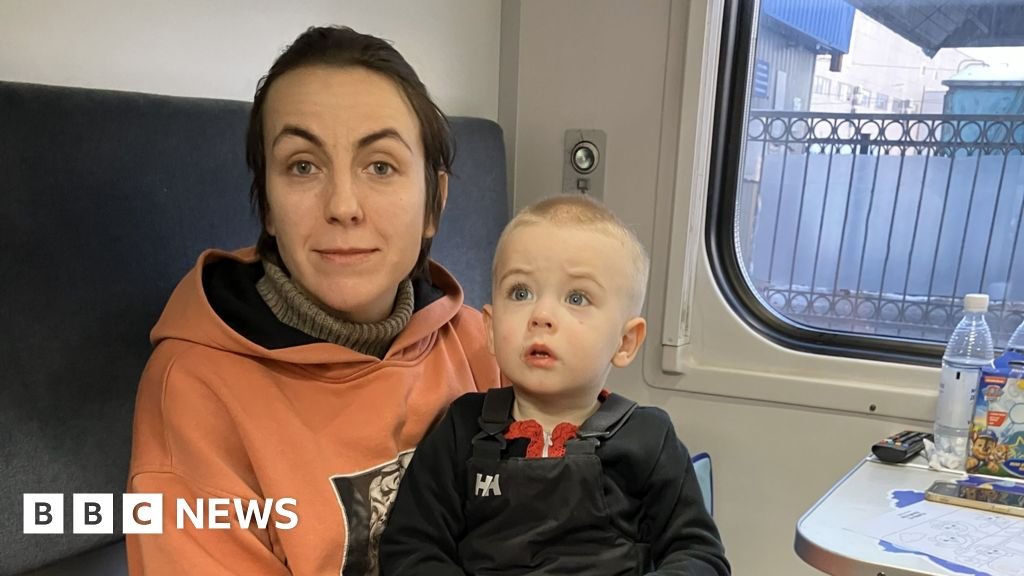
Inside one of the carriages, Alina watches her young son Taras happily playing with toys donated by various international charities. “It’s winter, and it’s quite cold outside,” she remarks, a testament to the chilling temperatures that plummeted to -19°C this week in Kyiv. Alina, who resides on the 17th floor of a modern building, shares that there is no electricity, no working elevator, and no water supply, leaving her feeling increasingly isolated.
The train provides a safe space for her children, a welcome distraction from daily hardships. Alina’s husband spends long hours working in a factory, making the train’s respite even more valuable. However, her composure falters as she remembers her father, who lost his life on the front lines two years ago. Despite her pain, she finds solace in knowing she can return to the warmth and safety of the train.
Resilience in the Face of Adversity
President Volodymyr Zelensky has critiqued Russia’s tactics, accusing them of exploiting winter to target essential infrastructures like power plants. Kyiv’s Mayor, Vitali Klitschko, recently suggested residents consider leaving the city to help alleviate the strain on limited resources. This remark sparked criticism and was perceived by some as a sign of surrender.
Challenges of Daily Life
Yet, the spirit of the Kyiv residents remains steadfast. Families like Yulia, Ihor, and their son Markiian face the bitter cold by heating bricks on a gas stove in a temporary apartment, having moved from their own home, which sustained damage in an earlier Russian attack. “We’ve had electricity today for only a few minutes,” Ihor laments, bordering on desperation.
With this severe winter, the couple admits that their apartment gets cold quickly. They plan to temporarily leave Kyiv, not solely due to the energy crisis but also as a precaution against ongoing dangers from the conflict which recently affected an adjacent apartment building.
The Energy Crisis Intensifies
With over three million residents, Kyiv grapples with chronic energy shortages exacerbated by frequent Russian airstrikes. The city faced significant power outages, with recent attacks leaving hundreds of buildings without electricity for extended periods. This winter has proven to be the toughest yet, according to experts, with repairs becoming increasingly complex due to icy conditions hindering restoration efforts.
Engineering Efforts Under Duress
Throughout Kyiv, engineers are working diligently to repair the damages inflicted by continuous strikes. On a particularly frigid morning, teams use mechanical equipment and their hands to locate and fix broken power cables. As demand for electricity surges when supply returns, the city authorities remind residents to conserve energy to prevent further outages.
Despite challenges, one engineer, Andrii Sobko from Kyiv Electric Networks, acknowledges that what they’re doing is only a temporary fix. “It will take years to fully recover. We’re operating under emergency conditions to ensure residents have at least some power,” he shared.
Voices of the Next Generation
Among those seeking warmth onboard the “Invincibility Train” is eleven-year-old Stanislav, who shares how the conflict has affected his childhood. He recalls the initial day of war vividly and admits, “I can’t really remember life before the war; it’s been difficult.” As he mingles with friends, he expresses the anxiety he feels from the ongoing threat of drone attacks, a reminder of their harsh reality.
The Community Spirit
Many people from different walks of life gather at the train, connecting over shared experiences and mutual support. Just as an elderly woman reflects on the war’s toll, the sound of air raid sirens fills the air, prompting the conductor to direct everyone to seek shelter.
Looking Ahead
As citizens return home to the cold and uncertainty, they display remarkable resilience. While this merciless winter will eventually subside, the underlying fear is that the war itself will continue, bringing ongoing loss and hardship. The “Invincibility Trains” symbolize hope and community spirit even amidst adversity.
Key Takeaways
- The “Invincibility Trains” provide essential support and comfort during harsh winter months in Ukraine.
- Residents are facing severe challenges, including power shortages and infrastructure damage due to ongoing conflict.
- Community resilience shines through as families adapt and support each other amidst dire circumstances.
- Despite improvements in living conditions temporarily alleviated by these train services, the uncertainty of the ongoing war looms larger.