

Russia’s Oreshnik Missile Strike: A New Wave of Attacks on Ukraine
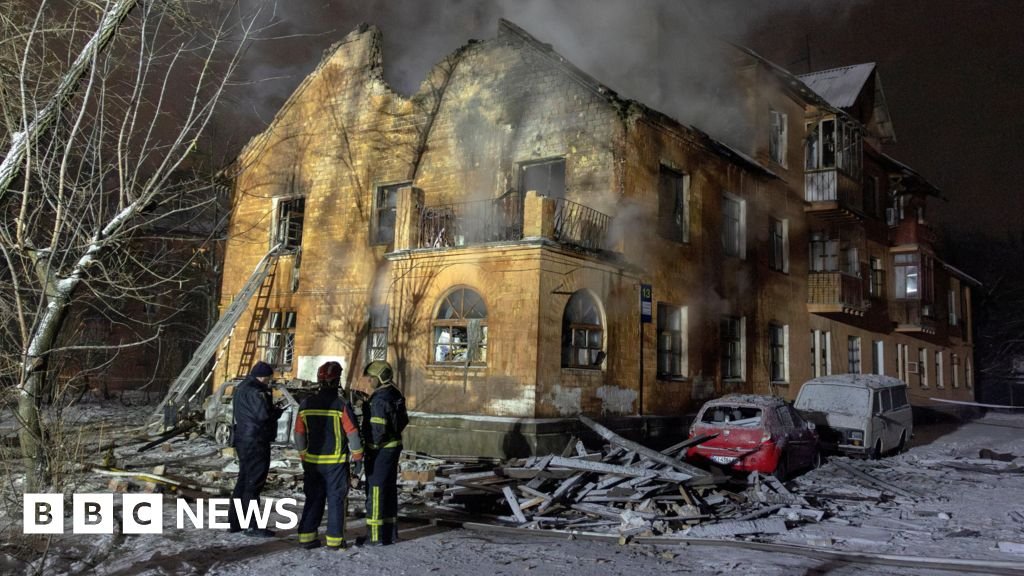
In a dramatic escalation of hostilities, Russia unleashed the Oreshnik ballistic missile during a massive overnight assault on Ukraine. The attack resulted in the tragic loss of four lives and left 25 people injured in Kyiv. For hours, the night sky was illuminated by explosions, echoing through the city as the situation unfolded.
Background of the Oreshnik Missile
This latest assault marks only the second usage of the Oreshnik missile, which was initially deployed in November 2024 against the central city of Dnipro. The Russian defense ministry claimed that the strike was a direct response to a Ukrainian drone attack allegedly aimed at President Vladimir Putin’s residence in late December—a claim that Kyiv firmly denies.
Details of the Attack
Although Russian officials did not disclose specific targets for the Oreshnik missile, videos began circulating on social media shortly before midnight, showcasing a series of explosions in the western city of Lviv. President Volodymyr Zelensky confirmed that a ballistic missile had indeed struck critical infrastructure in Lviv, approximately 60 kilometers (40 miles) from Poland.
Understanding the Oreshnik
The Oreshnik is classified as an intermediate-range, hypersonic ballistic missile, capable of striking targets up to 5,500 kilometers (3,417 miles) away. Its warhead is designed to fragment during the final descent, dispersing multiple projectiles and generating repeated explosions that wreak havoc on the ground.
“Such a strike near the EU and NATO border poses a serious threat to security across the European continent and serves as a challenge to the transatlantic alliance,” remarked Ukrainian Foreign Minister Andrii Sybiha. Referring to the purported drone attack on Putin’s residence, he stated that the missile launch was motivated by “Putin’s own hallucinations.” Additionally, the European Union has expressed skepticism about the occurrence of the alleged drone strike.
A Warning to the West
Kaja Kallas, the EU’s foreign policy chief, emphasized that Russia’s use of the Oreshnik missile is intended as a warning to both Europe and the United States. “Putin is not seeking peace; instead, Russia’s response to diplomatic efforts is more missile launches and destruction. This cycle of major Russian strikes will persist until we assist Ukraine in breaking it,” she stated on social media.
The Broader Impact
In addition to the Oreshnik missile, an extensive nighttime operation involved 13 ballistic missiles targeting energy facilities and civilian infrastructure, along with 22 cruise missiles and 242 drones. Among the damage reported was the impact on a building at the Qatari embassy. Zelensky condemned these attacks as deliberate disruptions to the lives of everyday citizens amidst a severe winter, stressing that efforts are underway to restore heating and electricity.
Tragedy in Kyiv
As Kyiv grappled with these strikes, the city faced a barrage of missiles and drone deployments. Among the fatalities was a paramedic responding to scenes of destruction. The mayor of Kyiv, Vitali Klitschko, described the incident as a “double-tap” strike, where an initial attack is followed by subsequent strikes to target rescue teams that arrive to aid victims.
Aftermath and Response
The following morning, cleanup operations began as many unaffected businesses resumed their daily operations. A coffee shop located just floors below a devastated apartment building was open for customers, while remnants of a Russian drone lay scattered on the pavement outside. In a quiet residential area, the scar left by a missile on the 11th floor of an apartment building stood out starkly.
Amidst harsh winter conditions, Kyiv’s neighborhoods experienced power supply disruptions, complicating efforts to keep homes warm as temperatures were expected to plummet to -15°C (5°F). Mayor Klitschko urged residents to temporarily evacuate to find warmth if possible, citing the significant damage to the city’s critical infrastructures and the extensive impact on heating systems.
Cycle of Attacks
The targeting of power plants has become a regular aspect of the ongoing conflict. In response to the sustained assaults on its energy infrastructures, Ukraine is increasingly targeting Russian facilities. As the assault on Ukraine continued on Thursday night, reports emerged that half a million individuals in the Russian region of Belgorod were left without power due to Ukrainian shelling.
Conclusion
The recent missile strikes highlight the continuing volatility and danger of the conflict between Russia and Ukraine. As military operations escalate, the ripple effects are felt not only in Ukraine but across Europe and beyond. The call for support and intervention in response to these attacks grows louder as the humanitarian crisis deepens.
Key Takeaways
- Russia’s Oreshnik missile was utilized in a significant strike on Ukraine, resulting in casualties and damage.
- The ongoing attacks reflect a strategy of targeting critical infrastructure during winter.
- Ukrainian officials warn that these strikes are aimed at disrupting civilian life and pose a threat to Europe.
- The conflict continues to escalate, impacting not only Ukraine but also neighboring regions through military responses.