

UK Advances Military Support for Ukraine Amid Rising Tensions
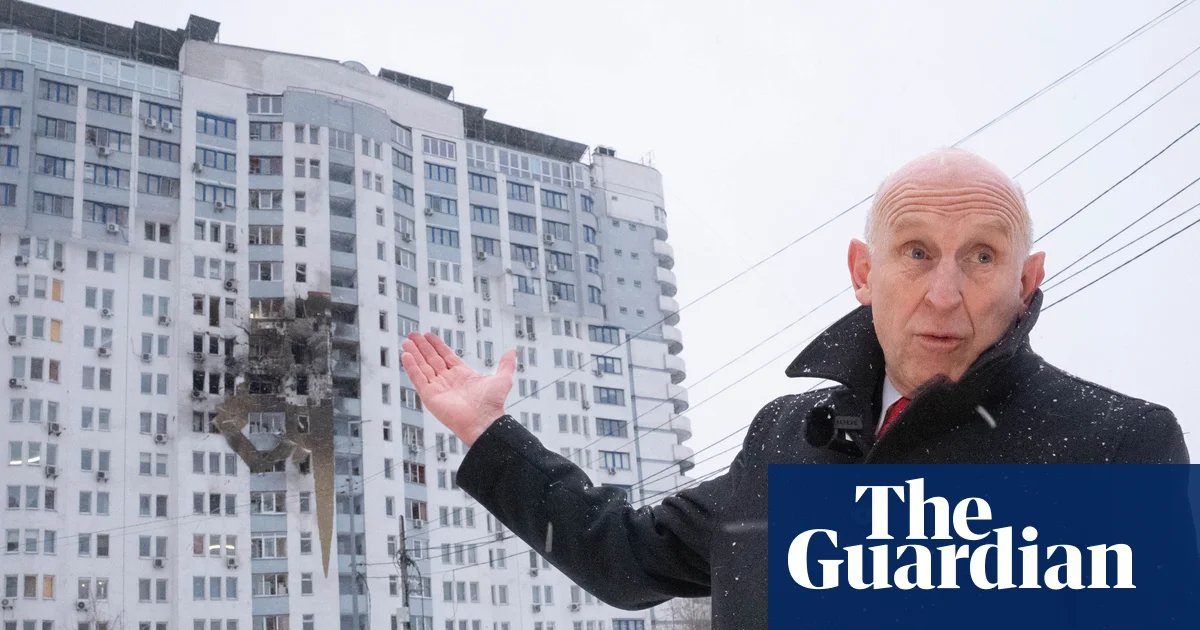
The United Kingdom has announced a significant £200 million (approximately $270 million) allocation aimed at bolstering preparations for a potential troop deployment to Ukraine. This funding comes in the wake of a recent commitment made by British soldiers to join a multinational force for Ukraine should a ceasefire be established. During his visit to Kyiv, British Defence Minister John Healey revealed that the money will be directed towards enhancing military vehicles, communication systems, counter-drone measures, and ensuring troops are fully prepared for deployment. This announcement follows a declaration of intent made earlier this week by leaders including Keir Starmer, Emmanuel Macron, and Volodymyr Zelenskyy at a summit involving Ukraine’s allies, which outlined potential future troop deployments.
Escalation in Conflict: A Large-Scale Attack
In a worrying development, Russia launched a substantial assault on Ukraine, utilizing hundreds of drones and numerous missiles overnight. This marked the second occasion during the nearly four-year-long conflict that Russia deployed a new hypersonic missile, targeting western Ukraine and sending a clear signal to NATO allies. Ukrainian officials reported that the attack involved a total of 242 drones and 36 missiles, including the Oreshnik missile, impacting key infrastructure in the Lviv region and around Kyiv.
International Responses and Calls for Action
In light of these developments, Ukrainian Foreign Minister Andrii Sybiha has indicated that Ukraine will seek international action in response to the missile strike. This includes an urgent meeting of the UN Security Council and a session of the Ukraine-NATO Council. “Such strikes near EU and NATO borders represent a severe threat to security on the European continent and pose a challenge for the transatlantic community. We demand robust responses to Russia’s reckless actions,” Sybiha emphasized in a statement.
President Zelenskyy further highlighted the proximity of these strikes to EU nations, urging neighboring countries such as Poland, Romania, and Hungary to recognize the escalating dangers. “From a medium-range ballistic perspective, this poses the same challenge to Warsaw, Bucharest, Budapest, and several other capitals. We must all acknowledge this threat seriously,” he warned in his nightly address to the nation.
Leaders Unite Against Escalation
In a show of solidarity, the leaders of the UK, France, and Germany discussed the recent attacks, condemning them as “escalatory and unacceptable.” According to a communication released by Starmer’s office, EU Foreign Policy Chief Kaja Kallas remarked that the launch of the Oreshnik missile was intended to send a warning to both Europe and the United States. “Putin’s response to diplomatic gestures is more missiles and destruction,” Kallas stated on social media.
German Chancellor Friedrich Merz expressed a similar sentiment, asserting that these threats are designed to induce fear but will not succeed. “We stand firmly with Ukraine,” he affirmed. The UN Secretary-General Antonio Guterres also voiced strong condemnation regarding Russian attacks on civilian infrastructure, emphasizing the humanitarian impact of these actions.
The Human Cost of Conflict
In Kyiv, the aftermath of the attack has been devastating, with reports of four fatalities and at least 25 injuries, including emergency medical personnel. The city’s military administration head, Tymur Tkachenko, noted that among the deceased was a medical aid worker, while four doctors and a police officer sustained injuries during their response efforts.
President Zelenskyy condemned the assault, noting that 20 residential buildings were affected, including damage to the Qatari embassy. Qatar expressed its distress over the incident but confirmed that none of its personnel were harmed. Russia has denied targeting the embassy, claiming instead that it was struck by a Ukrainian air defense missile.
Impact on Basic Services in Kyiv
The ramifications of the strikes extended beyond immediate casualties. Mass heating outages have left nearly half of Kyiv’s apartments—around 6,000 units—without warmth as temperatures are expected to plummet further below freezing. Mayor Vitali Klitschko has urged residents to consider temporarily leaving the city to avoid the harsh conditions, with daytime temperatures at approximately minus 8 degrees Celsius (17.6 degrees Fahrenheit). Water supply disruptions have compounded the difficulties faced by residents.
New Maritime Attacks
In addition to the attacks on land, Ukraine reported that Russian forces had struck two cargo ships off the southern coast in the Black Sea. Tragically, one Syrian crew member was killed during these assaults. One of the vessels was preparing to load grain at the Chornomorsk port, while the other, transporting soybeans, was hit near the Odesa port, as communicated by Restoration Minister Oleksiy Kuleba.
Conclusion
The current situation in Ukraine remains critical as both military and civilian targets face significant threats from ongoing attacks. The UK’s latest funding commitment underscores the importance of international unity and support for Ukraine during these challenging times.
- The UK has allocated £200 million for military preparations in support of Ukraine amid rising tensions.
- Russia launched a large-scale attack using drones and missiles, including a hypersonic missile.
- International leaders condemned the attacks, calling for strong responses to Russia’s aggression.
- Kyiv faces severe heating outages amid a harsh winter following the assault on civilian structures.