

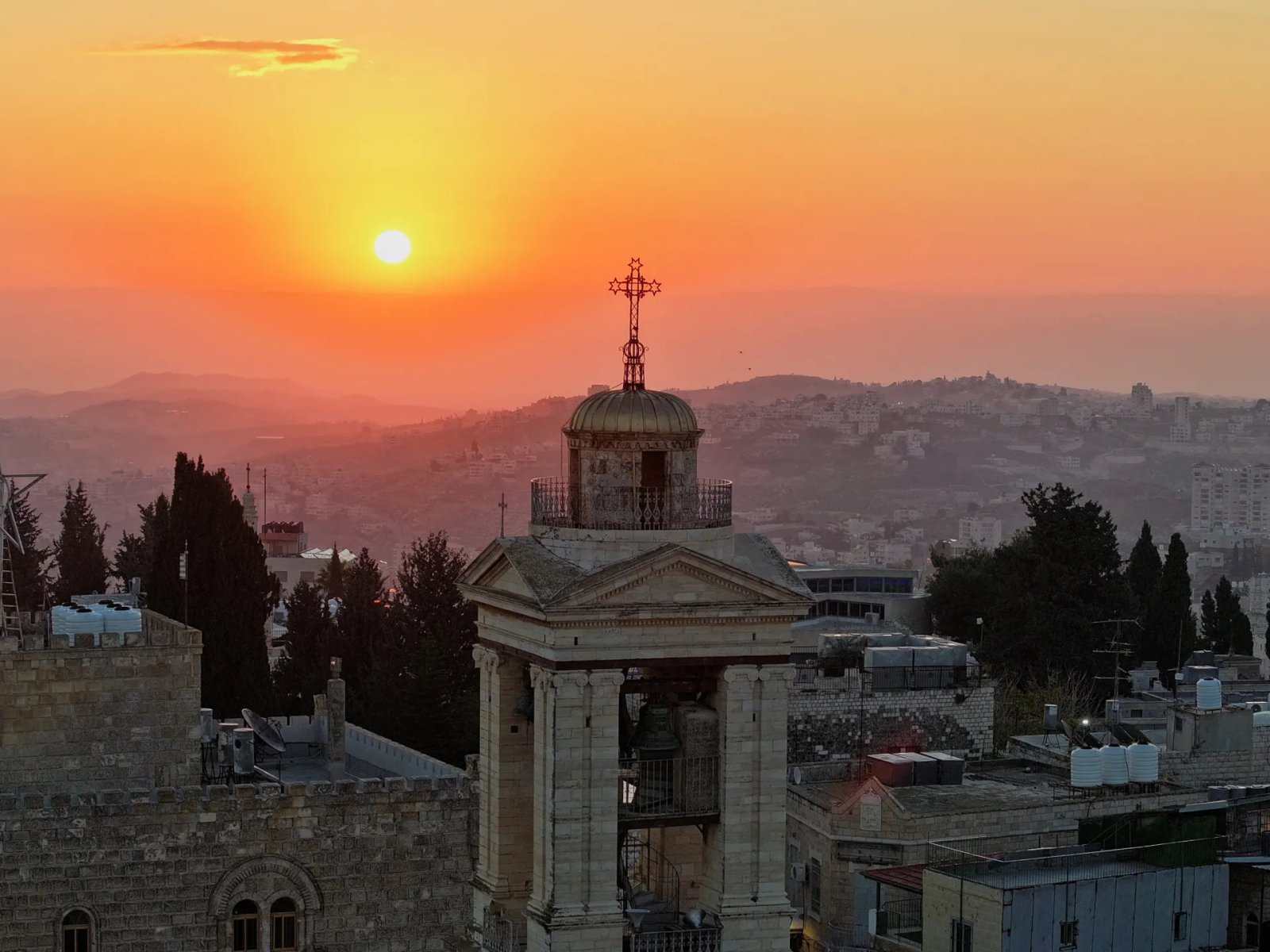
The Real Message of Christmas: A Perspective from Bethlehem
As December rolls around, many in the Christian world find themselves wrapped up in a cycle of traditional celebration: festive carols, glowing lights, decorated trees, and a surge in consumer activity. In conversations across the United States and Europe, phrases like “Western Christian values” and “Judeo-Christian civilization” frequently come up, leading many to believe that Christianity is fundamentally a Western phenomenon—something intrinsic to European culture, history, and identity. However, this perspective is a misunderstanding of the religion’s true origins.
Christianity’s Roots
Christianity has always been a religion deeply rooted in West Asia and the Middle East. Its culture, worldview, and foundational narratives are intricately tied to these regions, much more akin to the social landscapes of current-day Palestine, Syria, Lebanon, Iraq, and Jordan than anything seen in Europe. Moreover, even Judaism, often referenced in conjunction with the term “Judeo-Christian values,” has its own Middle Eastern heritage. Essentially, while the West embraced Christianity, it certainly didn’t originate there.
The Real Story Behind Christmas
Perhaps the most striking contrast between Christianity’s origins and its modern Western expression is exemplified in the celebration of Christmas—the narrative revolves around the birth of a Palestinian Jew, a child born long before the advent of contemporary borders or nation-states.
The Commercialization of Christmas
In Western society, Christmas has morphed into a cultural marketplace, heavily commercialized and adorned with layers of sentimentality. The act of giving gifts overshadows any genuine concern for those in need. Today, the holiday is often celebrated as a performance of nostalgia and abundance, stripped of its original theological significance.
The True Nature of Jesus’ Birth
Even the cherished lyrics of the Christmas carol “Silent Night” can obscure the reality of Jesus’ arrival into the world: He was born not into tranquility but into chaos. Born under military occupation, Jesus’ family was forced to navigate displacement due to an imperial edict, while violence loomed large over their lives. The Gospel accounts reveal that, fearing his reign, a tyrant ordered the massacre of infants in Bethlehem. This unsettling narrative remains alarmingly relevant even today.
Bethlehem: A Town in Conflict
For many in the West, Bethlehem, where Jesus was born, exists more as an abstract concept—an idyllic village from biblical times—rather than a lively city filled with real people experiencing complex lives. Today, Bethlehem is surrounded by walls and checkpoints established by an occupying force, with residents living under a system of apartheid that restricts their movement. Many feel isolated, not only from Jerusalem—which they are often barred from visiting—but also from a global Christian community that cherishes the historical Bethlehem yet frequently overlooks its present circumstances.
Modern Disconnection
This sense of disconnect explains why many in the West, while joyfully celebrating Christmas, seem indifferent to the lives of Bethlehem’s current inhabitants. Tragically, some theological and political views effectively erase or dismiss the reality of Palestinian Christians to uphold their support for Israel. In this context, the revered image of ancient Bethlehem contrasts starkly with the modern hardships faced by its residents, an inconvenient reality often ignored.
The Bethlehem Christmas Experience Today
Understanding Christmas through the eyes of Palestinian Christians reveals profound insights. What does Christmas mean for this small community that has held onto its faith for two thousand years? At its core, it embodies the message of God’s solidarity with humanity. God’s incarnation signifies a radical choice to dwell among those who live in vulnerability and poverty, standing with those oppressed by empires.
Divine Solidarity
In the narrative of Bethlehem, God does not identify with the powerful, but rather aligns with the marginalized. Rather than coming as a ruler, God arrives as a defenseless infant, born not in luxury but in a humble manger. This striking divine solidarity serves as a powerful reminder of God’s choice to be present with the most vulnerable.
A Reflection of Palestinian Struggles
For Palestinian Christians today, this message is not just theology; it encapsulates their reality. The census that compelled Mary and Joseph to travel mirrors the restrictive permits and checkpoints that govern everyday lives in the region. The holy family’s flight into exile resonates with the plight of countless refugees fleeing conflict. The violence experienced in the ancient story parallels the ongoing challenges faced by Palestinians today.
A Message of Resilience
This Christmas, Bethlehem celebrates for the first time after two years of silence due to public health concerns. Though the past years have been painful, canceling celebrations felt necessary amidst the ongoing tragedy in Gaza. For us, celebrating Jesus’ birth while children his age perish in conflict would be impossible. Our continued observance of the season, then, is an act of resilience—an assertion of our existence, a claim that Bethlehem remains the birthplace of Christmas and its story must endure.
Invitation to Remember
As political discourse often uses Christianity as a cultural identifier—frequently sidelining those who first inhabited this faith—now is the time to revisit the story’s roots. This Christmas, we invite the global Christian community, especially those in the West, to remember Bethlehem not as a distant memory, but as a living reality where people still strive for justice, dignity, and peace. Acknowledging Bethlehem is acknowledging that God stands with the oppressed, and that all followers of Jesus are called to do the same.
Key Takeaways
- Christianity has its roots in the Middle East, not in the West.
- The commercialization of Christmas often overshadows its theological significance.
- Modern Bethlehem is a place marked by conflict and struggle, not just a historical site.
- Celebrating Christmas is an act of resilience for Palestinian Christians today.