

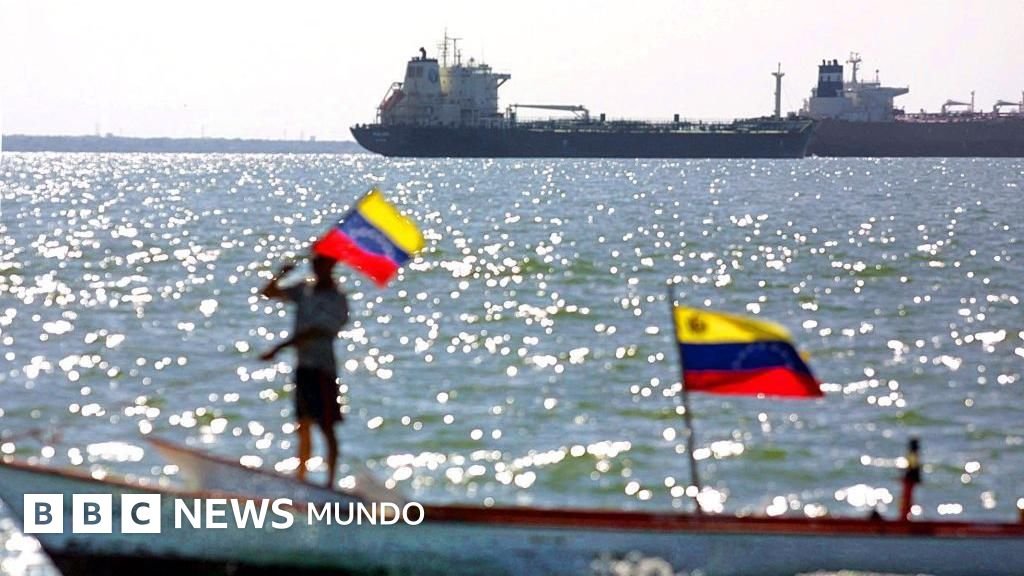
Impact of Venezuela’s Oil Blockade: What You Need to Know
For Venezuela, oil is not just an export commodity; it is the cornerstone of its economy and the primary source of revenue used to import essential goods such as food and medicine. With this in mind, the recent announcement by US President Donald Trump regarding a “total and complete” blockade against sanctioned oil tankers entering or leaving Venezuela could have far-reaching implications, potentially affecting the Venezuelan population at large, not just the government of Nicolás Maduro. Experts are cautioning that such a drastic measure could counterintuitively impact American interests.
The Nature of the Blockade
Trump revealed this decision on social media, accusing Maduro’s government of utilizing “stolen” oil to finance activities linked to “narcoterrorism, human trafficking, murders, and kidnappings.” This announcement came just a week after a US operation seized a tanker off the Venezuelan coast, which the Caracas government condemned as a “brazen theft” and “an act of piracy.”
In a follow-up post, Trump stated that Venezuela is “entirely surrounded by the largest navy ever assembled in South America,” and hinted at an increasing military presence like never seen before.
Venezuela’s Oil Reserves
Venezuela holds the world’s largest proven oil reserves, but it has condemned this blockade as a “grotesque threat,” asserting that it aims to “steal” the nation’s wealth. Since September, the US has significantly bolstered its military presence in the Caribbean near Venezuela, deploying over 15,000 personnel and the USS Gerald R. Ford, the world’s largest aircraft carrier. Alongside this, the US military has conducted numerous airstrikes against vessels in the Caribbean and Eastern Pacific, resulting in at least 95 casualties.
Potential Ramifications
According to Trump, the goal of this military campaign is to combat drug trafficking in the region, linking Maduro to the notorious “Cartel de los Soles.” However, analysts suggest that the blockade might also serve as a strategy to instigate regime change in Venezuela.
Current Oil Production and Economic Challenges
Venezuela currently produces around 1 million barrels of oil daily, which accounts for about 1% of global production—a striking contrast to over 3 million barrels per day back in 1998, just before the rise of Maduro’s political mentor, Hugo Chávez. This significant decline is attributed to a mix of poor management, lack of investment, skilled labor shortages, corruption, and international sanctions. As a result, the immediate impact of a blockade on the global oil market is expected to be limited; however, the repercussions for ordinary Venezuelans could be much more severe.
The Humanitarian Crisis
When Trump implemented strict economic sanctions against Venezuela in 2018, it exacerbated an already dire economic and humanitarian crisis. The International Monetary Fund (IMF) estimated that Venezuela’s economy contracted by roughly 15% that year, marking one of the steepest downturns in its recent history. Christopher Sabatini, a senior researcher for Latin America at Chatham House, warned that the newly announced blockade could be even more devastating if maintained, suggesting that the hyperbolic language Trump utilized might not provoke the intended backlash against Maduro’s inner circle.
Consequences of the Blockade
With over 30 sanctioned vessels operating in Venezuela, there are mounting concerns. Recent reports from independent organization Transparency Venezuela indicated that 41% of the oil tankers operating off the Venezuelan coast were sanctioned vessels as of November.
Furthermore, Tanker Trackers noted that around 37 vessels on the US sanctions list were active in Venezuelan waters earlier this month. Economist Francisco Monaldi, who leads the Latin America Energy Program at Rice University’s Baker Institute in Houston, stated that this blockade would likely force Maduro’s government to offer deeper discounts on oil sold through informal channels, further jeopardizing state revenues. As a result, inflation is expected to rise along with a probable decline in GDP.
Political Repercussions for Trump
Experts are cautioning that this blockade may also backfire politically for Trump. If the measure fails to displace Maduro’s regime and ordinary Venezuelans find themselves suffering the consequences, many could blame both the opposition and Trump for worsening the crisis. An increase in poverty is likely to trigger a new wave of migration—potentially towards Latin American countries and the United States. The UN estimates that approximately 7.7 million Venezuelans have fled the country amid this ongoing crisis, marking one of the most significant migration challenges globally.
American economist Mark Weisbrot of the Center for Economic and Policy Research warns that prolonged sanctions could politically disadvantage Trump, as nearly 90% of Venezuela’s foreign currency comes from oil exports. A blockade of this magnitude could lead to escalating poverty and migration, raising the stakes for Trump as the midterm elections approach.
Conclusion
The impending blockade against Venezuela’s oil sector could have profound implications both for the Venezuelan people and for U.S. foreign policy. While aiming to combat Maduro’s regime, the move may inadvertently intensify humanitarian suffering and prompt political fallout for Trump as more Venezuelans seek refuge abroad.
Key Takeaways
- The new blockade against Venezuelan oil tankers has far-reaching implications for the economy and populace.
- Venezuela’s oil production has drastically decreased from over 3 million barrels per day to around 1 million.
- Experts warn that sanctions could exacerbate poverty and lead to increased migration from Venezuela.
- This blockade may have significant political consequences for the Trump administration in the upcoming elections.