

US Offers Security Guarantees to Ukraine Amid Ongoing Peace Talks
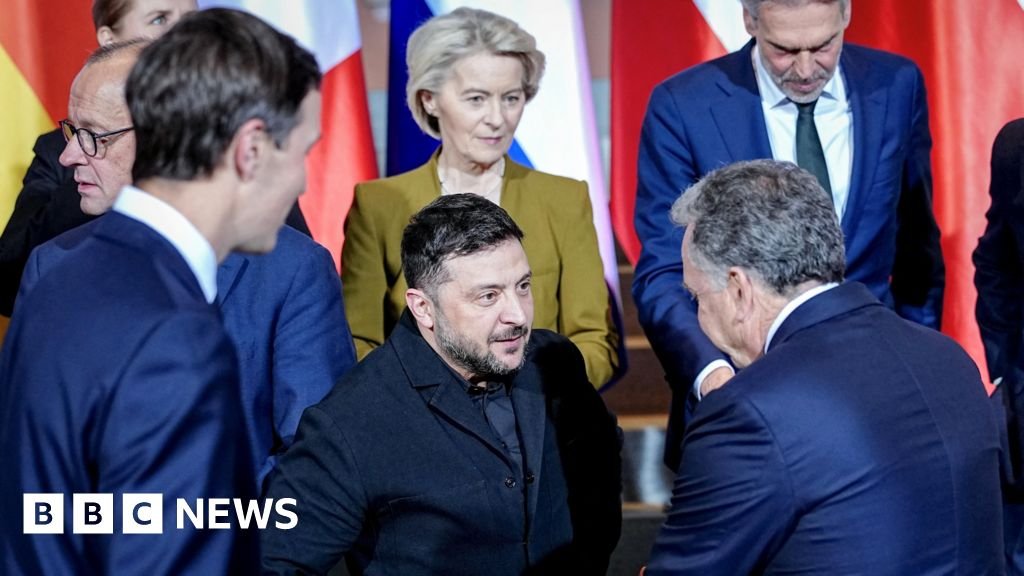
The United States has expressed its readiness to provide Ukraine with security guarantees similar to those offered by NATO. This development follows discussions held in Berlin with European officials and a delegation from Kyiv. These robust guarantees are designed to support a potential ceasefire and ensure Ukraine’s safety, with US officials hoping to attain Russian agreement on the matter.
Security Guarantees and Peace Negotiations
During these discussions, US representatives emphasized progress towards concluding the conflict; however, specifics about resolving Ukraine’s sovereignty remain unclear. Ukrainian President Volodymyr Zelensky characterized the meeting as “productive” yet challenging, highlighting the necessity for a “clear understanding of security guarantees” before making decisions on more controversial topics.
Ukraine has long stressed the importance of solid guarantees to ensure that Russia adheres to any ceasefire terms and refrains from future attacks. US officials described the proposed security guarantees as the “platinum standard,” while expressing urgency, indicating that this offer would not be available indefinitely.
Shifts in NATO Ambitions
In a notable shift, Zelensky indicated that he might compromise Ukraine’s aspirations to join NATO as part of a broader agreement for robust security assurances. Despite advances in discussions about security, the issue of the Donbas region continues to pose significant challenges.
The Donbas Stalemate
The US has proposed the creation of an “economic-free zone” in contested areas of the Donbas, although this would require Ukraine to withdraw from regions it currently controls, while Russia would likely retain its foothold. “It seems to me that [the US and Ukraine] so far have different positions, to be honest,” stated Zelensky, reflecting the complexities of the negotiations.
US officials noted that if the terms of the proposed economic zone could be clearly defined, the parties involved would then need to address the final aspects of sovereignty. Nevertheless, significant disparities remain between Moscow and Kyiv regarding the Donbas, with Russia seeking full control and Ukraine steadfastly rejecting any such demand.
Next Steps and Continued Talks
Washington is prepared to present this security package for Senate approval. President Donald Trump, addressing the situation from the White House, remarked on his discussions with Zelensky and European leaders, expressing optimism that the parties are closer to a peace deal than ever before.
German Chancellor Friedrich Merz, who facilitated the Berlin discussions, echoed Trump’s sentiments, stating, “This is the first time a ceasefire is conceivable,” and welcomed the US security guarantees as “remarkable.” Further negotiations involving European leaders and Ukrainian and US representatives are scheduled to continue.
Addressing Ukraine’s Crisis
At the core of these talks lies Ukraine’s comprehensive 20-point peace plan, recently presented to the US to counter an initial proposal perceived as overly favorable to Russia. While specifics are still under wraps, Zelensky referred to the points as foundational for Ukraine’s reconstruction and security provisions.
Any agreement reached among Ukrainian, American, and European parties must still be conveyed to Moscow. Zelensky noted that the US delegation would represent signals and demands from the Russian side during discussions. The Kremlin anticipates receiving a formal outline of the concepts discussed on Monday.
Continuing Challenges and EU Support
The ongoing negotiations occur at a critical moment for Ukraine, which is currently facing its fourth winter of conflict, exacerbated by widespread power outages following strikes on energy facilities. Over the weekend, millions of Ukrainian homes were left without electricity. Zelensky expressed concern, stating there was not a “single functioning power station” that had escaped attacks.
Moreover, the European Union is set to vote on a proposal to utilize €90 billion in frozen Russian assets to support Ukraine’s economy. Despite an agreement to indefinitely immobilize these assets, there is yet to be a consensus regarding their transfer to Ukraine. Opposition from Belgium and recent assertions from other countries, including Italy, calling for alternative options, reflect the complexity of the situation. EU foreign policy chief Kaja Kallas acknowledged the growing difficulties in the discussions yet remained hopeful as they continue in the days ahead.
Conclusion
The dialogue in Berlin represents a significant step in the quest for peace in Ukraine, as US security guarantees offer a potential path toward resolution. While challenges remain, the focus on both security and economic stability marks a crucial juncture in addressing Ukraine’s enduring crisis.
Key Takeaways
- The US is offering NATO-like security guarantees to Ukraine to support a ceasefire.
- President Zelensky has expressed willingness to compromise Ukraine’s NATO ambitions for strong security assurances.
- The situation in the Donbas region remains contentious and unresolved, with differing positions between Russia and Ukraine.
- Ongoing EU discussions aim to utilize frozen Russian assets to bolster Ukraine’s economy amid ongoing power outages.