

Ukraine’s Ongoing Struggles Amid Russian Aggression
Ukraine is facing escalating tensions as President Volodymyr Zelenskyy reveals that the country did not receive any warning from the United States prior to a recent Russian missile attack. This incident has raised concerns over whether the U.S. is withholding crucial intelligence to pressure Ukraine into a compromise with Moscow. In this article, we delve into the details of the attack, the reactions from Ukrainian officials, and the broader implications for Ukraine’s ongoing defense efforts.
Missile Attacks and Warnings
On Sunday evening, Ukrainian air force spokesperson Yuri Ihnat confirmed that there was no advanced warning before Russian missiles struck power infrastructure in Kyiv around 11 PM. This assertion was echoed by a Ukrainian government official who stated that the U.S. had not alerted the capital about the impending threat.
However, Ihnat noted that a warning was issued before a follow-up strike that occurred at 3 AM. Zelenskyy took to social media the following morning, expressing his frustration at the lack of notifications, particularly during Russia’s multiple missile attacks throughout the night.
“When the supply of missiles for Ukrainian air defence is blocked, and Russia receives sanctions relief or delays, it is, unfortunately, a denial of reality on the part of our partners,” Zelenskyy stated.
U.S. Political Maneuvering
Recent U.S. political decisions have complicated Ukraine’s situation. Former President Donald Trump recently waived significant sanctions aimed at Russia, claiming it was in the national interest. This has led to significant delays in the delivery of essential military equipment to Ukraine, such as PAC-3 air defense missiles. Trump suggested that his negotiations for peace are prioritized over military strategies, commenting on Zelenskyy’s approach to the conflict.
Statements from U.S. Officials
On a trip to Uzbekistan, U.S. Secretary of State Marco Rubio commented ambiguously on the failure of the early warning system that resulted in the missed alerts. While Rubio did mention that a software issue had occurred, this has not been confirmed by previous U.S. remarks regarding Ukraine’s warning capabilities.
The Human Cost of Attacks
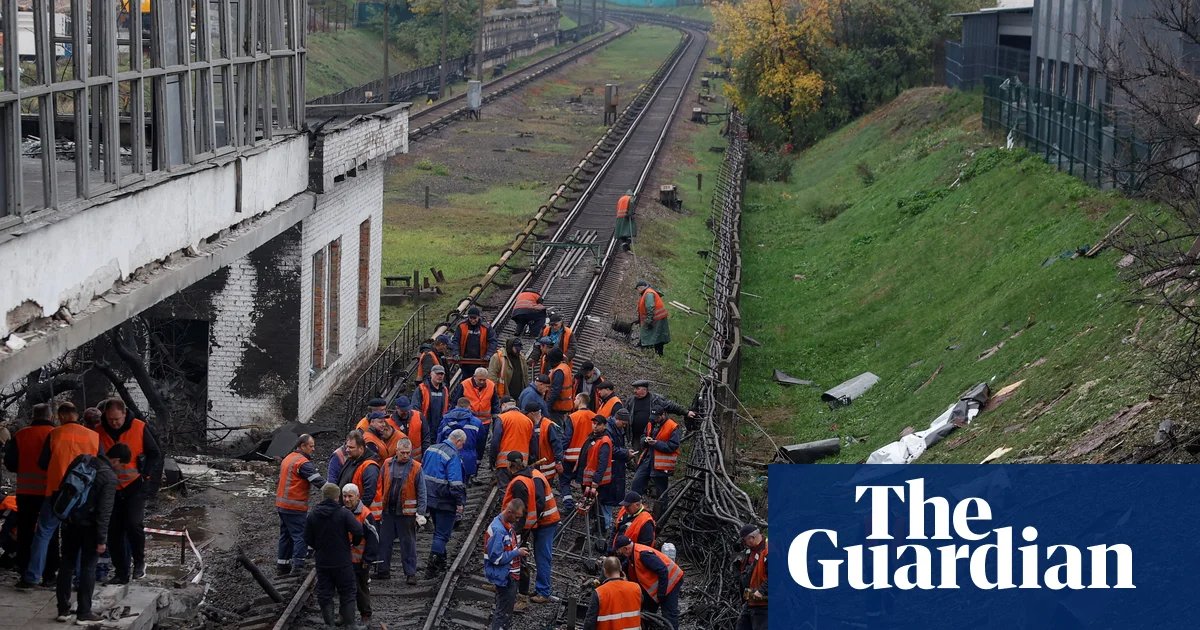
The recent Russian missile strikes inflicted severe damage, impacting 28 substations and leaving over 500,000 individuals without electricity, heat, or water supplies. Zelenskyy lamented these disruptions, which have continued unabated, affecting civilians across the country.
Continued Hostilities
In a large-scale aerial response, Ukraine sent over 1,000 drones into Russia, targeting critical infrastructures. Meanwhile, missile launches resulted in casualties, including the tragic loss of life among civilians. In Kharkiv, drone strikes on a public park took six lives, including young children, intensifying the outcry against Russian tactics.
Humanitarian Concerns
Pope Leo XIV expressed concern for the humanitarian crisis unfolding in the city of Oleshky, where residents are enduring severe shortages of food and medical supplies. The Pope reached out to Zelenskyy, discussing efforts to establish a humanitarian ceasefire that would allow for aid and evacuation while condemning the ongoing violence.
Conclusion
The current situation in Ukraine highlights the challenges it faces not only from external aggression but also from shifting geopolitical alignments. As the conflict evolves, the need for comprehensive support and strategic planning becomes ever more crucial for Ukraine’s resilience and sovereignty.
Key Takeaways
- Ukraine received no warning from the U.S. prior to recent Russian missile strikes.
- Political decisions in the U.S. are impacting military support and intelligence sharing.
- Recent attacks resulted in significant civilian casualties and humanitarian crises.
- Pope Leo XIV is advocating for a ceasefire to allow humanitarian aid to reach afflicted areas.