

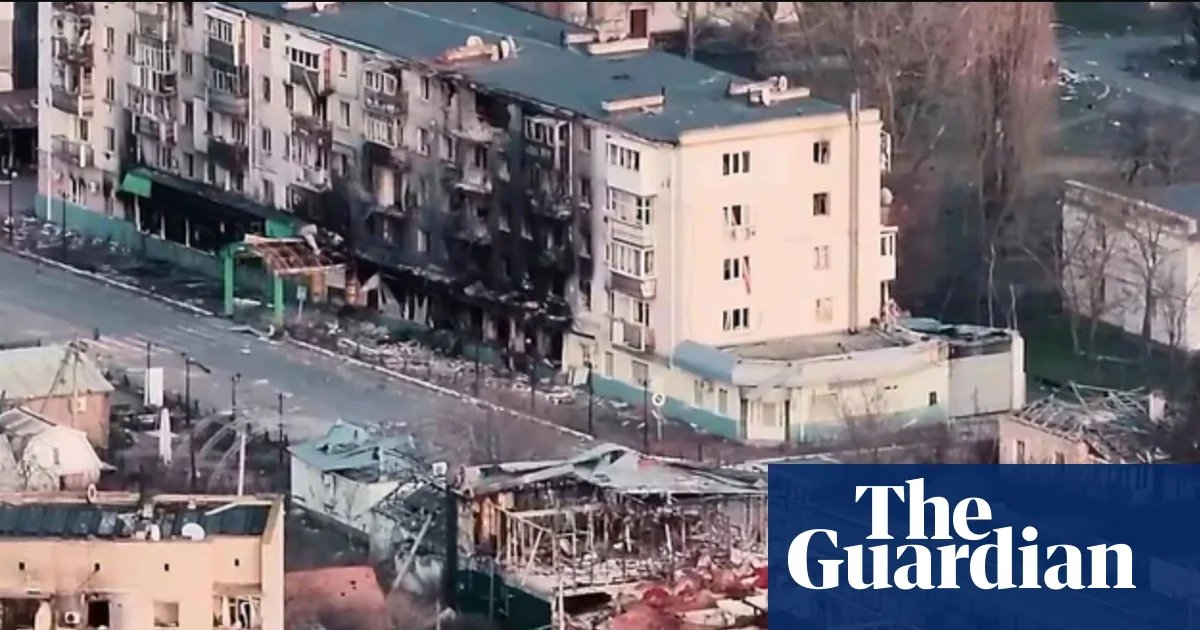
Dire Situation in Oleshky: A Call for Action
The grim reality faced by civilians in the Russian-occupied city of Oleshky is stark and heartbreaking. With food supplies completely depleted, the 2,000 residents who remain there are in desperate need of assistance. A woman from Oleshky recently conveyed the chilling message: “We can’t get out. We’re going hungry … Right now, I’ve got absolutely nothing to eat.” Once weighing 110kg, she now weighs only 67kg, highlighting the severe impact of the ongoing conflict on her health and well-being.
Oleshky, located just across the Dnipro River from the city of Kherson, has become a nightmarish shadow of its former self. The city’s conditions have been described as “a hell on earth” by those familiar with the struggles faced by its inhabitants. This plight was brought to the forefront during a recent United Nations General Assembly addressed by Ukrainian Foreign Minister Andrii Sybiha, who called for urgent action to address the crisis.
Humanitarian Catastrophe
During his speech, Sybiha warned of an impending humanitarian catastrophe and urged for immediate evacuations, placing the blame squarely on Russia’s shoulders as the primary barrier to relief. “Russia is deliberately making life there impossible,” he stated, asserting that the occupying forces are essentially starving the citizens of Oleshky.
The Kremlin has acknowledged the critical situation in Oleshky but deflected blame onto Ukrainian forces, alleging that they are obstructing humanitarian efforts. Until recently, food supplies had been trickling in, but that flow has ceased as Russian forces have intensified minefields and increased drone coverage, further hampering relief efforts.
Escalating Crisis
The ongoing conflict has adversely affected not only the civilians but also the Russian frontline troops, leading to food shortages that have compelled these soldiers to take from local residents. According to messages exchanged by affected Oleshky residents, they are now reduced to one meal a day—typically a meager soup made from zucchini, with only occasional additions of foraged edible weeds.
“We’re running out of everything,” one resident lamented earlier this summer. “By August, the situation will be critical for us. I’m already dying. I’m getting weaker by the day.” On September 1, a food convoy attempting to reach the city was attacked amidst finger-pointing between Moscow and Kyiv, further complicating the dire situation.
Desperate Measures and Human Rights Violations
Ukrainian officials have reported that attempts to drop food supplies via drones have largely failed, as these necessities are often seized by Russian soldiers. Tetiana Hasanenko, a local official, noted that access to Oleshky has become perilously challenging, particularly as minefields proliferate and food deliveries have diminished.
“The density of the minefields has become very high,” she explained. “By winter, supplying food had already become very difficult.” The lack of infrastructure, including power and financial services, leaves Oleshky in a state of near collapse.
Residents, who once cultivated enough food to sell in nearby markets, are now left with little to sustain themselves. Hasanenko recounted a tragic incident where a 74-year-old man lost his life while trying to unearth food supplies from a flooded cellar, showcasing the desperation and human suffering exacerbated by the war.
A Strategy of Fear
Despite the desperate conditions, officials believe that the occupying forces are deliberately stalling evacuations to use civilians as human shields against potential Ukrainian counterattacks. “They are just keeping civilians there,” Hasanenko suggested, underscoring the strategic exploitation of vulnerable populations amidst conflict.
As the situation deteriorates, it becomes increasingly apparent that Oleshky’s historical legacy is overshadowed by the ongoing crisis. “In all this time, people never lived in such horrible conditions,” Hasanenko noted. The ongoing struggles have led to increased mortality and a bleak outlook for the remaining residents, many of whom have witnessed unimaginable sorrow and loss.
Conclusion
The humanitarian crisis unfolding in Oleshky demands urgent attention and action. The chilling accounts from civilians reveal the profound impact of war on everyday life and the dire need for international intervention to alleviate their suffering.
- The food supply in Oleshky has run completely dry, leaving residents desperate.
- The conditions are described by locals as “a hell on earth,” reflecting the severity of the situation.
- Ukrainian officials are calling for immediate evacuations while accusing Russia of hindering relief efforts.
- The ongoing war has decimated infrastructure, exacerbating the plight of civilians.