

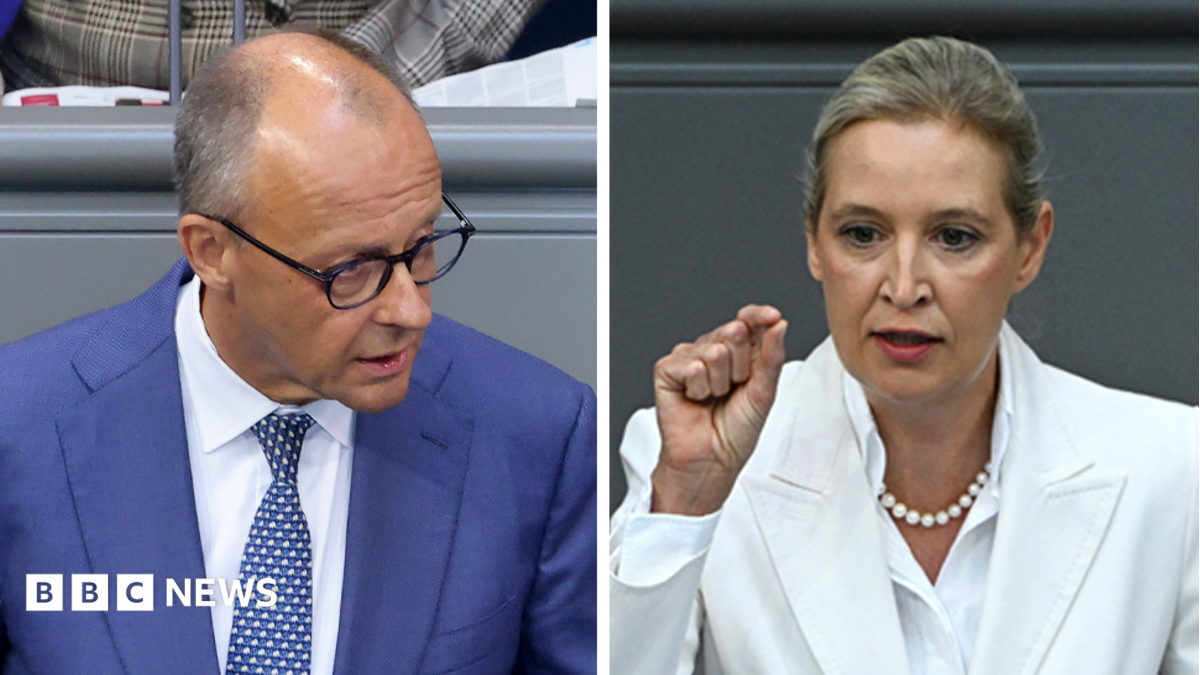
Friedrich Merz Challenges AfD Leader Alice Weidel in Bundestag Debate
In a heated parliamentary exchange, German Chancellor Friedrich Merz confronted Alice Weidel, the leader of the Alternative für Deutschland (AfD) party, labeling her party a “destructive force” with a migration policy that he described as tantamount to “ethnic cleansing” for skilled workers. This confrontation unfolded in the Bundestag following the AfD’s significant victory in the eastern state of Saxony-Anhalt, where it secured nearly 44% of the votes, while Chancellor Merz’s conservative coalition saw its support plummet.
Parliamentary Tensions Rise
During the session, Weidel criticized Merz, asserting that the recent election results indicated a complete failure of his coalition with the center-left, signaling that his political career may be nearing its end. In response, Merz countered that the AfD’s support for Russia has been detrimental to German interests and expressed concern that their proposed “remigration” policy would negatively impact millions of individuals.
Implications of the Election Results
Currently, it remains uncertain whether the AfD will manage to form a government in Saxony-Anhalt, as they came up three seats short of achieving an outright majority. Notably, no far-right party has held power in any of Germany’s 16 states since the aftermath of World War II. Merz acknowledged that the recent electoral outcomes represent a “seismic” shift in the political landscape of Germany.
International Reactions
The AfD’s electoral success has garnered international attention, including remarks from former US President Donald Trump, who celebrated their victory. He suggested it reflected widespread discontent with “absolutely horrible immigration rules and regulations” in Germany.
Concerns Over AfD’s Policies
The AfD in Saxony-Anhalt has been characterized as “right-wing extremist” by Germany’s domestic intelligence. The party has proposed robust measures to deport irregular migrants as part of their “remigration” initiative.
Conclusion
The clash between Friedrich Merz and Alice Weidel highlights the growing divide in German politics, especially concerning immigration and national identity. With the AfD gaining ground, the implications for Germany’s future political landscape remain profound.
- Chancellor Merz labels the AfD as a “destructive force” in German politics.
- The AfD enjoyed a significant electoral victory in Saxony-Anhalt, raising concerns about far-right influence.
- International responses, including from Donald Trump, highlight the party’s growing visibility.
- The debate underscores ongoing tensions regarding immigration policy in Germany.