

Legacy of Ratko Mladić: A Controversial Figure in History
Ratko Mladić, a commander of Bosnian Serb forces in the 1990s, led his troops against the Bosnian Croat and Bosniak armies during the Bosnian war from 1992 to 1995. His leadership is marred by the infamous campaign of “ethnic cleansing” aimed at forcibly displacing the non-Serbian population of Bosnia-Herzegovina, particularly marked by the siege of Sarajevo, which resulted in over 10,000 fatalities. Although arrested in 2011 and sentenced to life imprisonment in 2021 after a lengthy trial, Mladić remains a polarizing figure, admired by many in Serbia yet reviled by others as a symbol of horror from the conflict.
Funeral and Public Sentiment
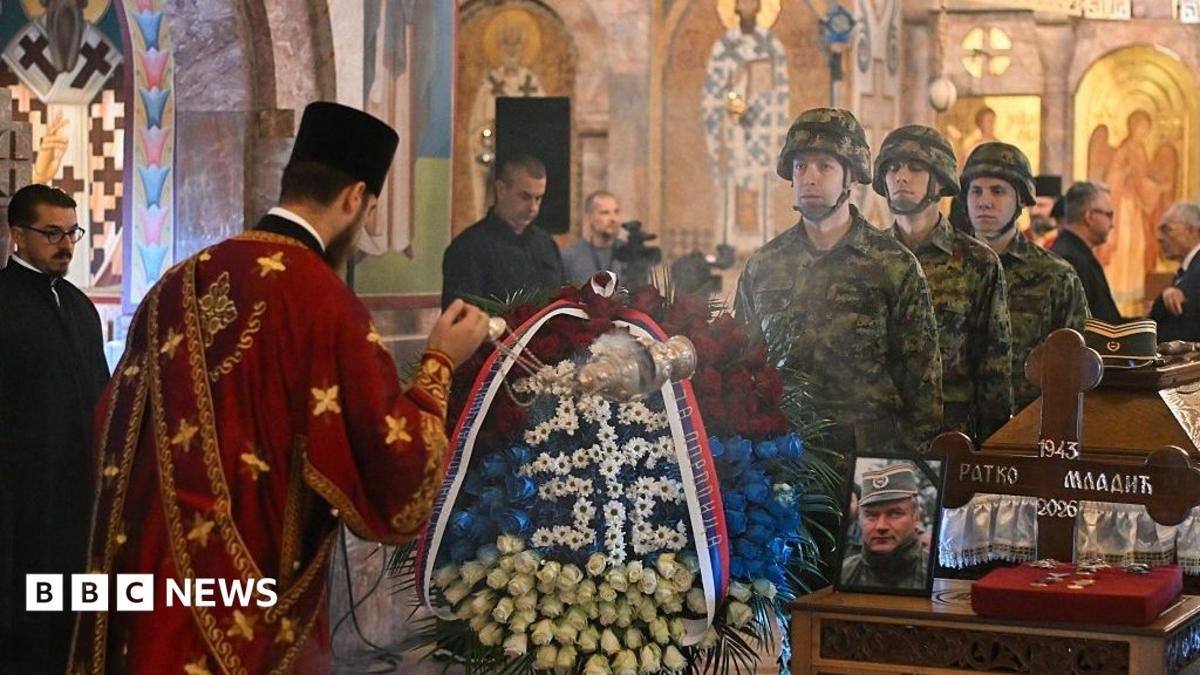
Following his death, Mladić’s funeral was held in Serbia and drew significant crowds, many of whom view him as a national hero. In the Bosnian Serb entity of Republika Srpska, he is seen as a protector of the nation. Ministerial figures, including the Defence Minister Bratislav Gašić and Justice Minister Nenad Vujić, were present at the funeral, paying their respects along with thousands of mourners.
Details of the Funeral
The ceremony took place at St Luka Church, where many attendees, including army veterans, came dressed in Serbian flags emblazoned with Mladić’s image. Long lines formed outside, as people waited to pay their respects. The service was led by Patriarch Porfirije of the Serbian Orthodox Church, who honored Mladić’s legacy, stating that his name would be “deeply etched in the memory and prayers” of many Serbians.
In an extraordinary display of reverence, the former general’s coffin was transported back to Serbia with military honors, carried by six soldiers. Additionally, complimentary bus services were offered to facilitate attendance from both Bosnia and various cities across Serbia.
Rising Controversy
However, the rousing tributes have also reignited painful memories for some, including Zdravka Gvozdjar, a woman from Sarajevo who lost her nine-year-old son during the siege led by Mladić. She expressed her dismay at the funeral, stating, “It is really horrible that this is taking place. He deserves to be erased from memory for good, not to be celebrated as a hero.” Her perspective resonates with many who advocate for remembrance of the tragedy rather than glorification of its perpetrators.
Media and Historical Perspectives
Commenting on the national sentiment, journalist Daniella Peled remarked that even though the war crimes tribunal presented a comprehensive account of Mladić’s actions, this narrative is often overshadowed in Serbian media and educational contexts. She highlighted that he is portrayed as a dedicated soldier faithfully executing his duties, without a recognition of the broader implications of his actions.
Conclusion
The legacy of Ratko Mladić is marked by a complex interplay of admiration and revulsion, encapsulating the multifaceted nature of conflict and memory in post-war societies. His funeral has unwrapped deep-seated sentiments related to national pride and collective trauma, revealing the ongoing struggle to reconcile the past.
Key Takeaways
- Ratko Mladić led forces during the Bosnian war and is associated with severe human rights violations.
- His funeral in Serbia highlighted his controversial status as a national figure amid deep historical divides.
- Public sentiments range from admiration to condemnation, reflecting the ongoing societal impact of the conflict.
- Media narratives play a crucial role in shaping perceptions of war figures like Mladić, influencing collective memory.