

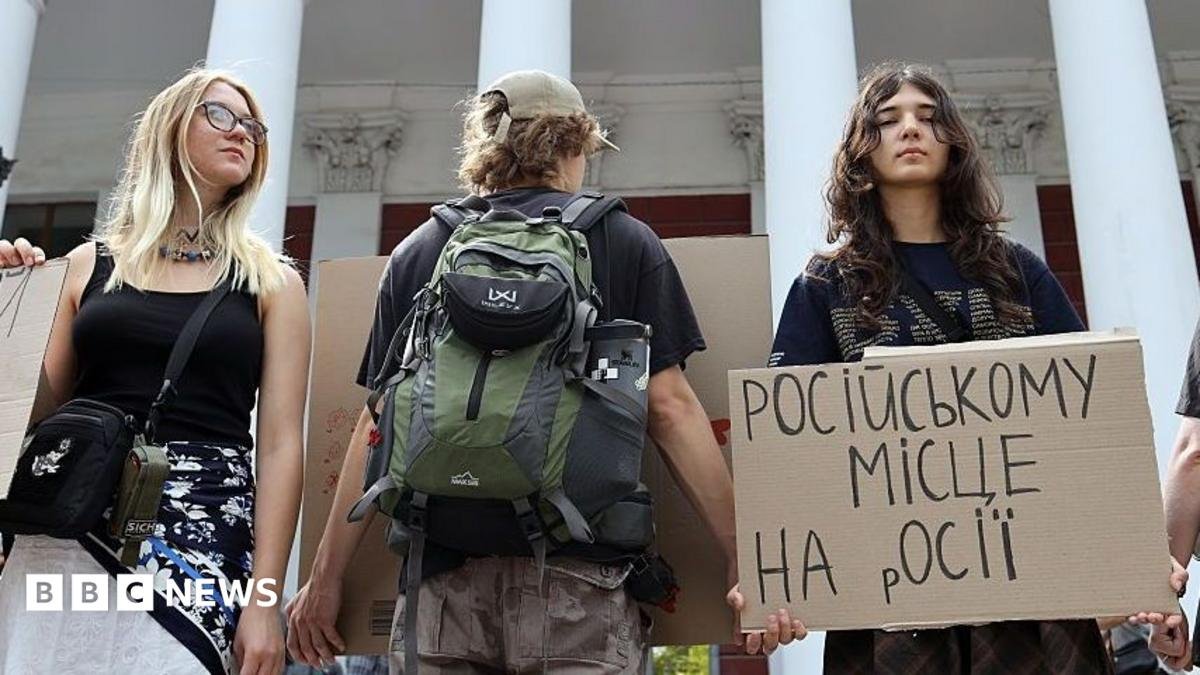
The Language Debate in Ukraine: Navigating a Post-Invasion Landscape
In Ukraine, public performances of Russian songs by its citizens are now prohibited, save for a few artists who have openly denounced the ongoing war. However, songs in Russian created or performed by Ukrainians remain permissible. New proposals aim to extend these restrictions to public venues, sparking discussions about cultural identity and personal freedom.
Background to Language Restrictions
As Anna Nerush explains, celebrations like birthday parties in private spaces, where Russian may still be spoken, won’t be impacted by these changes. This is due to the limited reach of private events, serving as a cushion against broader implications. Conversely, she cautions that hearing the Russian language in public can be triggering for certain individuals, particularly former prisoners of war and those from occupied areas.
A Shift in Language Use
In recent years, a notable shift has occurred among native Russian speakers in Ukraine, particularly following Russia’s extensive invasion in 2022. Many have transitioned to using Ukrainian predominantly. One example is photographer Natalia Mykhailenko, who embraced the switch even earlier. She has conducted tours in Odesa that spotlight the city’s non-Russian historical influences, including landmarks like a Cossack cemetery dating back to before 1794.
Odesa’s Changing Landscape
This cemetery serves as a reminder of Ukraine’s deep-rooted history predating Russian imperial influence, often attributed to Catherine the Great, who is said to have established Odesa in 1794—a claim that has faced scrutiny lately. In light of changing perspectives, a statue of Catherine was removed from a prominent Odesa square in 2022, and various streets have been renamed to honor Ukrainian writers and activists.
Voices from the Community
Mykhailenko emphasizes the importance of recognizing Ukraine’s colonial past. “We must understand we were a colony,” she states. “These language laws are crucial for our identity. While they may not seem democratic at times, without them, a genuine Ukraine may remain an unfulfilled dream.”
Rights and Freedoms at Stake
On another front, anthropologist Anastasia Piliavsky, part of a collective known as Ukrainian Cosmopolis, highlights the concerns of Russian speakers feeling marginalized. “In Ukraine, most people are bilingual,” she remarks. “Therefore, this isn’t merely a language issue; it’s a matter of freedom.”
Piliavsky believes the struggle for freedom forms the crux of the ongoing conflict. The essence of the struggle revolves around rejecting authoritarian control, a characteristic associated with Russia. As penalties for language violations loom, individuals begin to question the very nature of their fight for independence.
Conclusion
The language restrictions in Ukraine pose not only a question of cultural identity but also a fundamental debate about individual freedoms in the face of historical complexities. As the nation navigates these turbulent waters, initiatives that honor its rich heritage while promoting unity in diversity remain critical.
- Public performances of Russian songs are now largely banned in Ukraine, with specific exemptions.
- The shift towards Ukrainian among Russian speakers has accelerated since the 2022 invasion.
- Historical context plays a significant role in understanding the language laws and their implications.
- The ongoing conflict raises significant questions about freedom and identity for all Ukrainians.