

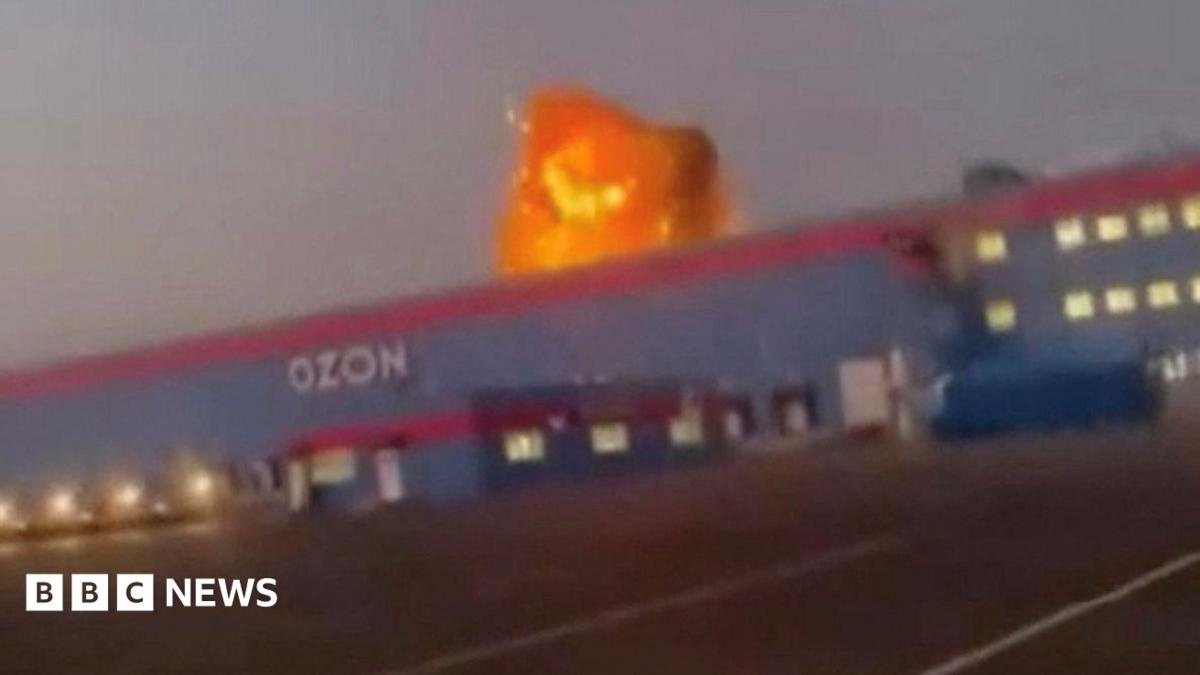
Recent Attacks on Ozon: A Significant Economic Impact
Ozon, a prominent online retailer in Russia, has faced substantial challenges following a series of attacks on its facilities. This article explores the implications of these strikes, the reactions from various stakeholders, and the ongoing situation surrounding the company.
Evacuations and Damage Reports
Workers at Ozon’s warehouses in both Adygeysk, located in the Adygea region, and Nevinnomyssk in the Stavropol region have been evacuated. Verified videos circulating on social media showcase the severity of the situation, including footage of a drone striking a warehouse in the Orenburg region, as well as scenes depicting smoke and flames engulfing a facility in Dagestan.
Market Repercussions
The impact on Ozon’s stocks was immediate, with shares tumbling as much as 12% in early trading on the Moscow Exchange. Similarly, the stock of AFK Sistema, Ozon’s primary shareholder, dropped nearly 13% following the news.
Government Response
When questioned about potential state support for Ozon, the Kremlin indicated it was exploring various avenues to assist businesses facing difficulties in this challenging environment.
Previous Strikes and Broader Context
The attacks on Ozon came just a day after its facility in the Samara region was also targeted, resulting in injuries among employees. In a statement on Saturday, Ukraine’s defense ministry emphasized that such systematic strikes on storage centers for dual-use goods not only disrupt logistics for the enemy but also adversely affect the broader Russian economy.
Wider Impacts in Ukraine
In a related development, overnight strikes in Ukraine’s Odesa region resulted in injuries as well, targeting food storage facilities and energy infrastructure. The regional head, Oleg Kiper, reported these incidents via Telegram.
The Role of Ozon in the Russian Economy
Established in 1998, Ozon is one of Russia’s earliest online retailers, ranking second to Wildberries in terms of scale. Its pick-up posts and delivery boxes are prevalent throughout the country, which has turned everyday operations into a focal point in the ongoing conflict. Both Ozon and Wildberries have been likened to “Russia’s Amazon,” servicing an estimated 85-90% of the economically active population, particularly in remote areas where traditional retail is limited.
While both companies are vital for many Russians seeking clothing and household goods, their model differs significantly from Amazon’s; Ozon and Wildberries primarily operate as marketplaces that connect independent sellers with consumers, managing storage, delivery, and payment processes. As a result, the economic fallout from these attacks impacts not just Ozon, but also the many small businesses that rely on the platform.
Conclusion
The ongoing situation surrounding Ozon highlights the intersection of conflict and commerce, revealing how the war has reached everyday life for many Russians. As government responses unfold and the full extent of the attacks becomes clear, the implications for the Russian retail landscape remain to be seen.
Key Takeaways
- Ozon’s facilities have been struck by drone attacks, leading to significant evacuations and injuries.
- The stock market has reacted sharply, with Ozon and its major shareholder experiencing notable declines.
- The Kremlin is exploring ways to provide support in light of the attacks.
- Ozon plays a crucial role in the Russian economy, particularly for residents in remote areas.