

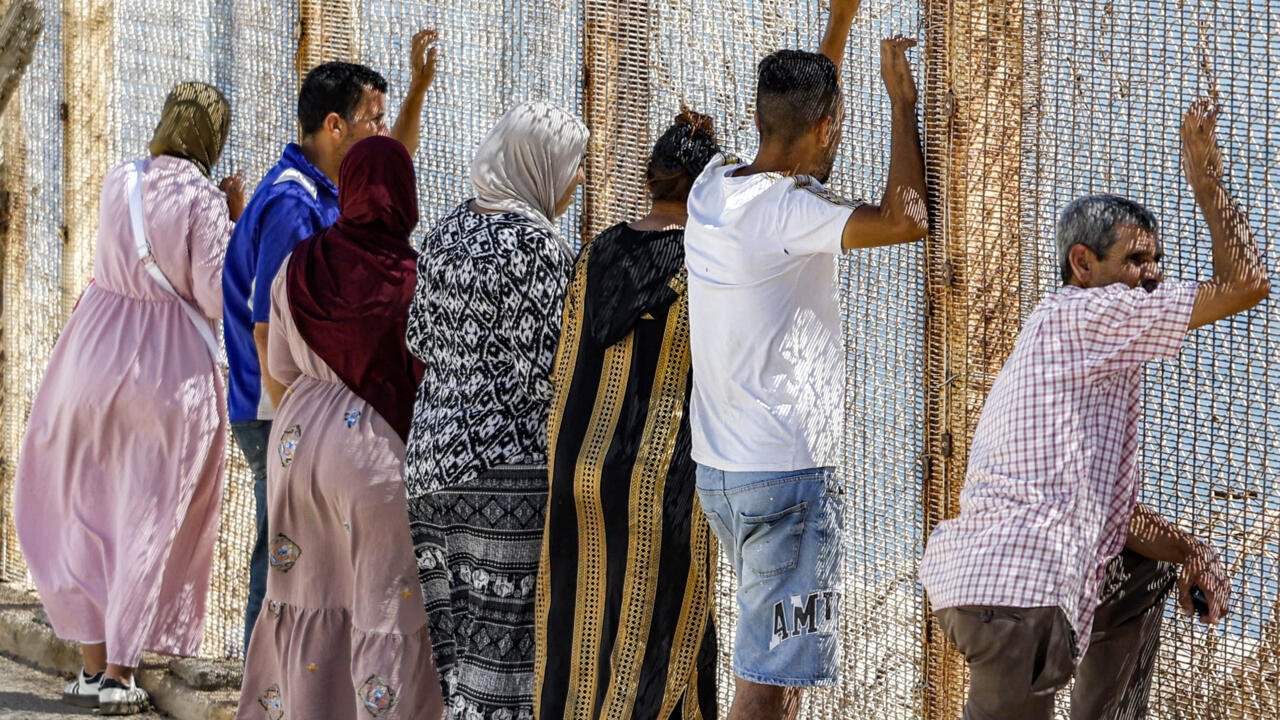
Ongoing Search for Missing Loved Ones in Ceuta
More than two weeks have passed since a large influx of migrants arrived in Ceuta, Spain, from Morocco, yet families are still anxiously awaiting news of their missing loved ones. On Tuesday, relatives met by FRANCE 24, having traveled to hospitals, police stations, and the border, all in search of information. Over the course of July 30 and 31, over 70,000 individuals crossed the border between Morocco and this Spanish enclave. While most have moved on, an estimated 2,000 to 5,000 remain in Ceuta, navigating an uncertain fate.
Tragic Toll of the Crisis
The official death toll from this crisis stands at 91, with 80 fatalities in Spain and 11 in Morocco. However, the Moroccan Association for Human Rights, a non-governmental organization, estimates that the true number of deceased could be at least 141. Authorities in Spain have discovered numerous bodies at sea but are struggling to identify the victims, leaving many families to grapple with the distressing possibility of loss.
Organizing Burials Amidst Uncertainty
Despite some bodies remaining unidentified, a court order has allowed burials to commence. According to Saïd Mohammed Mohammed, the manager of the Sidi Mbarek Muslim cemetery in Ceuta, more than 80 bodies cannot all be buried in one day due to limited resources. He expressed the challenges of coordinating burials amid many missing persons notices, phone calls, and photographs sent in by desperate families.
“There are bodies whose identities are unknown, and we do not know who they are, but our responsibility is limited to burial,” Mohammed stated. “Even if a person is buried without prior identification, they are assigned a number and have a file in court with all the relevant information. Here at the cemetery, we keep a record of this number for future identification.”
Personal Stories of Loss
In Fnideq, a town adjacent to Ceuta, Rahali has spent nearly a week searching for his son, Zakaria. “Zakaria left Tangier with a friend on Throne Day, July 30,” Rahali recounted. “When they heard rumors about the border being open, they decided to go. However, when they arrived, they found it closed.” Desperation set in as they sought an alternative, ultimately leading them into the sea, where the two became separated.
“His friend managed to swim back, but my son couldn’t. Since then, I’ve had no news,” Rahali said, his voice shaking with grief.
Social Media as a Lifeline
Since the crisis began, families have turned to social media as a crucial tool to locate missing individuals. Pictures of children and young adults circulate on platforms like Facebook, Instagram, and TikTok, accompanied by urgent pleas for information.
One family is searching for Mehdi, who has been missing for 18 days. His sister Zineb shared that while they found a video of him after he entered the sea, no further updates had emerged. “Our mother is struggling both physically and mentally,” she lamented.
Efforts to Identify Missing Persons
Officials in Ceuta have established a dedicated office for missing persons that collects reports from families, including photos and distinctive traits. They are also gathering biological samples from relatives to aid in matching DNA with unidentified bodies.
As of now, 32 cases of missing persons have been documented, with 29 matching DNA profiles in their database. The first successful identification was made on August 5, while forensic experts work tirelessly to compare fingerprints and biological data.
Conclusion
For countless Moroccan families, the anguish remains palpable as they wait for news of their loved ones who set out for a better life. Each day is a painful reminder of their uncertainty and hope for closure.
Key Takeaways
- The search for missing individuals continues in Ceuta after a significant migrant influx.
- The official death toll is reported at 91, but NGOs suggest the figure could be much higher.
- Families are utilizing social media to find their loved ones amidst the crisis.
- A special office for missing persons has been established to assist families with identification efforts.