

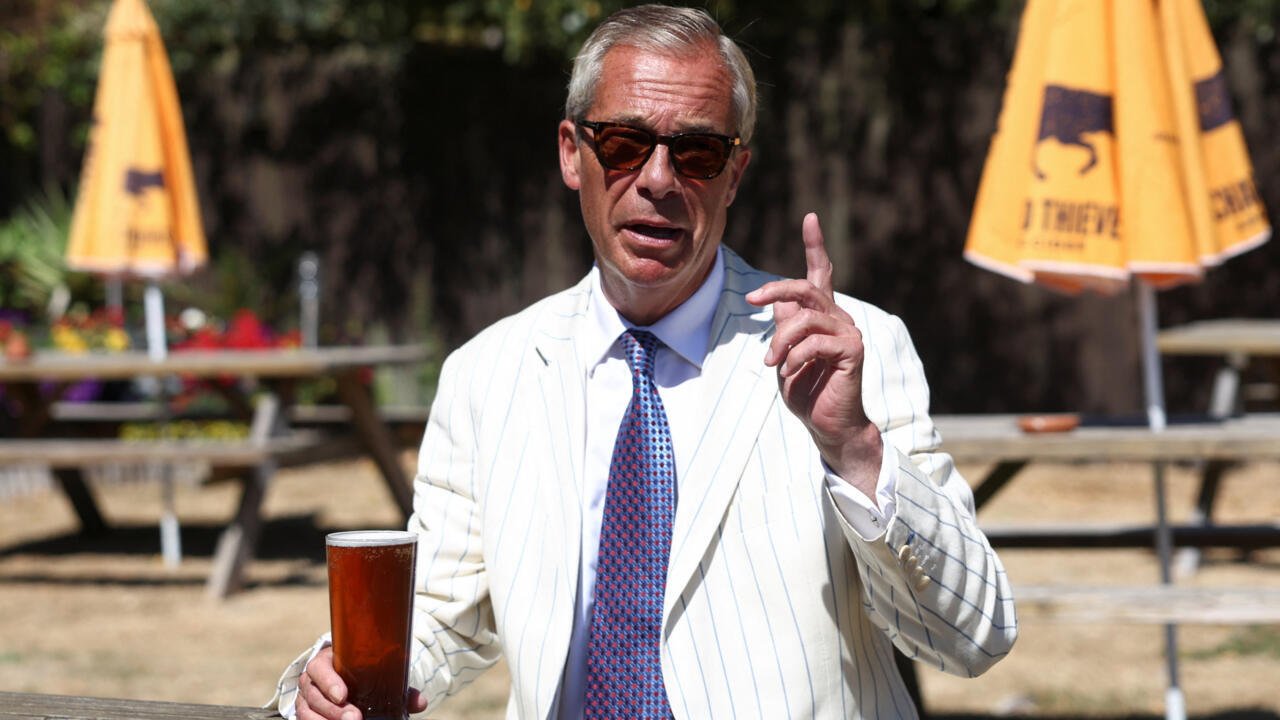
Nigel Farage’s Parliamentary Comeback Amid Controversy
Nigel Farage, the leader of Reform UK, resecured his parliamentary seat on Friday in an election he initiated to fortify his position amidst allegations of financial misconduct. However, his strategy stumbled when his primary rival, a comedian clad in a rubbish bin costume known as Count Binface, garnered over 25% of the votes.
Election Details
Farage, who is widely recognized as one of Britain’s prominent Brexit advocates, opted not to attend the results announcement in Clacton, a popular seaside town in southern England. He claimed police had warned him of potential disruptions to the event. “I refuse to stand on that stage and celebrate a victory only to be ridiculed by nobodies,” he expressed to a gathering of supporters prior to the results being disclosed.
This election followed Farage’s resignation from parliament the previous month, where he sought a renewed mandate from constituents in what he portrayed as a battle against an establishment intent on tarnishing his reputation over unreported gifts from donors.
Unusual Opponent
Following the withdrawal of major political parties, which characterized the election as a self-serving maneuver, Farage faced off against Count Binface, a whimsical character created by comedian Jonathan Harvey, who has become a staple in British elections. Farage managed to secure 62.8% of the votes, while Count Binface, advocating policies such as capping ice cream cone prices and requiring people to stop using speakerphones on public transport, received 26.7%. The voter turnout was at 44%, significantly lower than the 59% seen during the 2024 general elections, although typical for a by-election.
Shifting Political Landscape
Despite Farage’s victory, Reform UK has begun to see a decline in support following a sustained lead in opinion polls. Factors contributing to this decline include rising scrutiny from funding allegations surrounding Farage, who is currently under parliamentary investigation for not declaring a £5 million ($6.75 million) donation from a cryptocurrency billionaire. Many critics have dismissed Farage’s approach as a mere distraction from these serious allegations.
Changing Narratives
Laura Richards-Gray, a politics lecturer at Birkbeck University, noted that the lack of major party contenders weakened Farage’s attempt to frame the election as a struggle between the people and the establishment. “It backfired nationally, as Farage lost grip on the narrative,” she mentioned, pointing out that some voters perceived the election as a “waste of time and money.”
Adding to Farage’s challenges is the ascending popularity of the governing Labour Party, which has gained momentum since Andy Burnham became prime minister last month. Labour now leads Reform UK in polls, holding 28% compared to Reform’s 25%. Burnham has been prominent in media and social networks, solidifying a leftist bloc around Labour as the next national election approaches in three years.
Future Implications
Although Farage emerged victorious in this election, the parliamentary watchdog is set to continue its investigation into his financial disclosures when he returns to parliament. Central to this inquiry is whether he should have reported the donation from the Thailand-based billionaire ahead of the 2024 national elections. Parliamentary guidelines mandate that MPs declare any received donations from the year preceding an election within a month of taking office. While Farage has acknowledged receiving this funds, he argues it was a personal gift and claims no wrongdoing. If the investigation concludes he violated declaration standards, he could face suspension and a new vote to maintain his seat, likely facing competition from other major parties.
Conclusion
Nigel Farage’s recent election serves as a pivotal moment, highlighting the complexities of political maneuvering amidst controversy. As investigations continue and Labour’s popularity rises, Farage’s political future may hang in the balance, illustrating the unpredictable nature of modern British politics.
Key Takeaways
- Nigel Farage successfully reclaimed his parliamentary seat, but faced notable challenges.
- Count Binface, his comedic rival, attracted a significant portion of the vote.
- Farage’s popularity is waning amid scrutiny over financial allegations.
- The rise of the Labour Party under Andy Burnham poses new challenges for Reform UK.