

Identifying Soldiers from WWII: A Heartfelt Investigation
During the tumultuous times of World War II, the German military had a poignant system in place for identifying soldiers. When a soldier lost their life, their identification tags were divided—in a somber effort to track casualties and inform families. The remaining half of the tag would stay with the soldier while the other was sent to military authorities responsible for notifying relatives of the tragic loss. Recently, this practice has brought renewed interest and hope as the German War Graves Commission steps in to uncover the identities of two such soldiers whose families have long awaited answers.
The Importance of Identification
The German War Graves Commission emphasized that the families of these soldiers might have “waited in vain” for news regarding their loved ones. In a compassionate effort to bring closure, the commission has initiated an investigation aimed at identifying these fallen soldiers. They encourage anyone still searching for a missing relative to utilize their searchable database.
The Investigation Process
While the process may take considerable time, experts will examine the soldiers’ identification tags and the Kuban shield to confirm if they belong to the same individuals. According to the commission, “The names of the original wearers can probably be found quickly, but that is only the first step.” They further mentioned that “too many pieces of the puzzle need to be gathered, and the outcome is uncertain,” indicating the complexity of the task ahead.
Bone Analysis as a Key Tool
A vital method for identifying these soldiers involves analyzing their bones. This could potentially reveal vital clues about their identities, adding another layer to the investigation.
Community Response
The recent discovery of the soldiers has sparked significant interest, especially within online communities focused on World War II history. One member of a Facebook group dedicated to sharing information about the fates of ancestors from both World Wars expressed a heartfelt sentiment: “As bad as the low water level is, I am glad that bereaved families can once again be informed about the whereabouts of their relatives, and that the fallen soldiers can be given a dignified burial. Rest in peace.”
A Dignified Resting Place
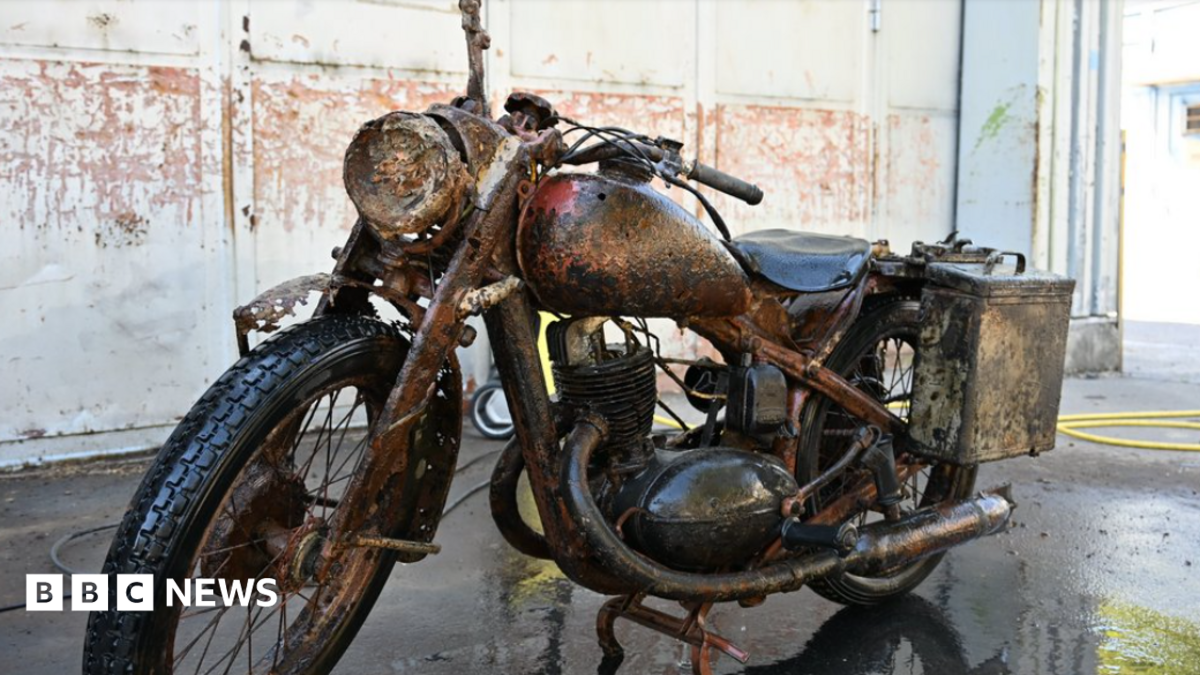
The two soldiers are set to receive a dignified burial at the German war cemetery located in Budaörs, just outside of Hungary’s capital, Budapest. This area witnessed intense combat between the Soviet Red Army and the German Wehrmacht during the latter stages of the war. In addition to this poignant revelation, remnants from World War II have also emerged in the Danube river, including a broken hull near Prahovo, Serbia.
Conclusion
The challenging journey of identifying these World War II soldiers serves as a reminder of the personal stories intertwined with historical events. While many families have searched in vain for closure, the ongoing efforts of organizations like the German War Graves Commission present hope for answers.
Key Takeaways
- Identification tags were split to track soldiers’ casualties during WWII.
- The German War Graves Commission is investigating the identities of recently discovered fallen soldiers.
- Bone analysis will play a crucial role in confirming these identities.
- The soldiers will be buried honorably at a cemetery in Budaörs, near Budapest.