

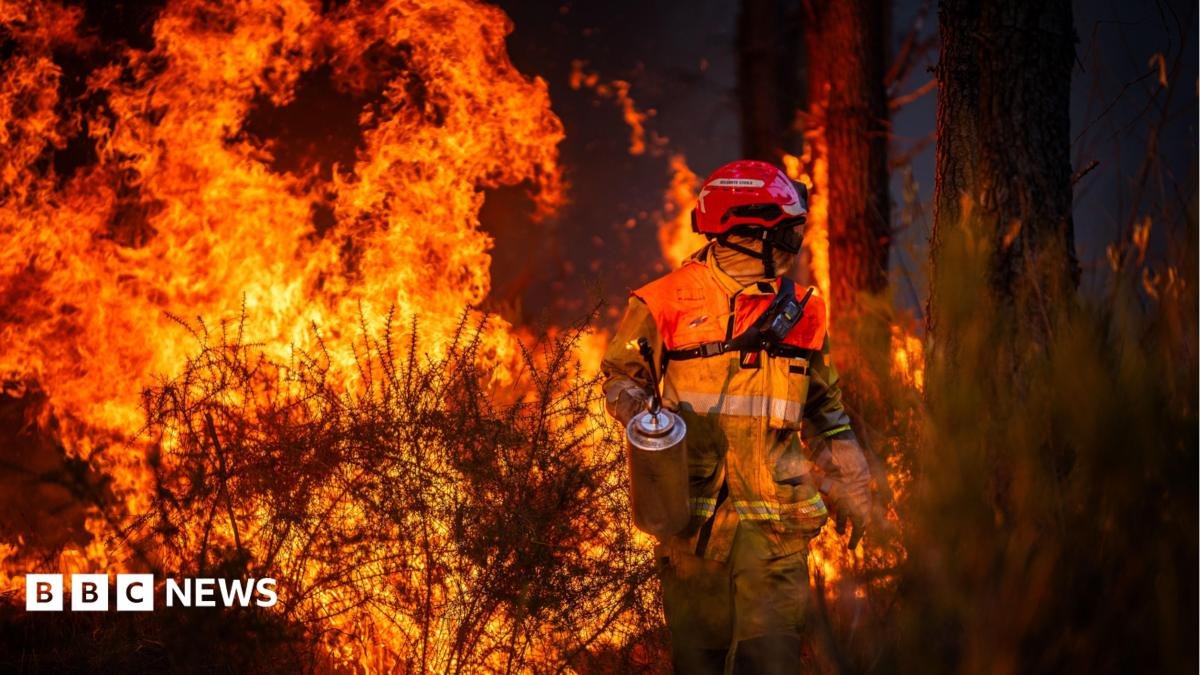
Understanding the Surge in Wildfires in France
This summer, France experienced unprecedented wildfires that ravaged more land than any period since World War II, prompting widespread concern and inquiries into the underlying causes. The primary factor shaping this crisis is climate change, primarily driven by humanity’s reliance on fossil fuels, which is resulting in steadily rising temperatures. However, attention is also directed towards human involvement, as statistics reveal that a staggering nine out of ten wildfires in France are sparked by people. This has led the French government to seek accountability, although it faces criticisms of being inadequately prepared to combat these raging infernos that have devastated over 300,000 acres this season.
Government Actions and Arrests
In response to the escalating crisis, France’s interior ministry has reported a notable increase in arrests, totaling 420 individuals thought to be responsible for starting wildfires, whether intentionally or inadvertently. Among those apprehended are 166 minors, showcasing the reach of this issue across various demographics. For instance, a 23-year-old man has been accused of igniting ten separate fires within a mere five days in southeastern Var last month. If found guilty, he risks facing a hefty fine of €150,000 (approximately $128,000) and up to 15 years in prison.
Cases of Sentencing and Controversy
Several individuals have quickly faced severe sentences. A notable case involves a man sentenced to three years in prison for initiating three fires in the Raon-L’Étape forest in the Vosges region—an act that, according to local media, resulted in only a few square meters of scorched vegetation.
However, some prosecutions have raised eyebrows, particularly when it comes to perceived injustices. Reports indicate that a homeless individual and someone with significant autism received prison sentences for merely discarding cigarette butts.
Concerns Regarding Law Enforcement Practices
“The volume of arrests is startling, and I feel it borders on excessive,” reflects Muriel Gestas, a lawyer who has defended several accused individuals, including firefighters. She expresses skepticism about whether many of these cases will lead to convictions.
Additionally, the newspaper Le Monde casts doubt on the investigative rigor applied in these cases, given the rapid pace of arrests. The limited information disclosed about specific charges—particularly regarding intent and comparisons to previous seasons—hinders any substantial evaluation of the current situation against historical data.
Official Justifications for Stringent Measures
Despite these criticisms, Bordeaux prosecutor Renaud Gaudeul has defended the hardline stance adopted by authorities, asserting that the conditions for charges such as endangering lives are met for those who discard cigarette butts or light barbecues in wooded areas. “It only takes a tiny spark for it to start,” he notes, highlighting the precarious nature of fire safety during such dire conditions.
Conclusion
The unprecedented outbreak of wildfires in France this summer has sparked a crucial debate about climate change and human responsibility. As investigations and prosecutions unfold, it is essential to balance accountability with fairness, ensuring that justice does not come at the expense of individual rights.
- This summer marked the worst wildfires in France since World War II, driven largely by climate change.
- A total of 420 individuals have been arrested, with a significant number being minors.
- Controversial sentencing cases have raised questions about the fairness of the judicial process.
- Authorities argue for strict measures due to the potential dangers of careless behavior in forested areas.