

The Evolving Landscape of Wine Harvesting in France and Beyond
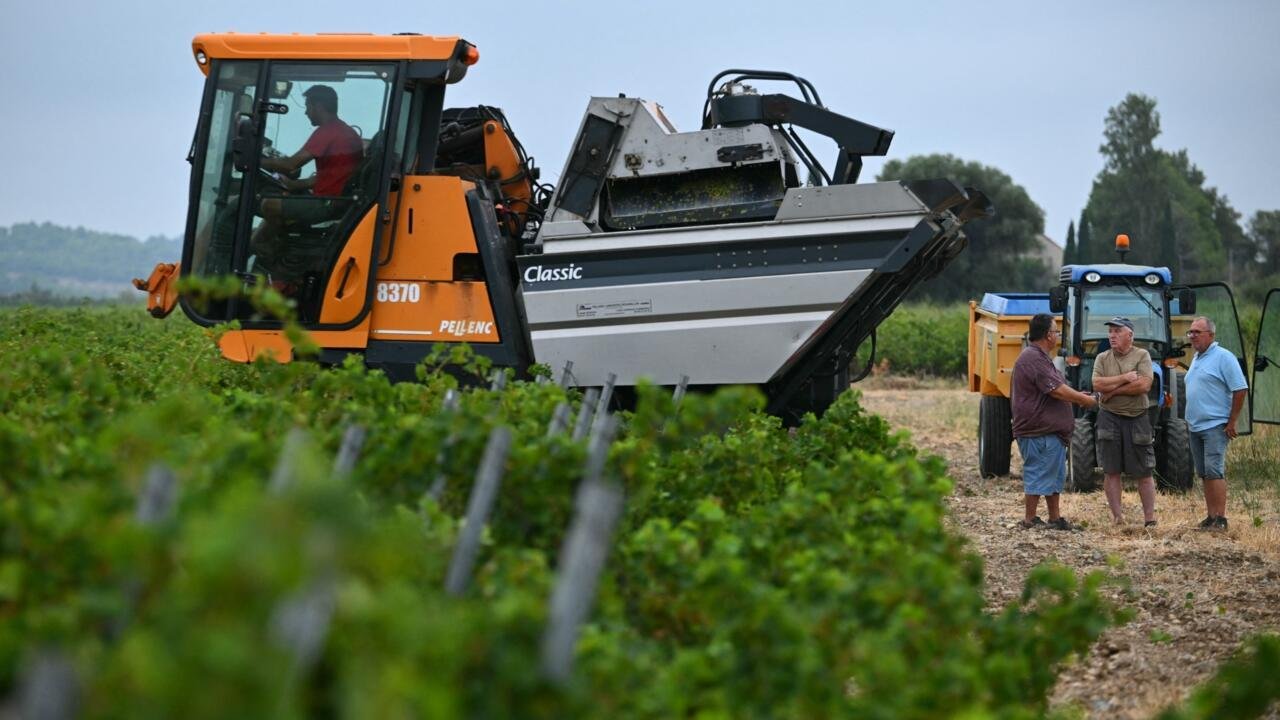
After weeks of intense heat, French winemakers are facing an unusual harvest season, different from those of the past. Recent trends indicate that harvests, which used to start at the end of September and sometimes extend into November, are now kicking off as early as August. This shift raises concerns for the industry, which is crucial to the French economy. Furthermore, wildfires have ravaged over 40,000 hectares in the Gironde department this year, adding to the region’s challenges. Winemakers are adapting by commencing their harvest earlier. Meanwhile, northern European countries are seeing a surge in winemaking, spurred by rising global temperatures, changing the traditional geography of this beloved industry.
Changes in Wine Production
Experts like Alicia Dorey, a French lifestyle and wine journalist, note that while regions such as England and Bornholm, an island off Denmark, now produce wine, it’s too soon to claim a dramatic transformation in the wine sector. Hugo Seilly, a senior lecturer at the Burgundy School of Wine & Spirits Business, emphasizes that while vineyards in Norway and Sweden are producing high-quality grapes, their focus remains local, as they haven’t yet ventured into the export market.
Global Vineyard Landscapes
While Spain holds the title for the largest vineyard area at approximately 930,000 hectares, followed by France at 783,000 hectares, the overall vineyard size in Spain is decreasing. China ranks third with 733,000 hectares, then Italy with 728,000, and Turkey with 410,000 hectares. The future may see a noteworthy geographic shift in wine production towards northern regions due to the increasing water scarcity and escalating temperatures affecting southern vineyards.
Innovations and Adaptations
In response to these climate changes, French winegrowers are implementing innovative strategies. Nighttime harvesting is becoming common to avoid grape oxidation caused by the heat. As wine journalist Jeffrey T. Iverson notes, this year’s harvest may yield grapes with unusually high sugar levels and low acidity, presenting new fermentation challenges for winemakers. Techniques such as adjusting vine pruning, using talc powder as a natural sunblock, and planting cover crops to retain soil moisture are becoming increasingly popular.
Drought-Resistant Varieties
Some producers are even replacing their traditional grape varieties with drought-resistant types more suited to warmer climates. While irrigation is typically restricted to maintain the quality of wines, recent exceptional droughts have led some authorities to permit it, aiming to help the vines survive. As temperatures rise, the profile of French wines is also changing, moving away from their classic characteristics.
The Future of Winemaking
The traditional sweet spot for viticulture lies between the 30th and 50th northern parallels. France’s vineyards historically thrived in this range, yet the effects of climate change are undeniable. As the summers grow hotter, grapes ripen faster, which can diminish their acidity and alter the flavor profiles that so many cherish. Winemakers are thus confronted with a tough decision: harvest early to maintain acidity or adapt to a new wine profile.
Exploring New Territories
Some French winemakers are now setting their sights on English vineyards, where the climate has warmed sufficiently to support grape varieties traditionally associated with Champagne. Meanwhile, winemakers like Romain Chichery, who have ventured to Sweden, are not overly optimistic. With limited viable land and harsh winters, producing wine there remains a precarious endeavor. Climate change presents unique challenges for every winemaker across Europe, requiring adaptability and expertise, qualities that independent winemakers possess in abundance.
Conclusion
As climate patterns and geography shift, the world of winemaking is entering an era of significant transformation. From early harvests to innovative vineyard management, the industry’s evolution reflects the challenges posed by climate change. However, the adaptability of winemakers exemplifies a resilient spirit in preserving the art of wine production.
Key Takeaways:
- The French wine harvest is starting earlier due to rising temperatures and environmental challenges.
- Northern regions in Europe are emerging as new winemaking territories, but major changes are yet to unfold.
- Innovative practices are being adopted by winemakers to combat the effects of climate change.
- Winemakers face tough choices regarding grape harvesting and adapting to changing wine profiles.