

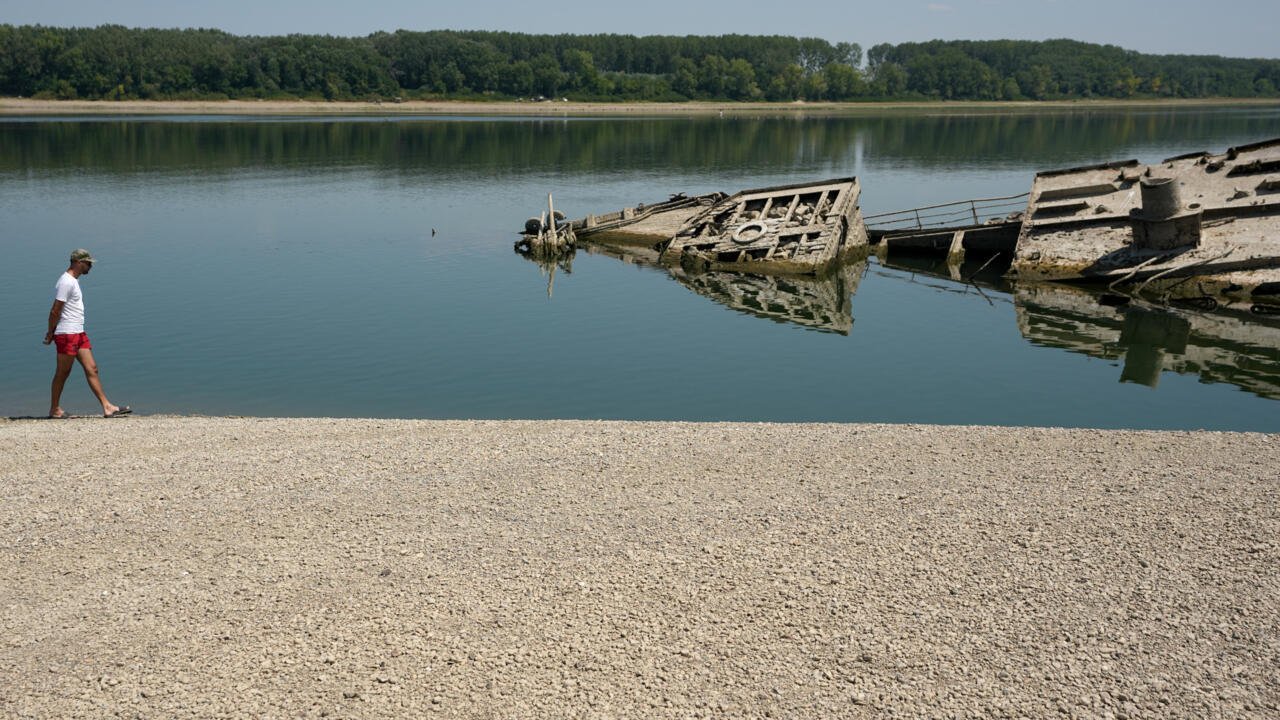
Unveiling History as Water Levels Plummet on the Danube
The Danube River, recognized as the second longest river in Europe, is undergoing a dramatic transformation this summer. Due to severe drought conditions and extreme temperatures, the river’s water levels have reached a historic low, revealing forgotten remnants of the past, including the hulls of German warships from World War II and the remains of an ancient mammoth in Romania. As it turns out, these historical treasures are just part of the broader impact of dwindling water levels on the region.
Historical Artifacts Emerge
In Serbia, a notable sight has been the exposure of a German WWII warship wreckage, laid bare by the reduced water levels. Observers have been seen navigating the sandbanks where the shipwrecks now stand, bringing a fascination for history amidst a pressing environmental problem.
Meanwhile, in Romania, scientists from the Regional Historical Museum in Rousse are diligently examining the remains of a mammoth revealed at the river’s edge near the village of Ryahovo. This find provides a unique glimpse into the geological and ecological history of the region.
Impact on Navigation and Environment
The low water levels are impacting local navigation dramatically. Fishing boats have become stranded along the banks of the Rhine in Germany, with many marinas left high and dry. Controlled demolitions have even been undertaken by the Romanian Navy to clear submerged rocks and improve water flow through the Danube.
As boats remain stuck on dry land, the environmental ramifications are becoming increasingly apparent. In many areas, including Rasova, Romania, even frogs can be seen floating in small puddles that are typically submerged under water. The drying riverbeds have become unusual habitats for plant life, including new sprouts emerging in traditionally water-logged areas, such as the Loire riverbed in central France.
Recreation and Adaptation
As the water recedes, people are adapting to the unique circumstances. In central France, for instance, families and visitors can be seen enjoying the sandy expanses of the now-partially dry Loire riverbed, turning what was once a riverbank into a recreational area. The societal and ecological shifts due to these changes call for thoughtful consideration of water management and environmental stewardship.