

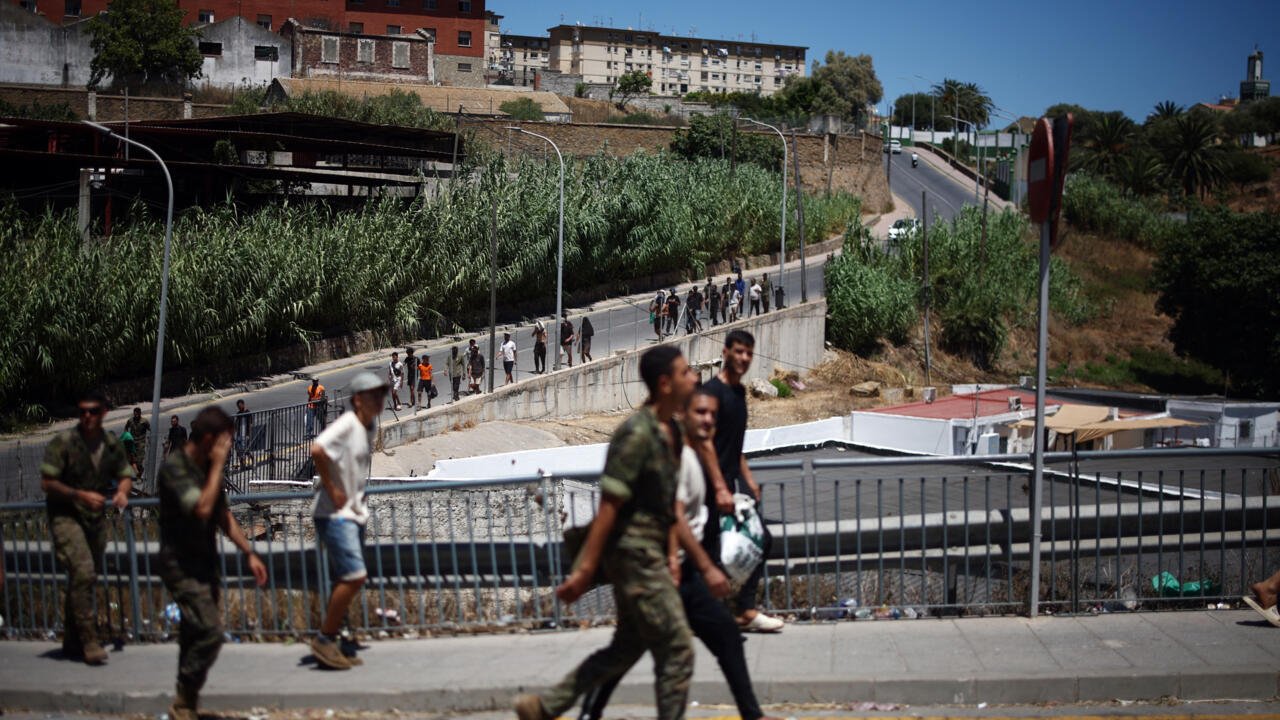
EU Nations Unite Amid Migration Crisis in Ceuta
On Tuesday, Spain and other EU countries worked toward reconciliation after a surge in migrants arriving in the North African enclave of Ceuta exposed deep-seated divisions regarding migration policies within the 27-member bloc. Following a three-hour meeting with the interior ministers of the EU, migration chief Magnus Brunner stated that the crisis had tested Europe’s border security, raised concerns about disinformation, and highlighted the need for solidarity among member states. “Europe has definitely passed this test,” he commented, emphasizing that while it was a challenging moment, it has fortunately been resolved.
In response to the situation, Spain took quick action to return migrants from Ceuta, announcing that of the 72,000 individuals who entered from Morocco last week, only 2,000 remain.
Political Reactions to the Crisis
The surge of migrants, with tragic losses during the crossing, was quickly leveraged by right-wing commentators across both sides of the Atlantic, framing it as a crisis of “uncontrolled” immigration threatening Europe. Consequently, Madrid found itself somewhat isolated, as 22 out of 27 EU nations expressed a need for stricter measures against illegal immigration, suggesting that Spain’s policies might have contributed to the situation.
Prime Minister Pedro Sanchez’s government has advocated for a more open stance on migration compared to many EU counterparts, especially hardliner countries like Italy and Denmark, which even proposed suspending Spain from the Schengen Zone. Madrid firmly dismissed this notion, which would be impractical under EU law, with Sanchez expressing his discontent regarding the “selfish” attitudes of other member states in a recent correspondence with EU leaders.
A Constructive Dialogue
Despite the potential for heated exchanges on Tuesday, the meeting ended on a seemingly constructive note, according to Spanish Interior Minister Fernando Grande-Marlaska. He characterized the discussions as “absolutely constructive,” highlighting that all member states reaffirmed their support for Spain. French Minister Laurent Nunez echoed this sentiment, distancing his country from actions taken by the 22-nation coalition, which he believed was exploiting the situation politically.
In the more hardline camp, Denmark expressed satisfaction with how Madrid managed the crisis. However, Danish Immigration Minister Morten Bodskov emphasized the necessity for EU control over its borders. Meanwhile, Italy’s Prime Minister Giorgia Meloni criticized Spain’s migration policies, particularly the initiative to grant legal status to undocumented migrants. Nonetheless, her interior minister, Matteo Piantedosi, began his statement with supportive comments toward Spain, even as he reinforced a strict immigration stance.
Looking Ahead: New Migration Rules
Encouraged by nations like Italy, the EU has taken significant steps to tighten immigration regulations in recent months, including allowing member states to transfer failed asylum seekers to designated “return hubs” outside EU territory. Piantedosi, referencing a successful agreement between Rome and Albania, stated that it’s time for EU countries to establish similar return centers.
He also suggested that the EU could leverage trade relations to exert pressure on Morocco, which he accused of not cooperating with repatriation efforts while benefiting from favorable trade terms with Europe. After the meeting, ministers praised Spain for its prompt and effective response, noting an absence of further migration to mainland Spain or other EU countries. However, they did acknowledge that “communication” during such crises could be improved, pointing out the shortcomings of the European response this time around.
Conclusion
The migration crisis in Ceuta has highlighted existing tensions among EU nations, revealing differing perspectives on how to manage migration effectively. As countries like Spain strive for a more open approach, the need for cohesive and robust policies becomes increasingly evident. The situation serves as a reminder of the complexities involved in navigating migration challenges within a united Europe.
- Spain and EU members met to address the Ceuta migration crisis, seeking unity.
- The swift return of migrants highlighted Spain’s proactive stance.
- Political divisions remain as some countries push for stricter immigration controls.
- The EU is working on new regulations to manage migration more effectively.