

European Leaders Gather in Armenia: Context and Implications
This week, European leaders alongside Canadian Prime Minister Mark Carney are convening in Yerevan, Armenia, to navigate a complex geopolitical landscape influenced by an unpredictable U.S. administration. Central to their discussions will be pressing concerns surrounding security and resilience amidst global tensions, particularly with Russia and the Middle East.
Significance of the Meeting
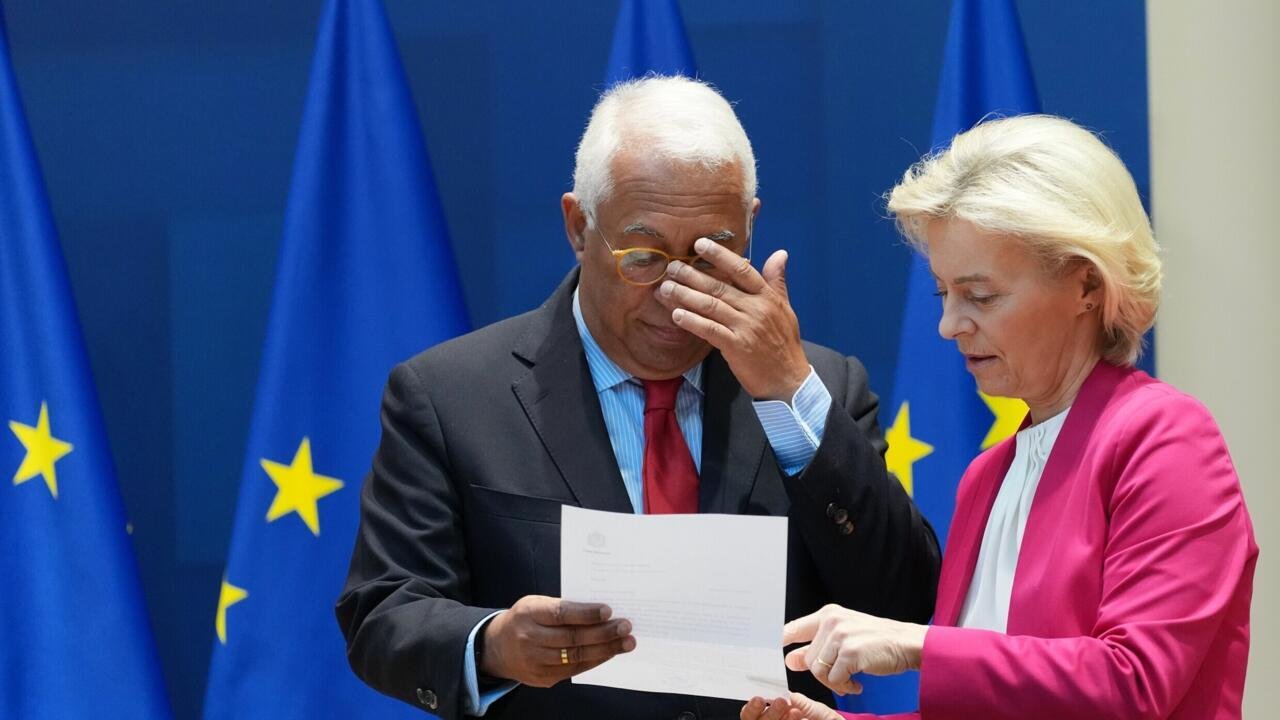
As the European Political Community (EPC) meeting unfolds, it serves as a platform for leaders to explore collaborative approaches to enhancing security and collective resilience. European Council President Antonio Costa noted the importance of this gathering on social media, emphasizing cooperation among nations. The war in Iran has contributed to soaring energy prices, further complicating transatlantic relations.
Tensions Between Europe and the U.S.
The meeting comes in the wake of noticeable strain in U.S.-European relations, especially after a recent exchange between U.S. President Donald Trump and German Chancellor Friedrich Merz. The fallout from Washington’s approach has led to the announcement of troop withdrawals from Germany, raising questions about the U.S. commitment to its NATO allies as Russia’s conflict in Ukraine stretches into its fifth year.
Ukraine’s President Volodymyr Zelensky and NATO chief Mark Rutte are set to participate in the discussions, alongside Macron representing Merz. Notably, Prime Minister Carney will be the first non-European leader to join these talks, marking a growing bond between Canada and Europe amidst the complexities introduced by Trump.
Canada’s Role in the EPC
The summit presents an opportunity to underscore what a senior EU official described as a “360-degree challenge” to European security. Although Canada’s economy has faced similar pressures from U.S. tariffs, Carney has emerged as a significant voice advocating for middle powers to unite amid the shifting global order.
Earlier this year, Carney passionately called for collaboration among nations, warning against complacency in the face of deteriorating international norms. Sebastian Maillard from the Jacques Delors Institute noted that the EPC was initially regarded as an anti-Putin alliance, but now, with Canada’s inclusion, it is evolving into a counterbalance to Trump’s policies.
Growing Ties and Initiatives
In shifting its focus away from the U.S., Canada has become the first non-European nation to join the EU’s defense financing mechanism and is looking to boost trade partnerships. An EU official noted that Canada’s perspective on global challenges resonates closely with issues Europe faces, making it a valuable ally for dialogue.
The EPC Forum: Background and Future Steps
The EPC, established by French President Emmanuel Macron in 2022 following the Ukraine invasion, convenes EU members along with various other countries, ranging from Albania to Britain. While these summits typically do not culminate in binding decisions, they allow for essential dialogue both in groups and bilaterally.
Prior to the meeting on Monday, leaders gathered for an informal dinner in Yerevan. Spanish Prime Minister Pedro Sanchez experienced travel delays but is expected to attend after encountering technical issues with his plane.
Strategic Shifts for Armenia
This summit in Armenia is particularly noteworthy as the country seeks to strengthen its connections with Europe while gradually distancing itself from Russian influence. Following the EPC meeting, an EU-Armenia summit will take place, highlighting the EU’s commitment to enhance its relationship with the three-million-strong nation.
Relations between Armenia and Russia have been strained in recent years, notably after Russian peacekeepers failed to act during conflicts with Azerbaijan. Under Prime Minister Nikol Pashinyan, Armenia is pursuing a strategy of “diversification,” aiming to balance ties with both Russia and the West.
With a partnership agreement formalized in 2017, Armenia has expressed intent to seek EU membership. The EU has also established a mission to assist Armenia in addressing foreign interference, particularly from Russia, ahead of upcoming elections.
Russia’s Stance
While President Putin claims to be “completely calm” regarding Armenia’s growing ties with Europe, he cautions that engagement with both the EU and the Russian-led Eurasian Economic Union is “simply impossible.”
Conclusion
The gathering of European leaders in Armenia underscores a pivotal moment in international diplomacy, signaling a shift in alliances and the pursuit of security collaboration amid rising global tensions.
- European leaders are gathering in Armenia to discuss security challenges.
- U.S.-European relations are under strain due to geopolitical developments.
- Canada’s participation reflects deepening ties with Europe.
- Armenia is seeking to balance its foreign relations amid regional pressures.