

Ukraine Aids US Bases in Jordan Amid Ongoing Conflict
In a strategic move, Ukraine’s President Volodymyr Zelenskyy has announced the deployment of interceptor drones and operators to safeguard US military bases in Jordan. This decision comes as part of an effort to bolster security in the region amidst the ongoing US-Israeli conflict with Iran, which has recently intensified.
Responding to Requests for Assistance
Last week, Zelenskyy revealed that he had agreed to a US request for assistance in defending Jordan, one of 11 nations reaching out to Kyiv for help amid escalating tensions with Iran. Highlighting Ukraine’s commitment to enhancing relationships with Gulf and Middle Eastern countries, Zelenskyy disclosed on social media that these nations had presented a mix of requests, some of which have already yielded “concrete decisions and specific support.”
Details of the Deployment
Specifically, the assistance for Jordan, which hosts a significant US military presence at the Muwaffaq Salti airbase, was formalized on Thursday, with a Ukrainian team departing promptly thereafter. Intelligence from satellite imagery has indicated that Iranian attacks have compromised the radar systems utilized by the US Thaad air defense mechanism stationed at the base, echoing a troubling pattern of regional assaults.
Diplomatic Engagements
Orysia Lutsevych, from the Chatham House think tank, noted that Ukraine is keen to position itself as a valuable ally, especially to Western counterparts, by offering its combat experience in exchange for support and goodwill. Zelenskyy has actively engaged with various leaders from Saudi Arabia, the UAE, Kuwait, Bahrain, Qatar, and Jordan over the past week. After a conversation with Saudi Crown Prince Mohammed bin Salman, Zelenskyy emphasized the importance of coordinated security efforts across Europe and the Middle East.
Ukrainian Air Defense Developments
In recent months, Ukraine has faced relentless assaults from swarms of Shahed-136 drones, initially engineered in Iran and subsequently produced in Russia. This situation has compelled Kyiv to innovate cost-effective air defense strategies to intercept these threats successfully, achieving remarkable interception rates reaching as high as 90%. Last Saturday, Ukraine’s air force reported successfully neutralizing 453 out of 480 incoming drones.
Intercepting Drones Innovatively
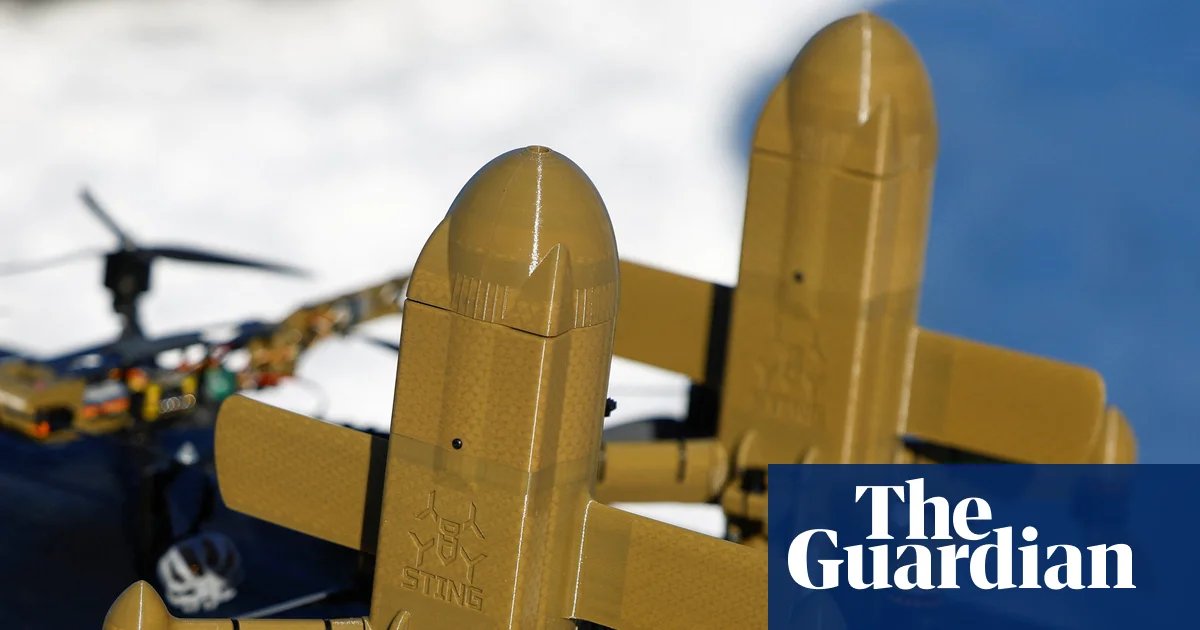
While Ukraine’s initial defensive efforts relied heavily on ground-based machine gun teams and limited fighter aircraft, they have transitioned to utilizing affordable Shahed interceptors, operated remotely. These include the Sting missile, produced by Wild Hornets, priced around $2,000 per unit. February statistics indicated that interceptor drones were able to destroy over 70% of Shahed-style attack drones around Kyiv, showcasing significant advancements in their defense strategy.
Contrasts with Regional Defense Strategies
In stark contrast, Middle Eastern and Gulf nations have predominantly relied on US-made Patriot and Thaad systems to tackle missile and drone threats from Iran. The cost disparity is notable: while a Shahed-136 is priced at approximately $50,000, a single Patriot interceptor can cost around $4 million. Zelenskyy informed that more than 800 Patriots were deployed in just three days of the conflict last week—an astonishing amount considering the global annual production limits.
Missile Defense Dynamics
There are two variants of Patriot interceptors: the Pac-2, which utilizes explosive fragmentation, and the more advanced Pac-3 “hit to kill” missiles. The manufacturing rates reveal the disparity in capability and availability, with 300 Pac-2 missiles produced annually by Raytheon and 600 Pac-3 missiles by Lockheed Martin. The ongoing hostilities have indicated a potential strain on these interceptors, with Iran’s missile activity reported to have decreased significantly since the US and Israel’s coordinated attacks.
Conclusion
As the conflict continues, the dynamics of military support and regional defense mechanisms remain crucial. Ukraine’s involvement in protecting US bases not only reinforces international alliances but illustrates the ongoing need for collaborative security efforts in the face of evolving threats.
- Ukraine deployed interceptor drones to assist US bases in Jordan amid heightened conflict.
- Zelenskyy is fostering relationships with Middle Eastern nations to enhance regional security.
- Ukrainian air defense strategies have evolved to achieve high interception rates against drone attacks.
- Distinctions exist between Ukraine’s low-cost interceptors and the expensive US-made defense systems used in the Gulf.