

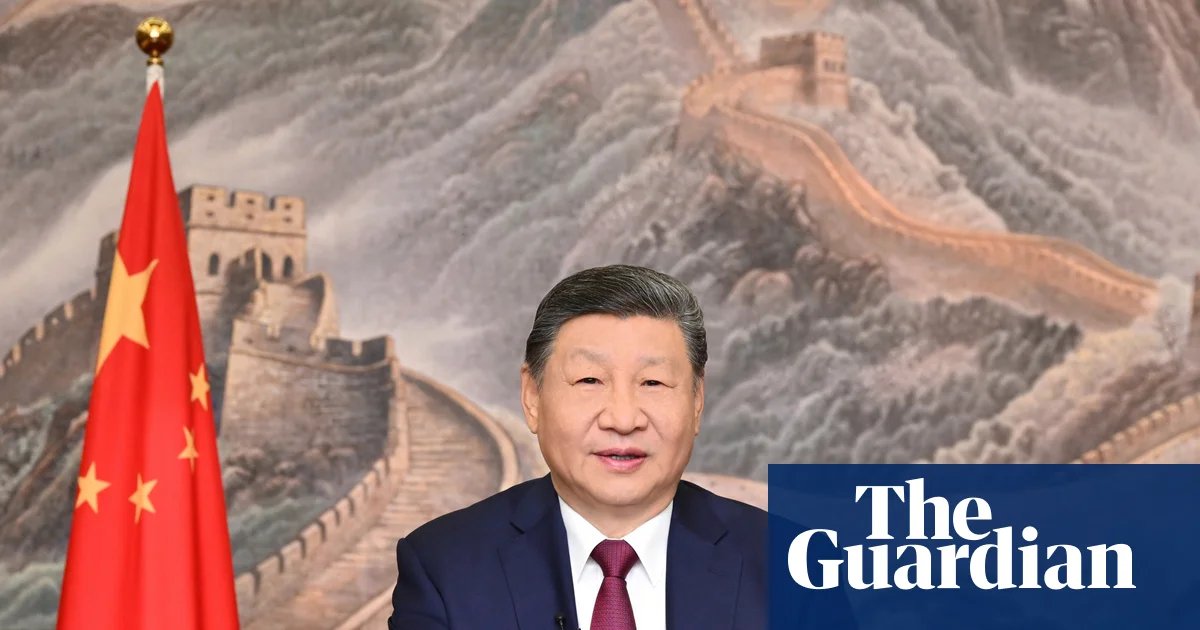
Xi Jinping’s Resolve on Taiwan: A New Year Address
In a significant New Year’s Eve address, China’s President Xi Jinping reaffirmed his commitment to the reunification of China and Taiwan, following a series of robust military exercises around the self-governing island. This speech comes amid a growing atmosphere of tension and strategic military moves in the region.
Emphasizing Reunification
During his speech delivered in Beijing, Xi declared, “The reunification of our motherland, a trend of the times, is unstoppable.” His comments followed military drills by the People’s Liberation Army, which simulated a blockade around Taiwan and featured extensive aerial and naval operations. The drills, dubbed “Justice Mission 2025,” involved over 200 warplanes and the firing of missiles, with some landing alarmingly close to Taiwan’s shores.
Despite the conclusion of these exercises, Taiwan remains vigilant, with Chinese naval and coast guard vessels still positioned in close proximity. Additionally, surveillance balloons were spotted, adding to the unease in the region. Analysts suggested that these military maneuvers were likely a response to the U.S. government’s recent arms approval for Taiwan, which included record weapons sales.
Global Reception and Concerns
Xi’s address was warmly received within China, where he showcased the country’s international engagements, including notable multilateral summits that featured leaders from Russia, India, and Turkey. His speech was frequently punctuated by images of China’s assertive military parades, notably one honoring the end of World War II, highlighting the geopolitical alliances between China, Russia, and North Korea.
However, this show of strength has garnered criticism from several nations, including Japan, the United States, and the European Union. In response to their remarks, China’s foreign ministry issued formal protests, emphasizing their stance against what they describe as “Taiwan independence” movements and claiming support from external forces.
Reflections on History and Sovereignty
Central to Xi’s vision is the integration of Taiwan into the framework of “One China,” a notion that is largely rejected by the Taiwanese populace. In a parallel development, Taiwan’s President Lai Ching-te has vocally criticized China’s military ambitions, underscoring the importance of national sovereignty and defense readiness. In his own New Year address, he called for a cessation of political bickering to focus on strengthening Taiwan’s defense capabilities.
Adding depth to this ongoing dialogue, Xi also looked back at Taiwan’s historical ties to China. He introduced the concept of “Taiwan Retrocession Day,” a newly declared observance to mark Taiwan’s return to Chinese rule post-World War II. This day, set for October 25, saw approval from Taiwan’s government, indicative of an evolving national narrative amid historical contexts.
Technological and Economic Aspirations
In his address, Xi also highlighted key advancements in technology, showcasing China’s achievements in high-tech and cultural exports, including the success of video games and animated films. He expressed optimism about the nation’s economic outlook, indicating a trajectory toward reaching the GDP growth target of 5%.
Conclusion
As tensions continue to simmer in the Taiwan Strait, both leaders have articulated their distinct visions for the future. Xi’s unwavering dedication to reunification contrasts sharply with Taiwan’s commitment to maintaining its sovereignty, setting the stage for ongoing regional complexities in the coming year.
- Xi Jinping reiterated China’s ambitions for Taiwan reunification in his New Year’s Eve speech.
- China conducted military drills around Taiwan, raising alarm in the region.
- Global criticism of China’s actions highlights rising geopolitical tensions.
- Taiwan’s leadership calls for unity to bolster defense against external pressures.