

Defending Taiwan: President Lai’s Commitment Amid Rising Tensions
In a landscape marked by rising tensions, Taiwanese President William Lai Ching-te has expressed a firm commitment to uphold national sovereignty. His statements come on the heels of recent military exercises conducted by China around Taiwan, reflecting ongoing concerns about Beijing’s intentions. This article explores President Lai’s pledges and the context surrounding these developments, including China’s aims for reunification.
China’s Assertive Stance
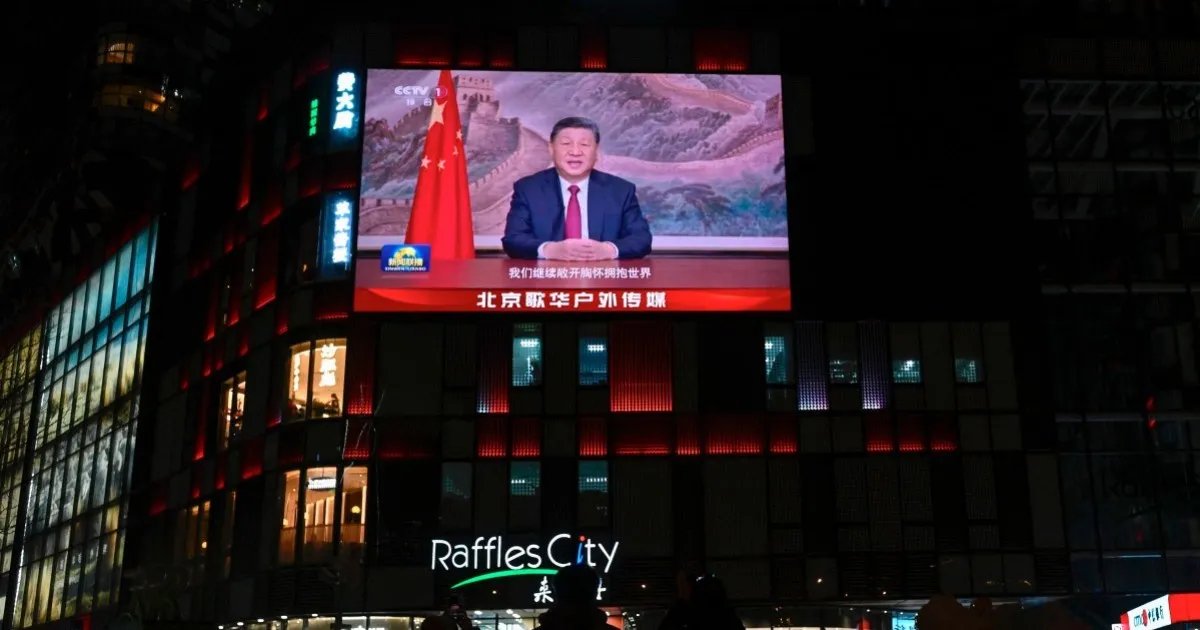
Chinese President Xi Jinping has reiterated his determination to achieve what he labels the “reunification” of Taiwan with China, characterizing this goal as “unstoppable.” In a recent address marking the New Year, he spoke of the “bond of blood and kinship” shared by the Chinese people across the Taiwan Strait.
Live-Fire Drills as a Warning
Xi’s remarks followed extensive live-fire military drills conducted by China around Taiwan, which officials described as a stern warning against “separatists” and “external interference.” These drills, referred to as “Justice Mission 2025,” were the largest of their kind in terms of the area covered, simulating a blockade of the island.
Historical Context and Future Plans
In his speech, Xi announced the establishment of an annual “Taiwan Recovery Day” starting in 2025, commemorating the end of Japanese rule in Taiwan after World War II. This move underscores China’s narrative surrounding Taiwan’s status and aims to reinforce domestic sentiments regarding reunification.
Taiwan’s Defiance and International Dynamics
Despite China’s pressure, Taiwan, governed by the Democratic Progressive Party, insists on its de facto independence. The island operates under its own military, financial system, and national identity, although it lacks widespread international recognition—officially acknowledged by only 11 countries and the Vatican.
Support from the United States
While the U.S. does not formally recognize Taiwan, it plays a crucial role in supporting the island’s defense capabilities. This is evident through the recent approval of an $11.1 billion arms package aimed at bolstering Taiwan’s military amidst escalating tensions. However, the Taiwan Relations Act of 1979 does not bind the U.S. to intervene militarily in the event of a Chinese invasion.
Public Sentiment
Polls indicate a strong preference among the Taiwanese population for maintaining the current status quo, with less support for immediate moves towards formal independence or reunification.
China’s Economic Aspirations
In addition to military ambitions, Xi highlighted China’s advancements in various industries such as artificial intelligence and space exploration during his speech. He emphasized the importance of innovation for driving high-quality economic development, noting that the country has made significant strides in technological sectors.
Conclusion
As Taiwan faces increased military pressure from China, President Lai’s commitment to safeguarding the island’s sovereignty takes on greater significance. The delicate balance between maintaining the status quo and responding to external threats remains a critical focus for Taiwan and its international partners.
Key Takeaways
- President Lai pledges to defend Taiwan’s sovereignty amidst escalating tensions with China.
- Xi Jinping declares the “reunification” of Taiwan and China as an unstoppable goal.
- The recent live-fire drills by China are seen as a direct warning to Taiwan and its allies.
- Public opinion in Taiwan favors maintaining the current status over a push for formal independence or unification.