

Struggles in Gaza: Winter Rain Floods Displacement Camps
This past weekend, severe winter rains hit the Gaza Strip, flooding displacement camps and impacting countless Palestinians. Many are struggling to keep dry in worn-out tents following more than two years of devastation from ongoing conflicts. This article delves into the challenges faced by those affected, the emotional toll of losing loved ones, and the desperate need for aid in this beleaguered region.
Devastating Conditions in Displacement Camps
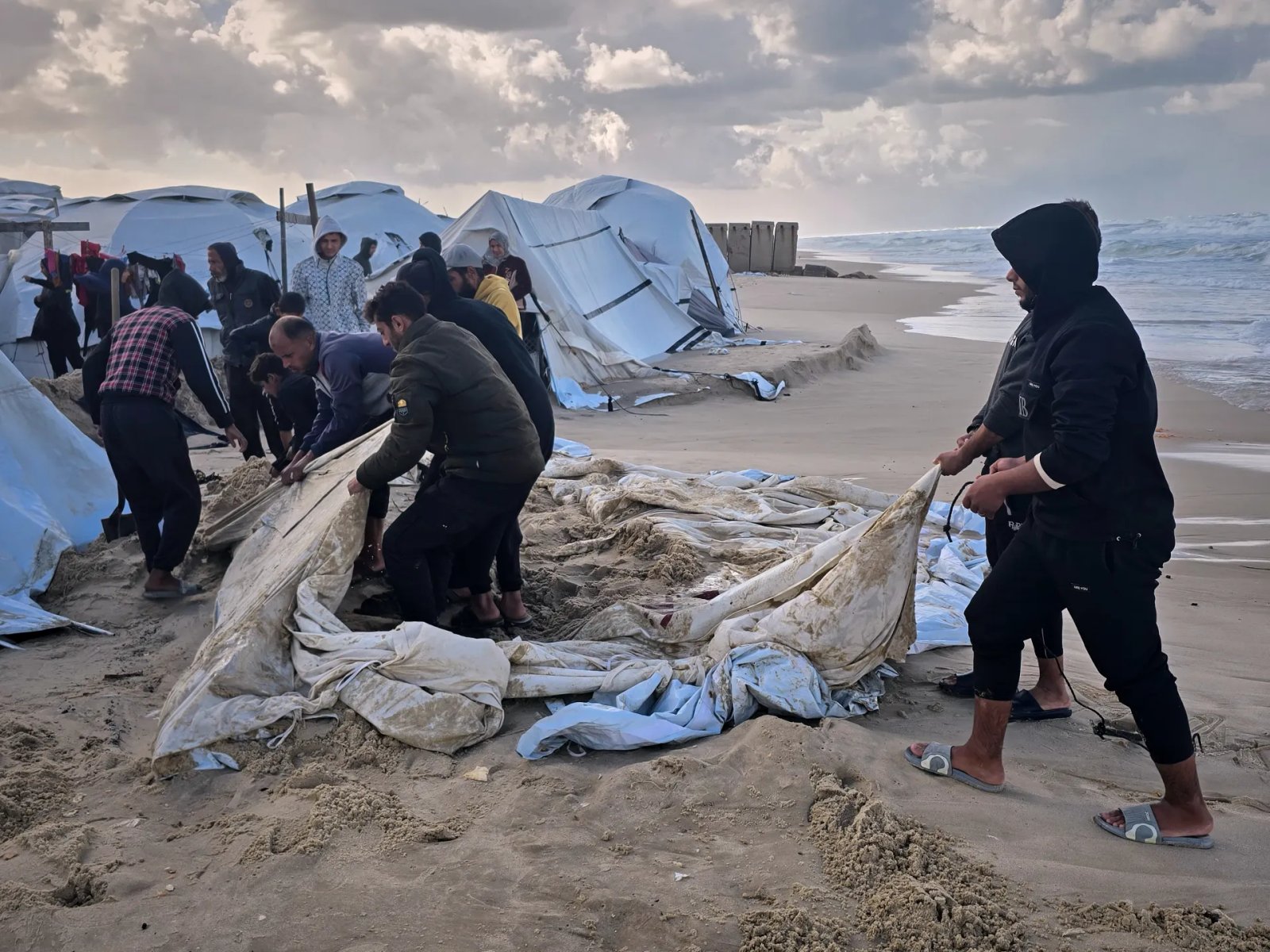
In Khan Younis, the scene is grim. Soaked blankets and inundated clay cooking ovens paint a picture of despair. Children attempt to traverse through the waterlogged grounds in flip-flops, while adults frantically use shovels and tin cans to scoop water out of their tents. The sound of collapsing shelters fills the air, heightening the urgency of the situation.
Voices of Displacement
“Puddles formed, and there was a bad smell,” shared Majdoleen Tarabein, currently displaced from Rafah. “Our tent flew away. We are lost, unsure of what we should do or where we can go.” Majdoleen and her family have resorted to wringing out wet blankets by hand in hopes of finding some comfort.
Eman Abu Riziq, also displaced in Khan Younis, recounted her difficult morning: “When we woke up, we discovered that water had come into the tent. These mattresses are completely soaked.” With heavy hearts, she added that her family is still mourning the loss of her husband, who passed away just two weeks ago. “Where are the mediators? We don’t want food or other items; we are exhausted. We just need mattresses and covers,” Fatima Abu Omar pleaded, desperately trying to prop up her collapsing shelter.
The Human Toll of Winter
Tragically, at least 15 individuals, three of whom were infants, have succumbed to hypothermia this month due to the relentless rains and falling temperatures, as reported by local authorities. Emergency personnel have been cautious, advising residents against staying in damaged buildings that risk collapse. However, with much of the Gaza Strip reduced to rubble from continuous bombardments, viable shelter options remain alarmingly limited.
Statistics on the Ground
According to United Nations estimates from July, nearly 80 percent of Gaza’s structures have been either destroyed or severely damaged. Since the ceasefire between Israel and Hamas took effect, the conflict has claimed 414 lives and left 1,142 wounded, bringing the overall Palestinian death toll to a staggering 71,266, as indicated by the Health Ministry.
Challenges in Aid Delivery
Reports from humanitarian groups indicate that aid deliveries to Gaza are woefully inadequate compared to the amounts mandated by the ceasefire agreement. The Israeli military authority responsible for overseeing humanitarian aid disclosed that 4,200 aid trucks entered Gaza last week, carrying sanitation supplies and winter provisions. However, they did not provide specific numbers regarding tents delivered. Aid organizations stress that the current supplies fall drastically short of the overwhelming need.
Since the ceasefire, around 72,000 tents and 403,000 tarps have been delivered to Gaza, according to the Shelter Cluster, an international coalition of aid organizations led by the Norwegian Refugee Council. “People in Gaza are existing in flimsy, waterlogged tents amidst ruins,” lamented Philippe Lazzarini, the UN refugee aid commissioner for Gaza. “There is nothing inevitable about this situation; assistance is not being permitted at the required scale.”
Conclusion
The humanitarian crisis in Gaza remains dire as winter conditions exacerbate the suffering of displaced families. The need for substantial aid is urgent, and the resilience of those affected is being tested in unimaginable ways. It is crucial for authorities to address these pressing needs and ensure aid reaches those who require it most.
- Severe winter rains have flooded displacement camps in Gaza.
- Many families are living in dilapidated and waterlogged tents.
- Over 15 individuals have died from hypothermia this month.
- Aid supplies are insufficient to meet the ongoing humanitarian crisis.