

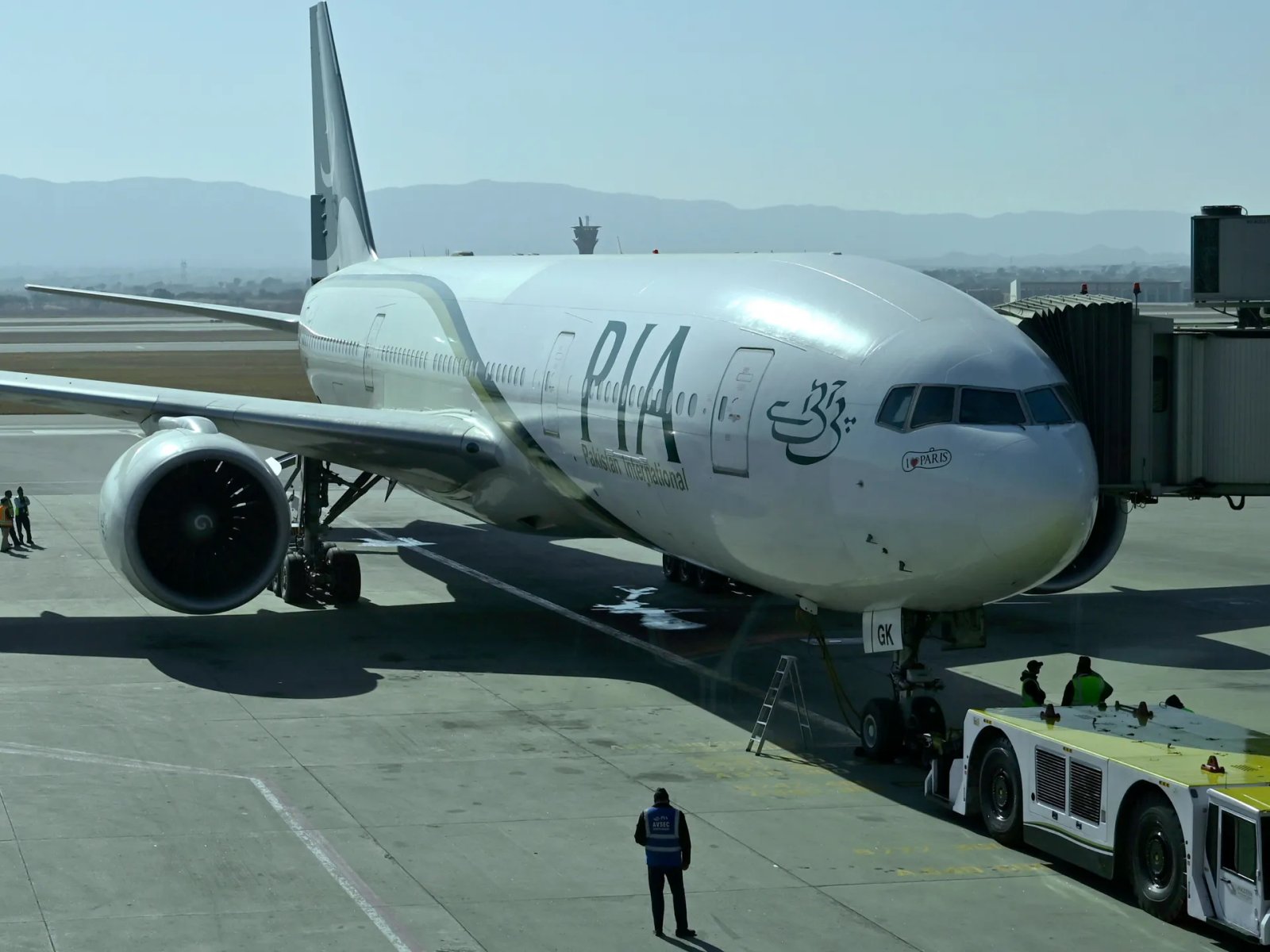
Pakistan International Airlines Takes a Major Step Towards Privatization
Islamabad, Pakistan – In a groundbreaking move, the government of Pakistan has officially sold a majority stake in Pakistan International Airlines (PIA), concluding its longstanding journey as the national carrier after seventy years. This sale, announced as part of a publicly broadcast auction, fetched $482 million and ends years of unsuccessful attempts at privatization.
The Winning Consortium
Leading the successful bidding effort was Arif Habib Limited (AHL), a securities brokerage based in Karachi. The consortium included prominent players such as AKD Group Holdings Limited, fertilizer manufacturer Fatima Fertilizer, the City Schools network, and real estate company Lake City Holdings Limited. Shortly after the auction, Fauji Fertilizer Company Limited (FFC), which is publicly listed and military-owned, joined the group.
This auction marked the second formal initiative to privatize PIA; a previous attempt in October 2024 ended in failure when a single bid of $36 million fell well below the government’s minimum requirement of $305 million. The push for privatization came under the influence of the International Monetary Fund (IMF), which directed Islamabad to divest loss-making state-owned enterprises. Currently, Pakistan is navigating a $7 billion loan program from the IMF, which necessitates the completion of PIA’s privatization by year-end.
Details of the Auction
The bidding, held in a bustling five-star hotel in Islamabad, lasted around 90 minutes and featured several pauses. Three parties strategically emerged to compete for a 75% stake in the airline. To entice investors, the government restructured PIA by separating over $2.3 billion in long-term liabilities into a different entity, while also providing guarantees for policy continuation and tax relief—measures that received IMF approval.
- Air Blue was disqualified for offering $94.59 million, falling short of the government’s minimum ask of $356.9 million.
- After the two competitive groups met the floor price, AHL’s consortium emerged triumphant with a final offer of $482 million.
During a news conference following the auction, Muhammad Ali, the government’s privatization advisor, announced that 92.5% of the winning bid, or approximately $446 million, would be reinvested into PIA. The government will retain a 25% stake valued at around $160.6 million. Furthermore, AHL expressed intentions to acquire the remainder of the stake, with plans to relaunch the airline by April next year. The consortium is required to submit two-thirds of the purchase price within three months, with the final third due within a year, along with a decision regarding the remaining 25% stake within the same timeframe.
The Necessity of Privatization
Once hailed as Pakistan’s pride, PIA catered to global routes and even wore uniforms designed by famed designer Pierre Cardin. Founded in 1955 with only 13 aircraft, it rapidly expanded its operations. PIA was the first Asian airline to operate jet aircraft and played a pivotal role in the establishment of Emirates in the 1980s. Fast forward two decades, and the airline is now seen as a financial drain on the government, burdened with significant debt.
With over $1.7 billion in liabilities added from 2015 to 2024, and long-term debts surpassing $2.3 billion, various governments have struggled to privatize PIA amidst opposition and labor protests. Unlike past attempts, this initiative involved comprehensive preparation and learned lessons from prior failures, according to Ali. Once operating nearly 50 aircraft and serving around 40 international destinations, PIA’s current active fleet has shrunk to just 18 out of 33, now servicing about 30 destinations and controlling roughly 30% of the domestic market—a stark decline from its previous 60% share.
Moreover, PIA has maintained landing rights at 78 destinations and access to more than 170 airport slots. Although the airline employed over 19,000 staff members in 2014, that number has dwindled to under 7,000 over the years. The situation worsened following a tragic plane crash in June 2020 that killed 97 people, leading to suspensions of PIA flights to the UK and Europe. Although these bans were lifted by late 2024, concerns linger over the airline’s management and safety.
Concerns and Criticisms
While the government celebrates the sale as a monumental success with symbolic significance, opposition parties have raised alarms. The Tehreek Tahafuz Ayeen-i-Pakistan (TTAP), an alliance that includes former Prime Minister Imran Khan’s Pakistan Tehreek-e-Insaf (PTI), denounced the sale as lacking public consent, parliamentary oversight, and transparency.
Critics have questioned the integrity of the bidding process, with some arguing that the actual amount received by the government seemed deceptively low when considering the reinvestment back into PIA. However, Ali countered that the government would ultimately receive about $196 million in value along with a significant flow of funds back into the airline.
Several economists believe this deal is the best possible outcome for PIA, emphasizing that its routes and landing rights, while valuable, could only be maximized through significant investment that the state could not provide. Khurram Husain, an economic commentator, remarked that handing over PIA to the private sector was vital to curtailing losses.
Who is in the Consortium?
The consortium is steered by Arif Habib, whose companies cover brokerage, fertilizers, steel, and real estate. Other collaborators include Fatima Fertilizer, part of a larger group with interests in various sectors; City Schools, which has over 500 campuses; and real estate developers Lake City Pakistan. AKD Holdings, led by entrepreneur Aqeel Karim Dhedhi, also joined the initiative.
FFC’s involvement has stirred debate due to its military connections. As Pakistan’s largest fertilizer producer, FFC’s entry may signify an expanding military influence into the aviation industry, a concern raised by critics pointing to the military’s historical hold on the country’s economic framework.
Experts also predict that FFC’s participation could foster greater confidence among investors in an otherwise unpredictable political landscape. As the economy continues to grapple with challenges surrounding state-owned enterprises, the privatization of PIA marks a significant transition, albeit one that will require ongoing scrutiny.
Conclusion
The recent sale of Pakistan International Airlines signals a critical moment in the country’s economic landscape, as it strives to minimize the burden of loss-making state-owned enterprises. While the road ahead is uncertain, this privatization could potentially usher in a new chapter for PIA, provided it adapts to the competitive aviation environment.
- The government has privatized PIA, selling a 75% stake for $482 million.
- The winning consortium includes major firms and military-affiliated companies.
- Criticism over the auction process emphasizes the need for transparency and accountability.
- Future success will hinge on efficient management and investment in the airline’s infrastructure.