

The U.S. Ambitions for Greenland: A Discussion on National Security and Sovereignty
The topic of Greenland has been a point of contention, especially in the context of U.S. national security. Former President Donald Trump’s calls for the U.S. to acquire Greenland have prompted significant reactions from Greenland’s local leaders and Denmark. In this article, we explore why Greenland holds strategic importance for the U.S. and the implications of Trump’s stance.
Understanding Greenland’s Strategic Importance
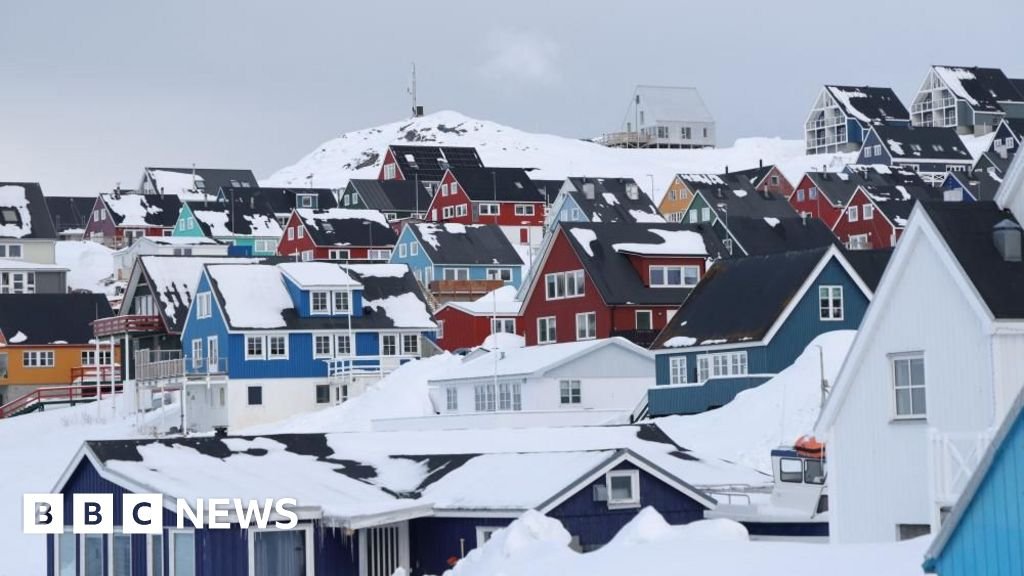
Greenland, the largest island globally that is not classified as a continent, is located in the Arctic region. Despite its vast size, it has a minimal population, with around 56,000 residents, primarily composed of indigenous Inuit people. About 80% of its land is covered by ice, leading most inhabitants to live on the southwestern coast, particularly around its capital, Nuuk.
The economy of Greenland heavily relies on fishing and receives substantial financial aid from the Danish government. Recently, interests in the island’s natural resources—such as rare earth minerals, uranium, and iron—have surged. As global warming continues to melt the ice sheets, these resources are becoming increasingly accessible.
While Trump has emphasized that his interest in Greenland is rooted in national security rather than mineral wealth, he has pointed out the increasing presence of Russian and Chinese naval forces in the region, asserting that this is a national security issue that the U.S. cannot ignore.
Trump’s Vision for Greenland
In light of various international military operations, Trump reiterated his desires for U.S. control of Greenland, insisting on its strategic importance for both American and European security. When questioned about the feasibility of acquiring Greenland, he maintained a serious tone, despite strong objections from its local government.
Greenland’s Prime Minister, Jens Frederik Nielsen, responded firmly, stating that the notion of U.S. ownership is merely a “fantasy.” Despite this, Trump’s administration continued to echo such sentiments, with aides suggesting that claiming Greenland would not provoke military confrontations with other nations.
During his presidency, Trump even proposed purchasing the island, but was met with a swift dismissal from Denmark, reaffirming that Greenland is not for sale. After resuming office in early 2025, Trump revived discussions around Greenland, hinting at potential aggressive measures should diplomatic avenues fail.
International Relations and Reactions
Trump’s proposition has generated notable backlash not just from Denmark but also among other NATO allies. Prime Minister Mette Frederiksen of Denmark expressed that any attempts to take over Greenland would jeopardize NATO itself. The UK’s Sir Keir Starmer, addressing the situation, stated a resolute “hands off Greenland” in solidarity with the Danish perspective.
A statement co-signed by European leaders emphasized the right of Greenland and its people to determine their future, underscoring that decisions regarding the territory should remain within the control of its residents and their government.
Historical Context of Danish Control
Though geographically part of North America, Greenland has been under Danish governance for nearly 300 years. American interests in Greenland have historical roots, with two previous administrations attempting to secure the territory during the 20th century. Following World War II and the occupation of Denmark by Nazi Germany, the U.S. established military bases in Greenland that continue to operate today.
The defense agreement solidified in 1951 reinforced the U.S.’s strategic role in protecting the island. By 1979, Greenland garnered home rule, gaining control over many local matters, while Denmark retained authority over foreign affairs and defense.
Public Sentiment in Greenland
Responding to Trump’s ambitions, Prime Minister Nielsen firmly declared that Greenland would not succumb to undue pressure or dreams of annexation. He invited open dialogue, rooted in respect for international laws and norms.
In conversations with residents, a consistent sentiment emerged: “Greenland belongs to Greenlanders.” During the 2025 elections, this phrase rang true, reflecting a strong desire among the population for independence from Denmark, coupled with a widespread rejection of U.S. claims. Locals expressed their concerns, likening Trump’s comments to treating Greenland as a mere asset rather than a nation with its own identity.
Conclusion
The discussion surrounding Trump’s desires for Greenland highlights profound questions about international relations, sovereignty, and the ethical implications of territorial claims. While U.S. national security interests are valid, the rights and opinions of Greenlanders must also take precedence in determining the island’s future.
- Greenland has strategic significance, both geologically and in terms of resources.
- Trump’s claims for U.S. control face strong opposition from Greenland and Denmark.
- The historical context of Danish governance shapes the current geopolitical landscape.
- Public sentiment in Greenland favors self-determination and independence from external control.