

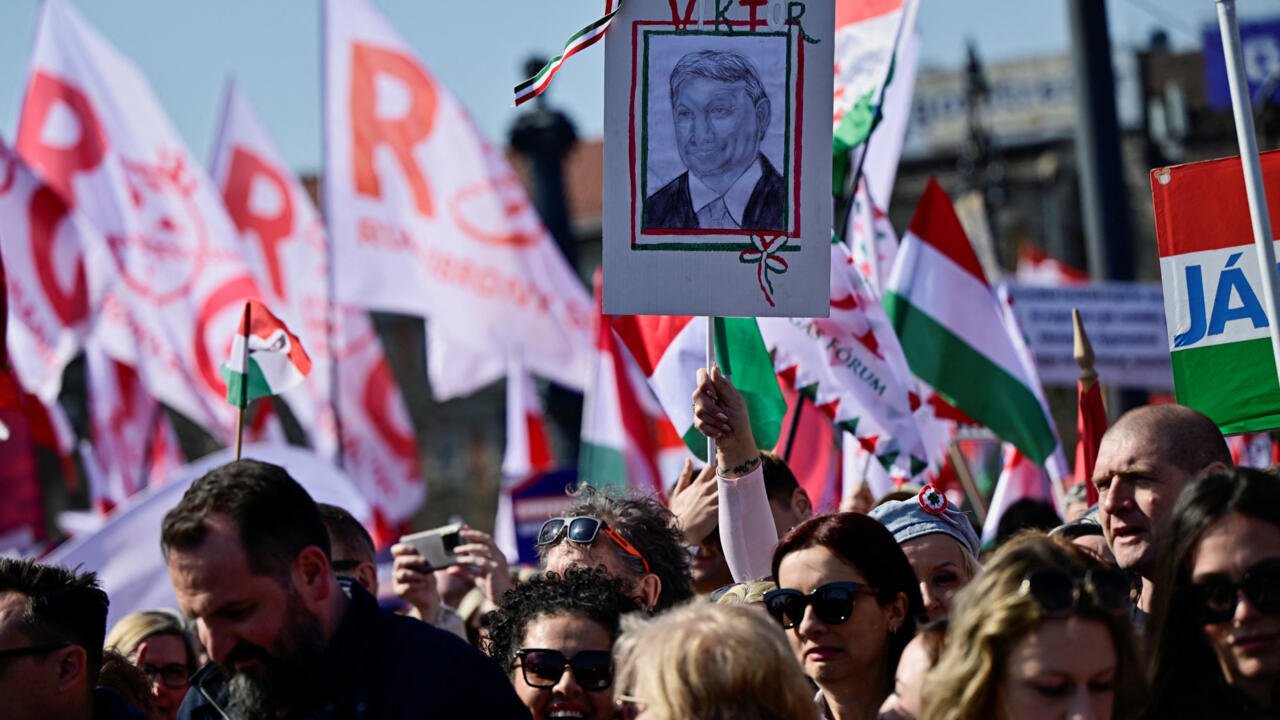
The Political Tensions in Hungary: Examining the Strategy of Viktor Orban
In 1241, the Mongol invasion of Hungary left a lasting scar on the nation’s psyche, marked by turmoil and tragedy. As Hungary prepares for pivotal parliamentary elections in April, Prime Minister Viktor Orban is cleverly evoking echoes of this historical chaos. His party, Fidesz, has shifted focus to a contemporary foreign menace—Ukraine—emphasizing it as a key part of their re-election strategy. By amplifying tensions with Ukraine, Orban aims to galvanize support while redirecting attention from pressing domestic issues.
The Historical Context and Its Modern Implications
The Mongol invasion centuries ago decimated Hungary’s religious leadership and left rampant destruction in its wake, a shadow still looming in the national consciousness. Today, Orban’s government is seeking to utilize this historical fear to shape political narratives, emphasizing a perceived threat from Ukraine. Michael Ignatieff, a former Canadian opposition leader, notes that Orban’s rhetoric includes not only opposition to military aid for Ukraine but also a personal onslaught against Ukrainian President Volodymyr Zelensky. “The narrative now suggests that Zelensky will draw Hungary into conflict, leading to loss of Hungarian lives,” Ignatieff stated.
Fidesz’s Campaign Strategies
Fear as a Tool for Distraction
Initially, Fidesz campaigned on domestic accomplishments and foreign policy angles. However, Richard Demény from Political Capital remarks that this messaging has failed to resonate with voters seeking improvement in public services like education and healthcare. “In order to distract from these shortcomings, Fidesz has turned to fear-driven narratives, amplifying anxiety about an imminent war,” said Demény.
Rising Opposition
As support for Orban’s party wanes, the center-right Tisza party, led by Peter Magyar, is gaining traction. Magyar’s supporters are eager for change after 16 years of Orban’s rule. In response to the shifting political landscape, Orban has ramped up his aggressive stance towards Ukraine.
Utilizing Scare Tactics
In a recent campaign video, a young girl’s inquiry about her father is juxtaposed with horrifying imagery of violence, culminating in the statement, “This is only a nightmare now, but Brussels is preparing to make it a reality. Fidesz is the safe choice!” This implies that a victory for Tisza would thrust Hungary into war. Daniel Hegedüs of the Institute for European Politics comments that for the first time, Orban is accusing the Ukrainian government and EU institutions of conspiring against him, aiming to establish a pro-Ukraine governance in Hungary.
The Oil Blockade and Rising Tensions
Central to the growing discord with Ukraine is what Orban refers to as “the Ukrainian oil blockade.” Relations have soured since Russian oil supplies to Hungary halted in January due to pipeline damage attributed to Russian drone strikes. Orban claims that Zelensky is deliberately obstructing oil deliveries, a notion that has been vehemently denied by the Ukrainian leader. In retaliation, Orban has vetoed a significant €90 billion EU loan intended for Ukraine, stating, “If President Zelensky wants his funds from Brussels, he must reopen the friendship oil pipeline.” He has even gone so far as to allege that Ukraine is plotting against him and his family.
Creating Enemies to Unite
Ignatieff asserts that Orban’s political playbook relies on the creation of enemies. Whether it was Brussels, George Soros, or now, Peter Magyar, these figures are cast as foreign threats to Hungary’s integrity. Orban positions himself as the steadfast defender of the nation against perceived conspiracies. However, Magyar counters this narrative by engaging passionately with voters through folk songs and patriotic displays, connecting effectively with the nationalist sentiment.
Conclusion
This strategy of leveraging historical fears to consolidate power may resonate with certain voters, as the scars of the past remain deeply embedded in Hungary’s national identity. Against the backdrop of contemporary political challenges, Orban’s tactics reflect a complex interplay of history and modernity.
Key Takeaways
- The Mongol invasion has historically shaped Hungary’s national psyche.
- Viktor Orban is currently leveraging fears of Ukraine as part of his re-election strategy.
- Opposition leader Peter Magyar is gaining ground and presenting a viable challenge to Orban.
- Orban’s tactics include the creation of enemies to unite and rally his support base.