

US Approves $10 Billion Arms Deal with Taiwan Amid Rising Tensions with China
The Trump administration has unveiled a significant arms package for Taiwan, valued at over $10 billion. This extensive deal includes medium-range missiles, howitzers, and drones, eliciting a strong backlash from China. The announcements reflect ongoing tensions between the United States and China, particularly regarding Taiwan’s status.
Details of the Arms Package
Late on Wednesday, the State Department disclosed the specifics of the arms sales during a televised address by President Trump, who notably omitted any mention of China or Taiwan. US-China relations have experienced fluctuations during Trump’s presidency, particularly concerning trade and China’s posture toward Taiwan, which Beijing insists must unify with the mainland.
The eight agreements announced encompass a variety of military equipment, including:
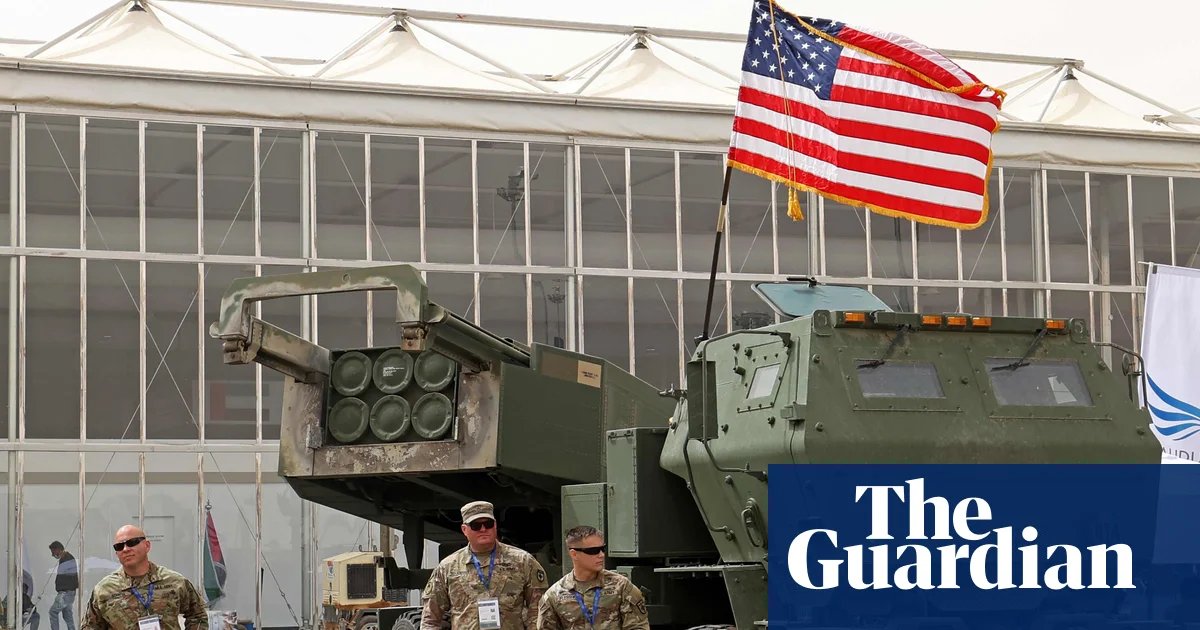
- 82 high-mobility artillery rocket systems (Himars) and 420 tactical missile systems (Atacms) valued at more than $4 billion. These systems are similar to those supplied to Ukraine in its defense against Russia.
- 60 self-propelled howitzer systems, alongside related equipment, also worth over $4 billion.
- Drones and military software amounting to more than $1 billion.
- Javelin and Tow missiles exceeding $700 million, helicopter spare parts valued at $96 million, and refurbishment kits for Harpoon missiles costing around $91 million.
The State Department indicated that these sales align with “US national, economic, and security interests” by aiding Taiwan’s modernization of its armed forces and enhancing its defensive capabilities. Such moves are intended to support political stability and maintain military balance in the region.
Reactions from China
The Chinese government condemned the arms sales, arguing that they violate diplomatic agreements between Beijing and Washington, threaten regional stability, and jeopardize China’s sovereignty. Guo Jiakun, a foreign ministry spokesperson, asserted that the arms would escalate tensions and transform Taiwan into a “powder keg.” He emphasized that US support for Taiwan’s autonomy would ultimately fail to restrain China’s ambitions.
Amid the increasing military assertiveness from China, federal law mandates US support for Taiwan’s self-defense, a point that has become a contentious issue. Historically, Trump has prompted discussions about Taiwan compensating the US for its defense commitments.
Taiwan’s Response and Defense Spending Plans
In light of China’s military exercises around the island in 2022, US and Taiwanese officials have fast-tracked approval for these arms sales. Taiwan’s defense ministry has expressed appreciation for the US support, asserting that these acquisitions are crucial for ensuring the island’s self-defense and contributing to regional peace.
Taiwanese Foreign Minister Lin Chia-lung echoed this sentiment, thanking the US for its assistance in bolstering Taiwan’s defense capabilities amidst threats from Beijing. In anticipation of the rising challenges, Taiwan has committed to increasing its defense spending to 3.3% of its GDP next year and aims for 5% by 2030—a move that has received mixed reactions domestically.
Additionally, President Lai Ching-te has proposed a special $40 billion budget for arms expenditures over the next eight years, intended to enhance air defense systems. However, approval for this budget has faced hurdles in Taiwan’s legislature, with opposition lawmakers blocking key proposals.
Conclusion
The recent arms sales package to Taiwan highlights not only the ongoing tensions between China and the United States but also Taiwan’s commitment to fortifying its military capabilities amid the evolving geopolitical climate. As Taiwan seeks to defend itself and maintain regional stability, the response from China underscores the delicate balance in cross-strait relations.
- The US has approved a $10 billion arms deal with Taiwan, featuring missiles and drones.
- China condemned the move, claiming it threatens regional stability and violates diplomatic agreements.
- Taiwan plans to increase defense spending significantly to counter Beijing’s threats.
- Internal legislative challenges may hinder Taiwan’s defense budget and military procurement efforts.