

Understanding the Dangers of PFM-1 Anti-Personnel Mines in Ukraine
In the ongoing conflict in Ukraine, PFM-1 anti-personnel mines, commonly referred to as “petal mines,” have emerged as a prevalent weapon employed by both Ukrainian and Russian forces. These mines, which can be deployed through various means including rockets, bombs, and drones, are particularly troublesome due to their design aimed at causing injuries rather than fatalities. The risk they pose to civilians is significant, as they are not only difficult to identify but also challenging to neutralize. In this article, we delve into the insights shared by demining specialists regarding the complications associated with these mines.
The Infamy of PFM-1 Mines
The PFM-1 mines, originally designed by the Soviet Union, have gained notoriety for the extensive destruction they inflicted during the Afghan conflict. Currently, these mines are utilized by combatants on both sides in Ukraine. As Pete Smith, the Ukraine program manager at HALO Trust, notes, “Our analysis of approximately 500 civilian casualties from anti-personnel mines highlights that around 90% of these incidents involve the PFM-1 mine. They are notoriously indiscriminate, easily camouflaged, and resemble objects that children might find appealing.”
Design and Delivery Methods
One of the alarming characteristics of PFM-1 mines is their delivery method; a single rocket can disperse over 300 mines, often launched from vehicles. Recently, the use of drones to drop these mines has increased, adding another layer to their threat level.
The Risks to Civilians
What makes these mines particularly perilous for civilians is their ability to remain concealed for years, posing a lasting danger. According to Lionel Pechera, program manager at the Geneva International Centre for Humanitarian Demining, “It takes as little as five kilograms of pressure to trigger these mines. We’ve encountered numerous tragic cases in which children suffer traumatic amputations of their hands, along with severe injuries like loss of sight or hearing. The impact is not only immediate; survivors are often left to face chronic consequences.”
Challenges in Demining
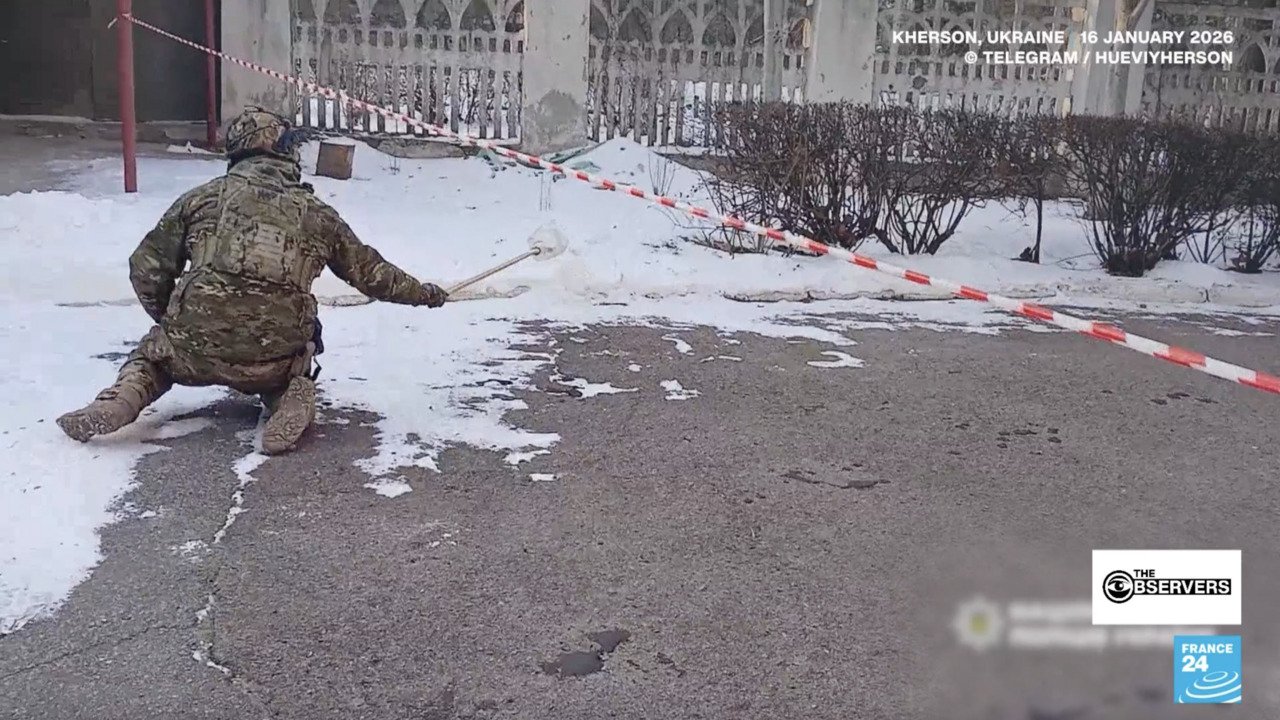
Neutralizing PFM-1 mines is no simple task, as they are often too complicated to defuse directly. Instead, experts typically resort to controlled detonations. Smith explains the demining process: “We usually employ either mechanical clearance teams or manual ones. If mechanical means are available, they can trigger the mines safely. However, the low-level explosives used in these mines mean that no significant damage occurs if they’re triggered this way. Unfortunately, mechanical methods can’t be utilized everywhere.”
Conclusion
PFM-1 anti-personnel mines present a severe and ongoing risk in Ukraine, highlighting the critical need for effective demining strategies. As both sides continue to deploy these dangerous weapons, the challenge remains not only in immediate civilian protection but also in long-term recovery and rehabilitation of affected individuals.
- PFM-1 mines are widely used by both Ukrainian and Russian forces in the conflict.
- About 90% of civilian casualties related to anti-personnel mines in Ukraine involve the PFM-1.
- These mines can remain dormant for years, posing long-term hazards, especially to children.
- Demining these mines is complex, often requiring controlled explosions due to their intricate design.