

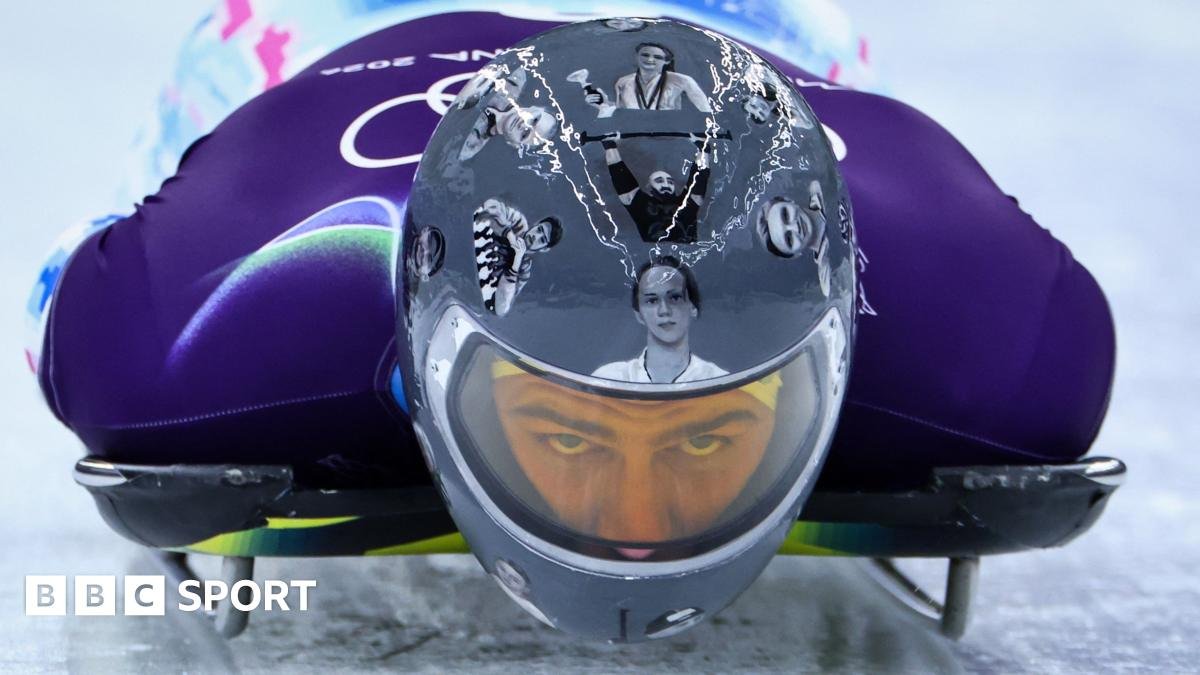
Ukrainian Skeleton Racer Shocked by IOC Helmet Ban
Ukrainian skeleton racer Vladyslav Heraskevych has expressed profound dismay at the International Olympic Committee’s (IOC) decision to prohibit him from wearing a helmet adorned with the images of individuals lost to the ongoing conflict in Ukraine. This decision comes as Heraskevych aims to leverage the Olympic platform to shine a light on the war affecting his homeland.
The Controversial Helmet
The 26-year-old athlete, who proudly served as Ukraine’s flagbearer during the opening ceremony, shared his heartbreak on social media, stating, “The IOC has banned the use of my helmet at official training sessions and competitions. A decision that simply breaks my heart.” He views this ban as a betrayal to athletes who wish to honor those who can no longer compete due to the war.
Background of the Images
Many of the individuals depicted on Heraskevych’s helmet were athletes, including young weightlifter Alina Peregudova, boxer Pavlo Ishchenko, and ice hockey player Oleksiy Loginov. Some of these faces were friends of his, making the prohibition even more personal. He noted that Toshio Tsurunaga, who handles communications for the IOC, visited the athletes’ village to explain the situation. According to Heraskevych, Tsurunaga cited Rule 50 as the basis for the decision.
Understanding Rule 50
Rule 50.2 of the Olympic Charter explicitly states that “no kind of demonstration or political, religious or racial propaganda is permitted in any Olympic sites, venues, or other areas.” Although there have been instances where the IOC allowed commemorative gestures, this time they established new regulations specifically affecting Ukrainian athletes. Earlier, the IOC contacted Ukraine’s Olympic Committee regarding the helmet.
International Reactions
Following the ban, Ukrainian President Volodymyr Zelensky acknowledged Heraskevych’s efforts to keep the world informed about the ongoing conflict. In a statement, he expressed gratitude to the athlete for reminding the world of “the price of our struggle.” Zelensky asserted that this issue should not be dismissed as a mere political demonstration at a sports event, but rather as a significant reminder of the current situation in Ukraine.
A Commitment to Awareness
Heraskevych, who made headlines at the 2022 Beijing Olympics by holding up a “No War in Ukraine” sign just days before Russia’s invasion, intended to abide by Olympic guidelines while still raising awareness about the war’s impact. In the wake of Russia’s large-scale invasion, athletes from Russia and Belarus have faced significant restrictions in international sports, although some have begun to return to competition.
Looking Ahead
The IOC has permitted a total of 13 athletes from Russia to compete as Individual Neutral Athletes (AINs) in the upcoming Milan-Cortina events. As the competition approaches, speculation continues about how such decisions will impact the Olympic community and the visibility of important global issues.
Conclusion
The IOC’s ruling against Heraskevych’s helmet is a poignant reminder of the larger implications of sport amidst conflict. As athletes strive to honor their shared humanity, controversies will inevitably arise in balancing rules with individual expressions of solidarity.
- Vladyslav Heraskevych faces a ban on his helmet depicting war victims.
- Many depicted were fellow athletes and personal friends of Heraskevych.
- The IOC’s Rule 50 restricts political demonstrations at the Olympics.
- President Zelensky supports Heraskevych’s efforts to raise awareness.