

Ukraine Denies Drone Attack Claims Amidst Peace Talks
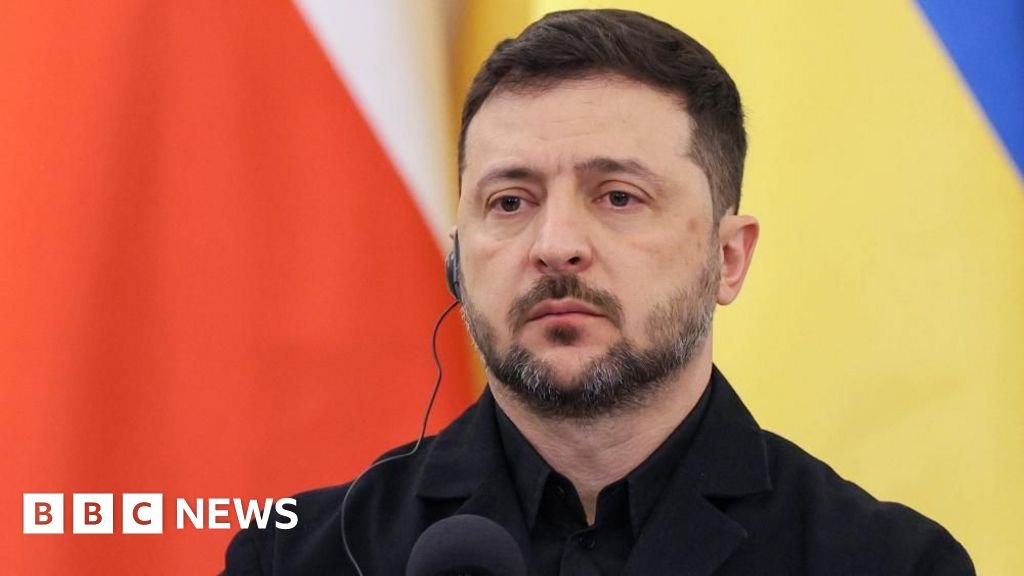
In a recent turn of events, President Volodymyr Zelensky has firmly rejected accusations from Russia alleging that Ukraine orchestrated a drone strike on one of President Vladimir Putin’s residences. Zelensky claims these assertions are an attempt by Moscow to jeopardize ongoing peace negotiations.
Allegations and Responses
Russia’s Foreign Minister, Sergei Lavrov, alleged that Ukraine launched an overnight attack employing 91 long-range unmanned aerial vehicles (UAVs) targeting Putin’s state residence located in the northwestern Novgorod region. In response, Moscow has indicated it will reevaluate its stance in peace talks, although the whereabouts of Putin during the supposed attack remain unclear.
Zelensky dismissed these claims as “typical Russian lies,” asserting they are designed to provide the Kremlin with justifications for continuing military actions against Ukraine. He reminded the global community that Russia has a history of targeting governmental buildings in Kyiv.
Expressing urgency on social media platform X, Zelensky stated, “It is critical that the world doesn’t stay silent now. We cannot allow Russia to undermine the work on achieving a lasting peace.”
Russian Defense and Diplomatic Stance
In a statement shared via Telegram, Lavrov claimed that all 91 drones purportedly launched at the residence were intercepted and destroyed by Russian air defense systems. He further noted there were no casualties or damage reported from this incident. Lavrov commented on the “final degeneration of the criminal Kyiv regime,” indicating a shift towards what he termed a policy of state terrorism. He stated that Russia’s position in negotiations would be reevaluated, although it would not withdrawal from discussions with the U.S., according to reports from Tass.
Recent Diplomatic Dialogues
This claim from Russia followed recent meetings between the U.S. and Ukraine in Florida, where Presidents Trump and Zelensky discussed a revised plan for peace aimed at concluding the ongoing conflict. After the meeting, Zelensky mentioned to Fox News the possibility of ending the war by 2026, emphasizing that Ukraine’s success hinges on continued U.S. support.
“My feelings of President Trump’s sanctions and economic directives indicate that he is prepared for significant measures,” Zelensky remarked, adding that the U.S. plays a crucial role in expediting the peace process.
Trust Issues and Unresolved Matters
Zelensky expressed skepticism about Putin’s intentions for peace, stating, “I don’t trust Putin, and he doesn’t want success for Ukraine.” He also remarked that the U.S. had offered Ukraine security assurances over 15 years, with Trump indicating that the agreement was nearly finalized at “95%.” The Ukrainian leader highlighted unresolved territorial disputes, particularly regarding the Russian-occupied Zaporizhzhia nuclear plant and the Donbas region, which Russia aims to fully control.
At present, Russia occupies about 75% of the Donetsk region and nearly 99% of Luhansk. Historically, Russia has rejected critical aspects of the ongoing peace plan.
Reactions from the U.S. and Kremlin
Following the discussions, the White House reported that President Trump had a “positive call” with Putin, wherein Putin mentioned the alleged attack on his residence occurring shortly after what the U.S. considered a successful round of talks. Yuri Ushakov, a Kremlin foreign policy advisor, relayed that Trump appeared shocked and angry about the news during the call, indicating that it could change the U.S. approach to working with Zelensky.
During a subsequent press briefing, Trump initially appeared unaware of the incident but later acknowledged that Putin informed him about it, expressing his discontent. When questioned about evidence supporting Russia’s claims, he stated, “We’ll find out. You’re suggesting perhaps the attack didn’t take place—that’s possible too, I guess. But President Putin told me this morning it did.”
Conclusion
The tensions surrounding alleged attacks and the interplay of peace negotiations highlight the complexities of the ongoing conflict between Ukraine and Russia. As both sides navigate through accusations and diplomatic efforts, the situation remains precarious, with significant implications for regional stability and international relations.
- Ukraine denies Russia’s claims of a drone attack on Putin’s residence.
- Accusations come amid ongoing peace negotiations and discussions with the U.S.
- Zelensky emphasizes the importance of global attention and support for Ukraine.
- Trust issues between Zelensky and Putin complicate the peace process.