

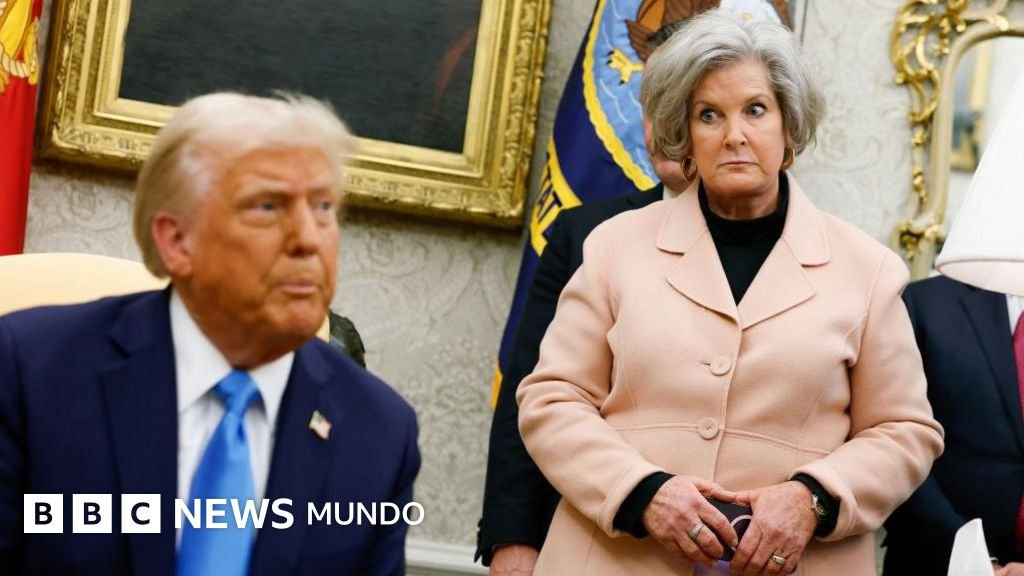
Susie Wiles Responds to Vanity Fair’s Critique of Trump Administration
In a recent turn of events, Susie Wiles, the White House Chief of Staff, has taken a stand against a critical article published by Vanity Fair, which portrayed several high-ranking officials within Donald Trump’s administration in an unfavorable light. Wiles firmly disputes claims made in the article, particularly regarding her perspectives on Trump and Vice President JD Vance.
Clarifying Misrepresentation
In the Vanity Fair piece, Wiles was quoted labeling Trump as someone with an “alcoholic personality” and describing Vice President JD Vance as a “conspiracy theorist.” Following the article’s release, Wiles took to X to assert that much of the context necessary for a balanced narrative was omitted, leading to a portrayal that she deemed overwhelmingly chaotic and negative.
At 68, Wiles has been an influential figure in Trump’s political journey, playing a crucial role in his successful 2024 presidential campaign. She is notably the first woman to serve as Chief of Staff in the White House.
Insights from Wiles
During multiple interviews with Vanity Fair, Wiles touched on various subjects, including the Epstein case document handling and Trump’s legal actions against political adversaries. She acknowledged that there might be a vindictive element to Trump’s pursuits against those he views as threats. “I don’t believe he wakes up thinking about revenge,” she remarked, “but when the chance arises, he seizes it.”
The Psychology of Leadership
Reflecting on her background, Wiles noted that growing up with an alcoholic father equipped her to work effectively with Trump. She explained, “High-functioning alcoholics or alcoholics in general tend to exhibit exaggerated personalities while drinking. So, I have a fair bit of expertise when it comes to strong personalities.” She characterized Trump as having an “alcoholic personality,” claiming he operates with the mindset that “there’s nothing he can’t do. Nothing, zero, nothing.”
Vice President Vance’s Shift
Wiles also provided insights about Vice President JD Vance, who was once critical of Trump but later became a close ally. Wiles implied that Vance’s change in stance was politically motivated. When questioned about the Vanity Fair article during an event, Vance stated he hadn’t read it, but only subscribes to conspiracy theories he believes to be true, citing allegations regarding former President Joe Biden’s health.
Comments on Elon Musk
Wiles had particularly sharp remarks for billionaire Elon Musk, who was instrumental in efforts to cut federal spending through the Department of Government Efficiency before leaving the administration in May. Following their public fallout, Wiles characterized Musk as a “declared” ketamine user who would spend nights “in a sleeping bag at the EOB,” or Executive Office Building. “He’s a very unusual guy; I think all geniuses are,” she said. “He isn’t particularly useful, but that’s just who he is.”
She shared her initial horror at Musk’s spending cuts, emphasizing her belief in USAID’s valuable work. “Anyone who has paid attention to the government would know USAID was doing a great job,” Wiles recalled. “Elon has this perspective that you need to execute swiftly. If you’re gradual, you’ll never get your rocket to the Moon. With that mindset, some plates are going to break. No reasonable person thought the dismantling of USAID was beneficial. No one.”
Wiles’ Defense Against Criticism
The morning following the Vanity Fair publication, Wiles criticized what she called a “defamatory article with a misleading focus” directed at her, Trump, and other cabinet members. “An important context was ignored, and much of what I and others said about the president and our team was omitted,” she expressed on X. “After reading it, it seems they aimed to craft an overwhelmingly chaotic and negative narrative about the president and our team.”
The White House stood by Wiles, with Press Secretary Karoline Leavitt affirming that Wiles has been vital in helping Trump achieve the most successful first eleven months of any U.S. president. “There isn’t a more essential or loyal advisor to President Trump than Susie,” Leavitt stated, adding that the entire administration supports her leadership. Later, in a briefing, Leavitt accused Vanity Fair of “bias by omission,” saying the article excluded other White House staff interviews and misrepresented Wiles’ words.
Conclusion
The recent dust-up over Susie Wiles’ comments reflects broader tensions and narratives surrounding the Trump administration. Wiles’ responses to the Vanity Fair article emphasize her commitment to providing context and understanding the complexities of leadership within such a high-profile environment.
Key Takeaways
- Susie Wiles refuted claims made in a Vanity Fair article that portrayed her and the Trump administration negatively.
- Wiles discussed the psychological insights that inform her working relationship with Trump.
- Vance’s shift from criticism to support of Trump raises questions about political allegiance.
- The White House has publicly defended Wiles against the portrayal in the media.