

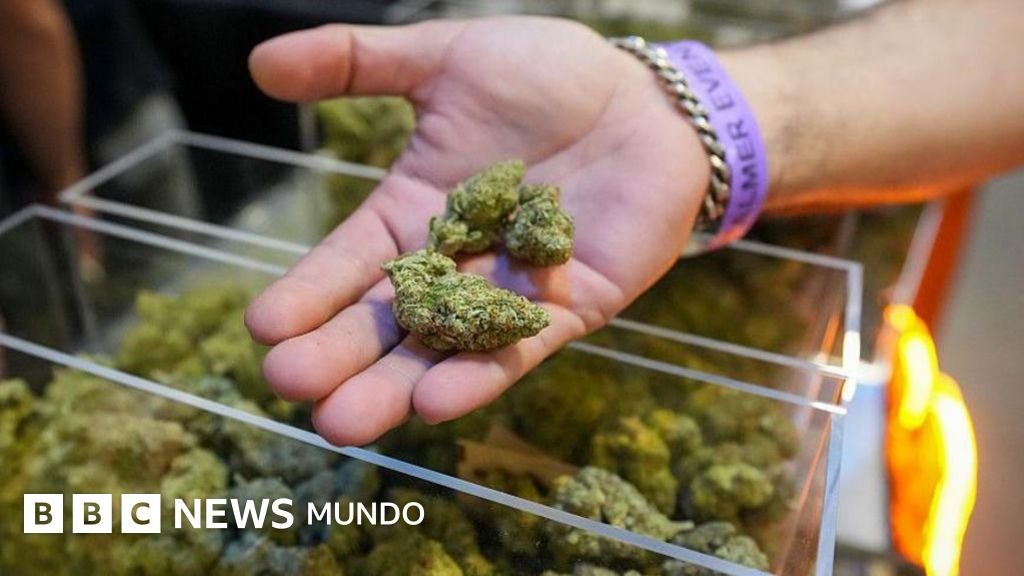
Significant Changes to Cannabis Policy Under Trump
The announcement of an executive order by President Trump marks a pivotal shift in the cannabis landscape within the United States. This highly anticipated decision aims to broaden access to cannabis, representing the most substantial modification in drug policy seen in decades. Under this new directive, the Attorney General is tasked with reclassifying cannabis from a Schedule I narcotic to a Schedule III substance, placing it alongside medications like Tylenol with codeine.
Current Legal Status of Cannabis
While cannabis will remain illegal at the federal level, its reclassification to Schedule III will pave the way for expanded research into its potential benefits. This shift has met resistance from some Republican lawmakers who argue that it might normalize cannabis consumption. According to the Drug Enforcement Administration (DEA), Schedule III substances—such as ketamine and anabolic steroids—exhibit a “moderate to low potential for physical and psychological dependence.”
Impact on Cannabis Dispensaries
This new classification will also have fiscal implications for state-licensed cannabis dispensaries, as existing regulations currently restrict certain tax deductions for businesses selling Schedule I products.
Access to CBD
In addition to the reclassification of cannabis, President Trump has directed officials to work alongside Congress to facilitate access to cannabidiol (CBD) for certain Americans. As part of a newly announced program, select Medicaid beneficiaries will be able to obtain CBD at no cost, pending a medical recommendation. Health authorities are now tasked with developing “methods and models” to assess the actual benefits and risks associated with CBD.
A senior government official described the order as a “common-sense measure that will enable better understanding and study” of cannabis and CBD.
State Regulations and Historical Context
In recent years, a significant number of U.S. states have legalized cannabis for various medical uses, with nearly half (24) having sanctioned its recreational use. Despite this progress, cannabis has held a Schedule I classification since 1971, reflecting a lack of accepted medical use and a high potential for abuse. The previous Biden administration had proposed a similar reclassification in 2024, but efforts were hindered by administrative hurdles.
Legislative Opposition
Trump’s reclassification order faces some pushback from Republican lawmakers. Recently, a group of 22 Republican senators sent an open letter to the president, arguing that marijuana use could impede the reindustrialization of America. They voiced concerns over cannabis’s potential health risks, citing studies that link it to “impaired judgment” and “lack of focus.”
The senators concluded that promoting the cannabis industry contradicts economic growth and the encouragement of healthy lifestyles for Americans.
Public Opinion and Future Perspectives
In a related communication, nine Republican representatives expressed that there is insufficient scientific evidence to support the reclassification. They emphasized that, while marijuana differs from heroin, it still poses an abuse potential and lacks demonstrated medical value, arguing that such a reclassification would wrongly suggest to younger generations that marijuana is safe.
Nonetheless, surveys indicate that a majority of Americans favor marijuana legalization. A Gallup poll published in November found that 64% of respondents believe it should be legalized, although support has slightly waned from previous years, particularly among Republicans.
Conclusion
President Trump’s recent executive order demonstrates a significant step toward altering cannabis policies in the United States, shifting its classification and opening doors for further research into its benefits. While opposition remains, public support continues to grow, indicating a potential shift in future drug policy.
Key Takeaways
- Trump’s executive order reclassifies cannabis from Schedule I to Schedule III.
- The new classification allows for increased research into cannabis benefits.
- Access to CBD is expanded for certain Medicaid beneficiaries.
- Public support for cannabis legalization remains strong despite some legislative opposition.