

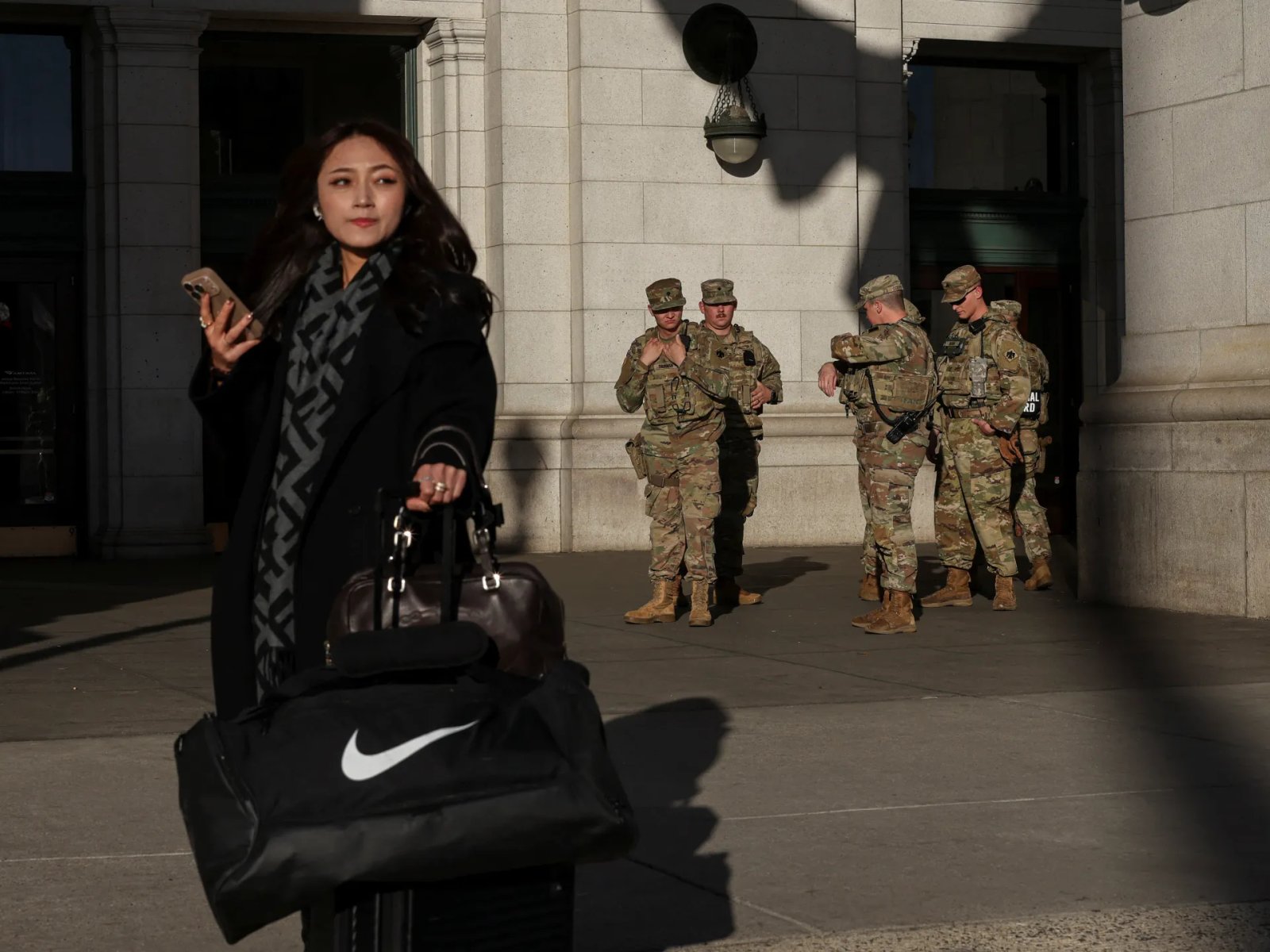
President Trump Withdraws Troops from Major Cities Amid Legal Challenges
In a significant policy shift, President Donald Trump has announced the decision to end the deployment of federal troops to several Democratic-led cities. This move comes amidst a series of legal obstacles to the administration’s attempts to send National Guard members to locations like Chicago, Los Angeles, and Portland.
Announcement and Reasons for Withdrawal
On Wednesday, Trump stated via Truth Social that he is “removing” the National Guard from these cities, even though the troops had already been operating under limited circumstances due to previous court rulings. He asserted, “We are removing the National Guard from Chicago, Los Angeles, and Portland, despite the fact that crime has been greatly reduced by having these great Patriots in those cities, and ONLY by that fact.”
However, it’s important to note that the National Guard has been restricted from engaging directly in law enforcement, which is against US law. Notably, Trump had not invoked the Insurrection Act of 1807, which permits presidents to deploy troops domestically in situations of rebellion or obstruction to enforce federal law. As a result, the National Guard’s role in these cities has primarily involved protecting federal buildings and assisting with immigration enforcement.
At the time of the announcement, approximately 300 National Guard members were still under federal command in both Los Angeles and Chicago, with an additional 200 stationed in Portland. The deployment initially began in response to protests concerning mass immigration enforcement.
Legal Challenges Faced by the Administration
Trump’s announcement comes on the heels of various legal setbacks. Last week, the Supreme Court upheld a lower court’s ruling that prohibited the deployment of the National Guard in Chicago. Generally, National Guard troops are deployed at the request of state governors. Although presidents can independently send the National Guard, this is only permissible when traditional federal agents are unable to uphold the law.
A majority of the Supreme Court justices concluded that Trump had not met the necessary criteria for such actions, posing a significant challenge to the administration’s justification for deploying troops across the nation. Earlier on the same day, lawyers from the Department of Justice in California retracted a request to keep troops in the state during the appeal of a lower court’s decision. This ruling mandated that the troops be returned to state control.
In reaction, California Governor Gavin Newsom, a prominent critic of Trump, expressed approval, stating that this recognition from the administration would signal an end to what he termed illegal intimidation tactics. He and his team are looking forward to a more definitive court ruling on the matter.
Future Possibilities of Troop Deployment
Despite the withdrawal, Trump reassured his supporters that he would not hesitate to redeploy troops if crime rates began to rise again. He remarked, “We will come back, perhaps in a much different and stronger form, when crime begins to soar again – It’s only a question of time!”
Conclusion
As the legal challenges facing Trump’s administration diminish troop presence in key cities, the prospect of future deployments remains open, contingent on crime trends. This ongoing development emphasizes the complex interplay between federal authority and state controls.
Key Takeaways
- Trump withdraws National Guard troops from Democratic-led cities due to legal challenges.
- The National Guard’s role was limited to support and protection, not law enforcement.
- Legal rulings have restricted the administration’s ability to deploy troops without state approval.
- Trump signals potential future redeployment if crime rates rise again.