

US-Taiwan Relations Amidst Chinese Military Drills
The escalating military activities around Taiwan have recently caught global attention, especially with US President Donald Trump downplaying concerns regarding China’s extensive military drills. These exercises, which are perceived to aim at Taiwan, come in the wake of significant US arms sales to the island, suggesting a complex interplay between military posturing and international relations.
Trump’s Stance on Chinese Military Actions
In a recent press conference, President Trump expressed that he sees no reason for alarm concerning the military drills conducted by China around Taiwan, a territory Beijing claims as its own. “I have a great relationship with President Xi [Jinping], and he hasn’t told me anything about [the drills]. I certainly have seen it,” he stated, dismissing the actions as typical behavior over the past two decades.
The military exercises, which began on a recent Monday, took a sharper focus following the US’s declaration of one of its largest arms sales to Taiwan. According to Chinese military officials, the drills serve as a warning against “Taiwan independence separatist forces” and any “external interference.” These include substantial live-fire training across various sea and airspace locations surrounding the island.
Military Movements and Responses
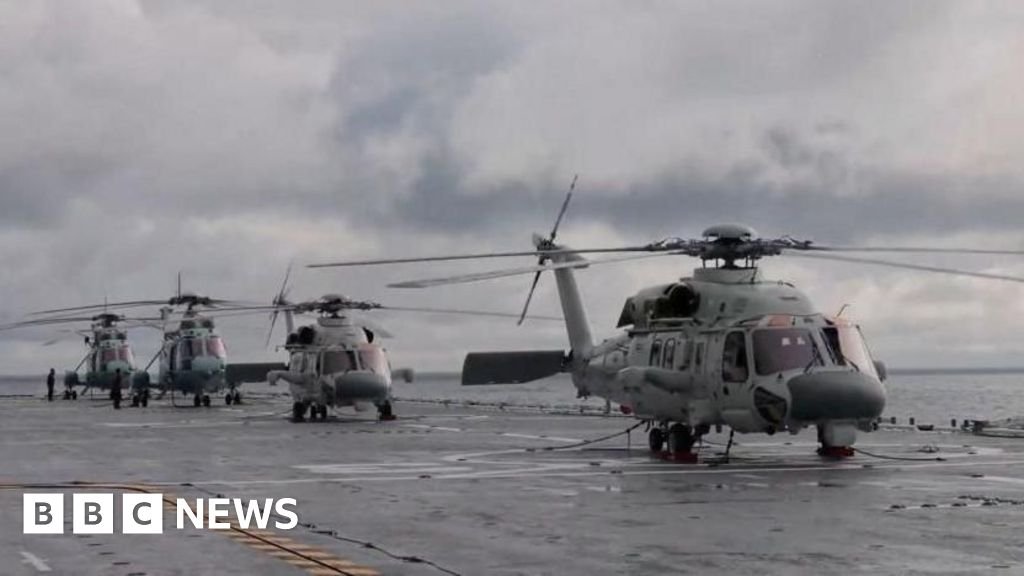
The drills involve a comprehensive application of military capabilities, utilizing destroyers, frigates, and fighter-bombers to test coordination between sea and air operations. Taiwan’s defense ministry reported detecting around 130 Chinese military aircraft near the island, with 90 of those crossing the “median line,” although China does not recognize this informal boundary.
These military incursions have become a frequent occurrence, continuously testing Taiwan’s defenses through what is known as “grey-zone warfare.” Amid these tensions, Taiwan’s armed forces remain vigilant and have mobilized aircraft and naval units in response, focusing on national security.
Taiwan’s Reaction and International Implications
The Taiwanese government has openly criticized these military drills, framing them as a direct challenge to established international norms. President Lai Ching-te condemned the escalating pressure from China, asserting, “We will act responsibly and not escalate conflict or stir up disputes,” while emphasizing the importance of maintaining Taiwan’s security.
Insights from experts suggest that the primary audience for these military exercises is more about sending a message to the US, Trump, and Japan, rather than addressing Taiwanese citizens, as noted by Susan Shirk, a former US Deputy Assistant Secretary of State. This military display reflects China’s growing frustration regarding recent US arms sales to Taiwan, which include advanced weaponry capable of striking targets on the Chinese mainland.
Concerns Regarding US Policy on Taiwan
Amid concerns from within the US about Trump’s commitment to Taiwan’s defense, analysts like Alexander Neill emphasize that while the scale of China’s military drills has undeniably increased, Trump’s perception that his relationship with Xi Jinping might influence these maneuvers is overly optimistic.
China has consistently asserted its intent to “reunify” with Taiwan, leaving open the possibility of military action. This stance has fostered increasing military pressure on the island, prompting Taiwan to enhance its defense initiatives. Despite Trump’s reassurances, his administration has sanctioned a weaponry package valued at $11 billion, further complicating the diplomatic landscape.
Conclusion
The dynamics between the US, Taiwan, and China are currently at a critical juncture. While Trump has attempted to ease concerns regarding Chinese military activities, the reality of regional tensions continues to require assertive reassurances and strategic maneuvering from all parties involved.
- Trump downplays concerns over China’s military drills around Taiwan.
- Tensions rise as these drills follow significant US arms sales to Taiwan.
- Taiwan responds with increased military readiness amid ongoing incursions.
- China warns against US involvement while reaffirming its claims over Taiwan.