

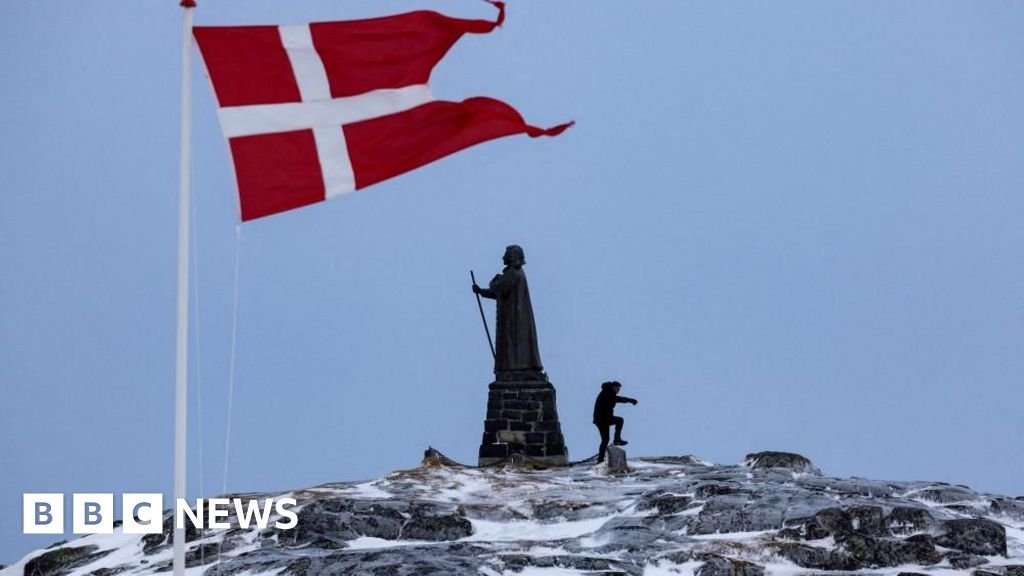
The Importance of Greenland in U.S. National Security
Recently, President Donald Trump emphasized the need for the United States to “own” Greenland, highlighting concerns over potential influence from Russia and China in the strategically located territory. Trump’s comments have sparked discussions about military presence and sovereignty in the Arctic region, a context that underscores Greenland’s geopolitical significance.
The Ownership Debate
While addressing reporters, Trump stated, “Countries have to have ownership, and you defend ownership. You don’t defend leases, and we’ll have to defend Greenland.” He further mentioned that the U.S. would approach this matter “the easy way” or “the hard way,” indicating a firm stance on the issue. His remarks come as the White House is reportedly exploring the possibility of purchasing Greenland, a semi-autonomous territory of Denmark. However, both Denmark and Greenland have firmly stated that the territory is not for sale, with Denmark warning that any military action would jeopardize the transatlantic defense alliance.
The Strategic Value of Greenland
Although Greenland is one of the least densely populated regions in the world, its geographical position between North America and the Arctic makes it crucial for U.S. national security. The territory provides an ideal location for establishing early warning systems to detect possible missile attacks and for monitoring shipping activities in the surrounding waters. Trump asserts that Greenland is vital to U.S. security, claiming, without evidence, that “Russian and Chinese ships [are] all over the place.”
Current Military Presence
Presently, the U.S. has over 100 military personnel stationed at the Pituffik base, located in Greenland’s northwestern region, a facility that has been under U.S. operation since World War II. According to existing agreements with Denmark, the U.S. maintains the ability to deploy as many troops as necessary to the base. However, Trump expressed that a lease would not suffice.
Trump’s View on International Relations
He remarked, “Countries can’t make nine-year deals or even 100-year deals,” stressing the necessity for ownership over temporary agreements. In a curious twist, Trump also conveyed affection for the people of China and Russia but firmly stated, “I don’t want them as a neighbour in Greenland; not going to happen.” He called for NATO to recognize the U.S. position on this matter.
International Reactions
Denmark’s NATO allies, including key European nations and Canada, have voiced their support for Denmark, reaffirming that “only Denmark and Greenland can decide on matters concerning their relations.” They emphasized their commitment to Arctic security while advocating for collaborative efforts among allies, including the U.S. Moreover, they highlighted the importance of adhering to the principles of the UN Charter, ensuring sovereignty and territorial integrity.
Rising Interest in Greenland’s Resources
The spotlight on Greenland has intensified, especially following Trump’s recent military intervention in Venezuela. Previously, during his first presidential term, Trump sought to purchase the island, only to be informed that it was not for sale. Next week, U.S. Secretary of State Marco Rubio is expected to engage in talks with Denmark to further explore these dynamics.
In recent years, Greenland’s natural resources, such as rare earth minerals, uranium, and iron, have drawn attention. As climate change accelerates the melting of ice, experts speculate that the territory may also harbor significant reserves of oil and gas.
Conclusion
Greenland’s strategic location and rich natural resources make it a focal point in discussions surrounding U.S. national security and international relations. As the geopolitical landscape evolves, the importance of respectful dialogue and cooperation among allies will be crucial in addressing the balance of power in the Arctic region.
- President Trump emphasizes U.S. ownership of Greenland to counteract potential threats from Russia and China.
- Greenland’s geopolitical significance lies in its strategic location and resource potential.
- Denmark and NATO allies reaffirm that decisions regarding Greenland should respect its sovereignty.
- Recent military actions and international interest illustrate the complexities of Arctic politics.