

Tragic Loss: Twenty-Two Migrants Dead While Attempting to Reach Europe
In a heartbreaking incident, twenty-two migrants seeking a new life in Europe have tragically died off the coast of Greece after enduring six harrowing days at sea in a rubber boat. Survivors revealed these details to the Greek coastguard on Saturday, shedding light on the grim circumstances of their journey.
Rescue Operations and Survivor Accounts
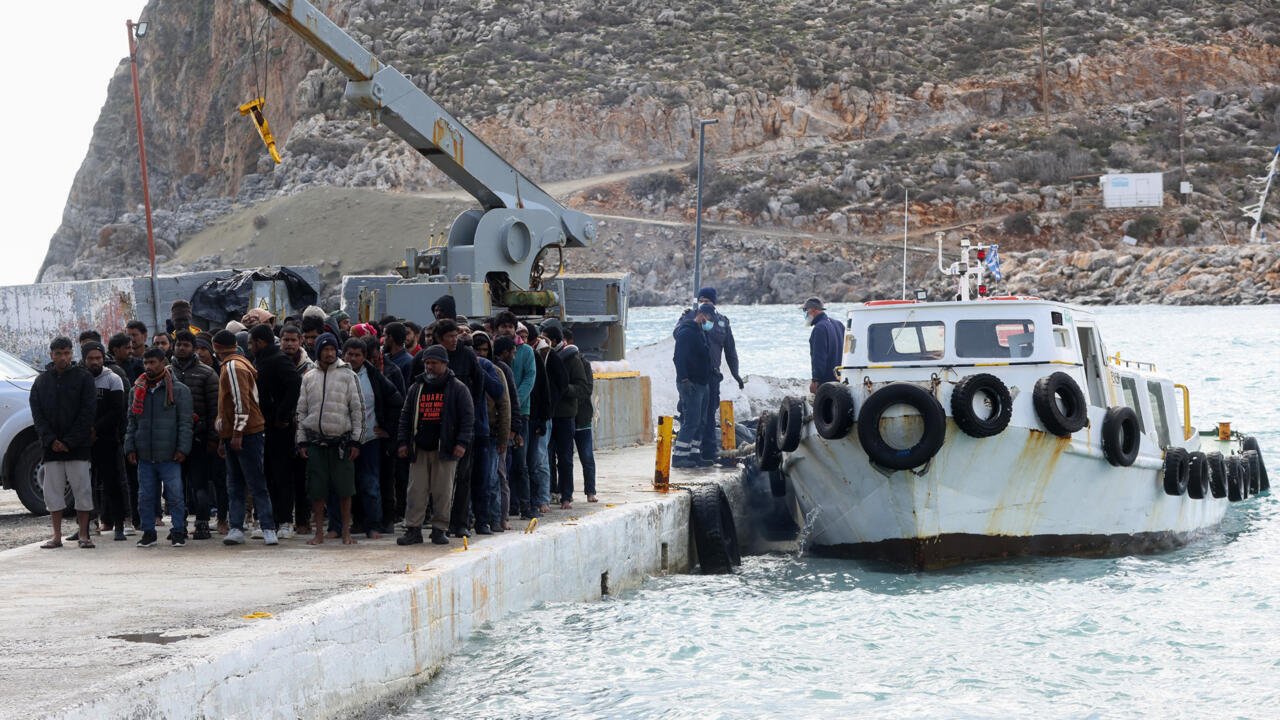
The Greek coastguard confirmed on late Friday that 26 individuals, including a woman and a minor, were rescued by a vessel from a European border agency near Crete. Out of those rescued, 21 were Bangladeshis, four were South Sudanese, and one was a citizen from Chad. Sadly, the survivors recounted that the deceased were thrown into the Mediterranean Sea following the orders of one of the smugglers on board.
Two of the survivors required hospitalization in Heraklion, Crete, due to their ordeal. According to their testimonies, the journey began in Tobruk, a port city in eastern Libya, on March 21, aiming for Greece—a common destination for many migrants seeking asylum within the European Union.
The Struggles at Sea
The coastguard reported that during their perilous journey, the boat’s occupants lost their sense of direction and remained adrift for six days without access to food or water. This dire situation ultimately led to the deaths of 22 individuals due to exhaustion.
Authorities mentioned that the two smugglers, aged 19 and 22 from South Sudan, have been apprehended and are currently under investigation for “illegal entry into the country” as well as “negligent homicide.” The vessel was located 53 nautical miles south of Ierapetra, a town on southern Crete.
Conditions and Concerns
A spokesperson from the coastguard stated that “unfavorable meteorological conditions,” combined with the lack of basic necessities, contributed significantly to the tragic deaths. The surviving witnesses confirmed that the order to dispose of the bodies into the sea came from the traffickers.
Increasing Death Tolls and Calls for Action
The EU border agency Frontex reported a sharp rise in migrant fatalities attempting to reach EU soil, with deaths more than doubling in the first two months of 2026 compared to the same period last year. In light of these events, an EU commission spokesperson emphasized the urgent need to enhance collaboration with partner countries along migratory routes and to strengthen efforts against migrant smugglers, who bear responsibility for such calamities.
Data from the International Organization for Migration indicated that 559 individuals lost their lives in the Mediterranean during January and February, a stark increase from 287 the previous year.
Previous Incidents and Policy Changes
In a similar tragic incident last December, at least 18 migrants were discovered deceased within a boat that was taking on water southwest of Crete, with only two survivors found. Unfortunately, the bodies of most of the deceased were never recovered.
In response to the increasing crossings, the European Parliament recently endorsed significant changes to EU migration policy, including the establishment of “return hubs” intended to send migrants to non-EU countries. However, these proposals have faced criticism from human rights organizations, who deem them inhumane.
Conclusion
The heartbreaking loss of lives among migrants attempting to reach Europe underscores the urgent need for effective action to address the issues surrounding migration and smuggling. Through international collaboration and policy reforms, it is essential to work toward preventing such tragedies from occurring in the future.
- Twenty-two migrants presumed dead after a six-day journey at sea.
- Survivors reported bodies were disposed of in the Mediterranean by smugglers.
- Authorities have arrested two smugglers and are investigating for serious crimes.
- The EU sees a significant increase in migrant deaths, calling for urgent action.