

Violence Erupts in Bangladesh: A Journalist’s Account
The recent turmoil in Bangladesh has left both journalists and citizens on edge, particularly following an incident that escalated rapidly into chaos. Zyma Islam, a journalist for the Daily Star, found herself amidst a mob while trying to escape the intense violence that erupted after the assassination of a pro-democracy leader. The ensuing destruction has raised serious concerns about the future of media freedom and civil stability in the country.
Tragic Spark of Violence
The unrest was triggered by the assassination of Sharif Osman Hadi, a key figure in the pro-democracy movement that recently overthrew former Prime Minister Sheikh Hasina. According to officials, Hadi’s murder was orchestrated by loyalists of Hasina who fled to India. As news of the assassination broke on December 18, a furious crowd gathered, intent on targeting anyone connected to the previous administration.
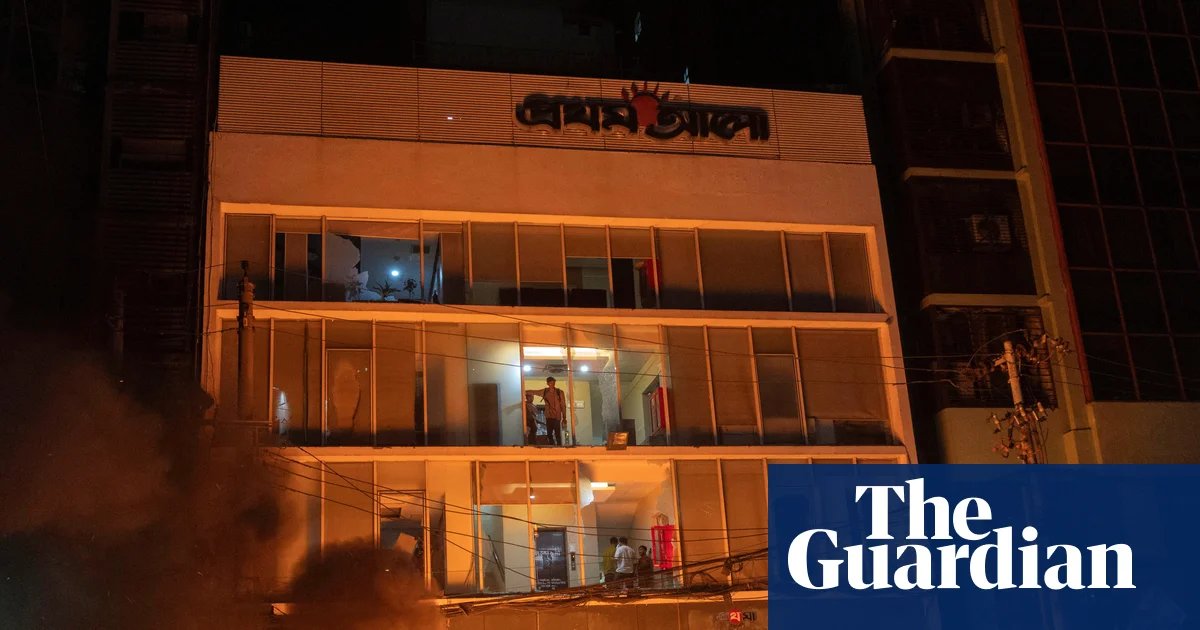
Both the Daily Star and Prothom Alo, two of the nation’s leading newspapers, became focal points for the mob’s fury. These publications had already suffered under Hasina’s regime, facing threats and legal challenges. Islam reported the crowd’s intentions before she could even leave the building, stating, “We all knew this mob was not going to stop at trashing this office; it was going to set fire to it.”
Destruction and Despair
The chaos culminated in the burning of offices and a cultural institution, creating a palpable sense of dread among journalists and civil society just 15 months after a period that inspired hope for a new political landscape. Reports indicate that 184 individuals have lost their lives in mob violence so far this year, with a striking increase in such incidents compared to previous years.
On that fateful night, as violence erupted, Islam and several colleagues sought refuge on the roof. With smoke thickening around them, she attempted to reach out for help, posting what she feared might be her last message on social media: “I can’t breathe anymore. There’s too much smoke. I’m inside. You are killing me.”
Government Response and the Future
The government’s response has come under scrutiny, with many questioning its effectiveness in managing the chaos. Instances of violence against journalists have made them feel particularly vulnerable, jeopardizing the fragile progress that had suggested a shift towards a more democratic society.
In a grim reminder of earlier struggles, Shafiqul Alam, the press secretary for the interim government, expressed his frustration over the lack of adequate support, stating he had tried desperately to reach out for help without success. Meanwhile, other journalists, witnessing the devastation from their offices, lamented the lost hope that once fueled the movement for change in 2024.
Recurring Patterns of Violence
Islam pointed out the cyclical nature of violence that seems to grip Bangladesh, expressing concern that the government must take immediate steps to break this pattern. Observers are left wondering if the recent events will lead to additional retaliatory acts, further exacerbating the cycle of violence.
Despite the uncertainty, Islam clings to a thread of hope that the government will act decisively, ensuring those arrested are genuine offenders and not merely a reflection of the oppressive tactics often seen in the region’s political landscape. She remains optimistic, stating, “We still have a little hope. It’s still not time to worry and go into full-blown panic yet.”
- Recent violence in Bangladesh has its roots in the assassination of a pro-democracy leader.
- Both Prothom Alo and the Daily Star have faced mob attacks, highlighting a resurgence of aggression against media outlets.
- Concerns are rising about the government’s ability to manage civil unrest as tensions escalate ahead of upcoming elections.
- Journalists express a mix of fear and hope, yearning for genuine political change while recognizing the risks involved.