

Cricket, Politics, and Rivalry: The India-Pakistan T20 World Cup Clash
When India and Pakistan face off in the T20 World Cup this Sunday, the spectacle will be more than just a cricket match. It will encapsulate a history steeped in rivalry and political undertones that impact the sport. Both countries have a tumultuous relationship, marked by decades of conflict and tension, a sentiment that was palpable even during their last encounter in May 2025, which saw cross-border skirmishes unfold over several days.
A History of Rivalry
The animosity between these South Asian nations goes back over 78 years, creating a sporting rivalry that often results in boycotts, cancelled matches, and tense encounters both on and off the field. While players have occasionally shared light-hearted moments, the shadow of political hostility looms large over cricket, particularly in the aftermath of recent conflicts that have impacted fans and players alike.
Key Moments in Recent Encounters
September 14 – The Handshake Controversy
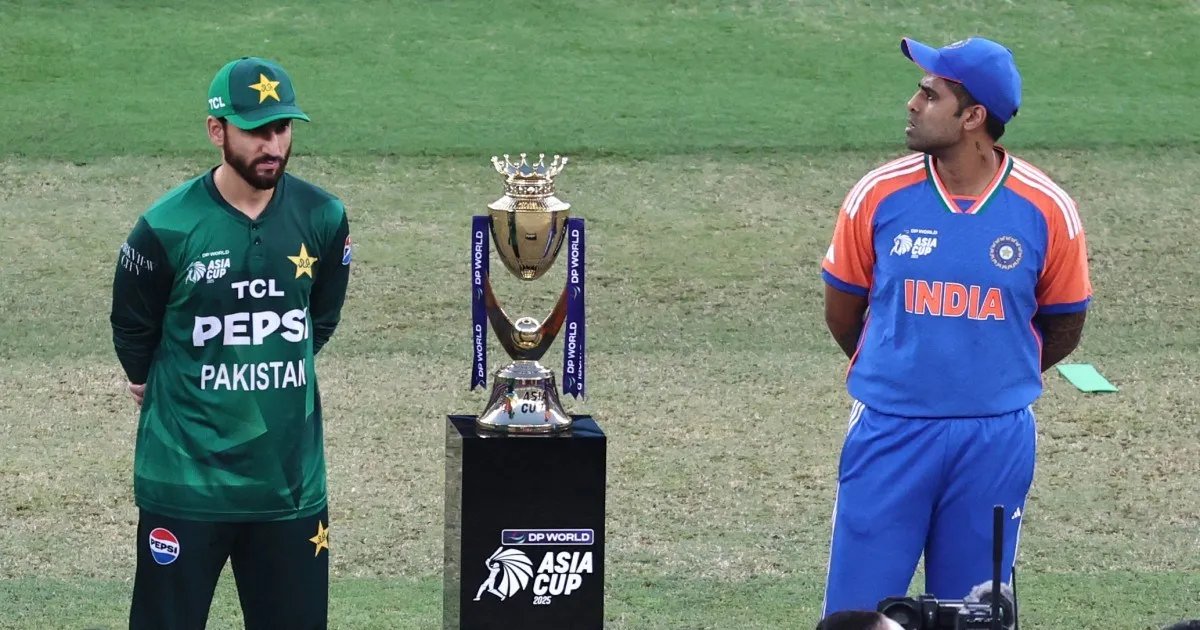
The tension was palpable as the match began with India’s Suryakumar Yadav choosing not to participate in the traditional handshake with Pakistan’s Salman Ali Agha. The decision raised eyebrows and led many to speculate about the underlying political implications. Following the match, Yadav and his teammate Shivam Dube deliberately avoided greeting the Pakistani players, opting to retreat to their dressing room without acknowledging their opponents. Yadav later explained that the decision was a calculated one, referring to the earlier attack in Indian-administered Kashmir that preceded the May conflict. “Some things are above sportsmanship,” he stated.
September 17 – Pakistan’s Protest against Officials
The aftermath of the handshake incident continued to stir controversy during Pakistan’s next game against the UAE. The team refused to take the field in protest against match referee Andy Pycroft, who had enforced the decision regarding the pre-match handshake. Negotiations ensued, causing a delay, and Pycroft ultimately issued an apology for what was termed a “miscommunication.”
September 21 – Charged Exchanges on the Field
The intensity carried on during their second face-off in the Asia Cup, where players exchanged heated banter on the pitch. Pakistan’s Haris Rauf confronted India’s Abhishek Sharma, who, in turn, took his 74 runs as a rebuttal to the aggression shown by the Pakistani players. Rauf made gestures during the match referencing the claims of downed Indian jets from the earlier conflict, raising tensions even higher. Both cricket boards lodged complaints against each other for unprofessional conduct following this match.
September 28 – Trophy Presentation Drama
The final of the Asia Cup saw India defeat Pakistan, but a fresh controversy erupted when India refused to accept the trophy from Mohsin Naqvi, Pakistan’s federal interior minister and also the chairman of the Pakistan Cricket Board. This decision was taken to avoid recognition of a political figure, with India’s board chairman stating, “No one instructed us to do this; it was our team’s choice.” The trophy presentation was delayed, with the Indian team celebrating by pretending to hold a trophy instead.
October 5 – The Women’s Cricket World Cup Fallout
The political tension echoed during the ICC Women’s World Cup 2025, when the Indian women’s team mirrored their male counterparts by not shaking hands with the Pakistani team post-toss.
November 4 – Sanctions from the ICC
Following the Asia Cup, the International Cricket Council (ICC) took action, finding several players guilty of misconduct for their behavior on the field. Consequently, both Yadav and Rauf were fined and received demerit points, while other players were also reprimanded for their conduct.
January 25 – Speculations about T20 World Cup Participation
After Bangladesh’s exit from the T20 World Cup, Pakistan’s officials announced they would reconsider their participation. The situation evolved as authorities awaited the return of the Prime Minister to make a final decision.
February 1 – The Proposed Boycott
In a surprising move, the Pakistani government declared its intention to boycott the February 15 match against India, calling it an act of solidarity with Bangladesh.
February 9 – Decision to Compete in the Match
However, less than a week later, Pakistan reversed its stance and confirmed its cricket team would participate in the encounter, following international appeals from other cricket boards.
Conclusion
The upcoming match between India and Pakistan in the T20 World Cup is layered with historical significance and ongoing political tensions. As cricket fans eagerly await this highly anticipated clash, they are reminded that the sport often transcends mere entertainment, reflecting broader cultural and historical narratives.
Key Takeaways
- The ongoing India-Pakistan cricket rivalry is deeply rooted in historical conflict.
- Political tension has influenced recent encounters between the two teams.
- The refusal of handshakes and other sideline events symbolizes the strained relations.
- ICC has actively sanctioned players for unsportsmanlike conduct related to this rivalry.