

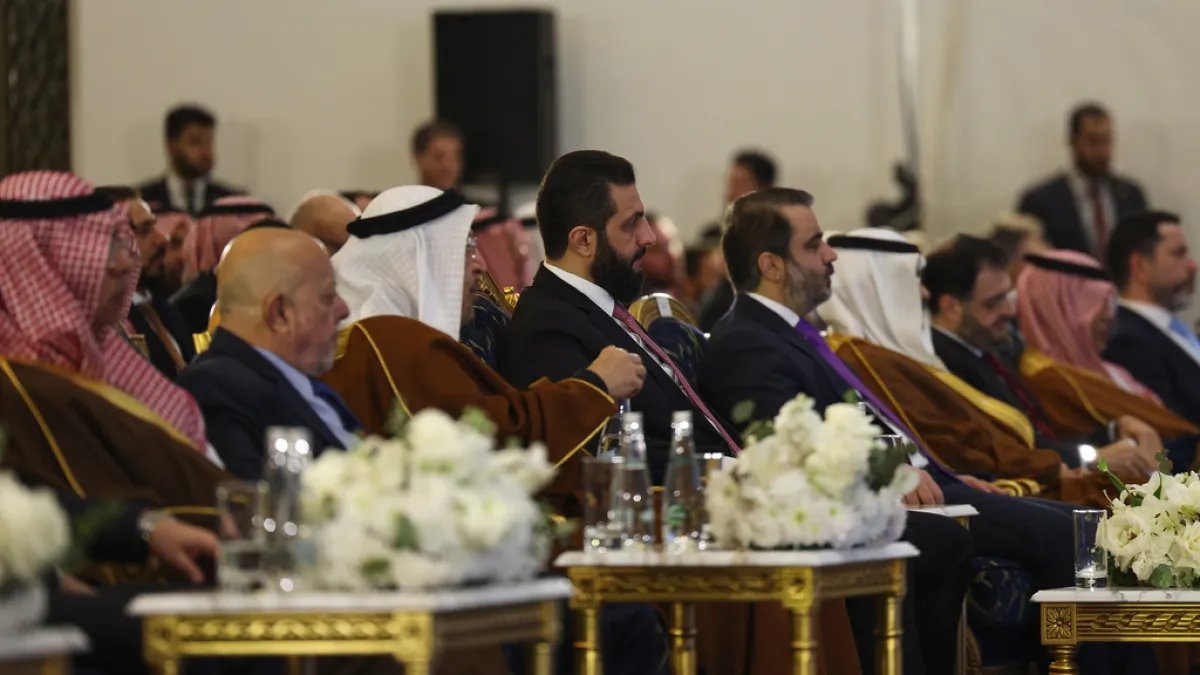
Saudi Investment Fuels Growth in Aleppo
In a significant step towards rebuilding, Syria and Saudi Arabia have embarked on a major investment initiative that encompasses various sectors, including aviation, telecommunications, energy, and real estate. With $2 billion allocated for the development of two airports in Aleppo, this venture signals a promising future for Syria after years of turmoil.
New Investment Package Announced
During a recent announcement, Talal al-Hilali, the head of the Syrian Investment Authority, outlined a range of projects set to transform the Syrian landscape. This includes the inception of a new international airport in Aleppo and plans for a new low-cost airline, as well as an innovative telecommunications project called SilkLink. This initiative aims to establish Syria as a regional connectivity hub.
Support from Saudi Arabia
Saudi Arabia has emerged as a crucial ally for the new Syrian administration, which came into power after the ousting of long-time leader Bashar al-Assad in December 2024. This landmark agreement marks a significant investment milestone since the lifting of U.S. sanctions in the same month.
The Elaf Fund
Khalid al-Falih, the Saudi Investment Minister, stated that the newly inaugurated Elaf Fund is dedicated to financing large-scale projects involving private investment from Saudi entities. The fund has committed $2 billion (approximately 7.5 billion Saudi riyals) specifically for the construction of the airports in Aleppo.
Advancements in Telecommunications
According to Abdulsalam Haykal, Syria’s Minister of Communications and Information Technology, the telecommunications sector alone is set to receive nearly $1 billion in investments. The plan includes laying thousands of kilometers of cables to improve connectivity between Asia and Europe.
Establishment of New Airline
Saudi budget airline Flynas and the Syrian Civil Aviation Authority have formalized an agreement to establish a new airline, named “Flynas Syria.” The airline, which will be 51% owned by Syrian stakeholders, is expected to commence operations in the fourth quarter of 2026.
Energy Initiatives
Additionally, Syria’s Ministry of Energy is collaborating on a water agreement with Saudi Arabia’s ACWA Power, a well-known entity for its projects in power generation and desalination across the Middle East and beyond.
Rebuilding and Economic Revival
These agreements are designed to bolster critical sectors that directly affect the daily lives of Syrian citizens, representing essential foundations for restoring the country’s economy. Comments by Tom Barrack, the U.S. envoy to Syria, highlight the importance of these strategic partnerships, stating that they can significantly aid in Syria’s reconstruction efforts.
However, Benjamin Feve, a senior research analyst at Karam Shaar Advisory, has raised caution, suggesting that while the agreements send a strong political message, their immediate economic impact may be limited. Criticism has also been directed at the government for making broad claims about future development based on partnerships that have yet to solidify into legally binding contracts.
Conclusion
The collaborative efforts between Syria and Saudi Arabia mark an optimistic chapter for the war-torn nation. With significant investments flowing into vital infrastructures like airports and telecommunications, hopes for revitalization and economic recovery are on the horizon. The effectiveness of these agreements will ultimately depend on their ability to translate promises into tangible results.
Key Takeaways
- Syria and Saudi Arabia have initiated a $2 billion investment for two new airports in Aleppo.
- The Elaf Fund aims to finance large-scale projects involving private sector investors.
- Investment in telecommunications and a new airline signals a push for regional connectivity.
- Strategic agreements may facilitate Syria’s economic revitalization, pending the conversion of commitments into binding contracts.